In 1978, 1384 people died on New South Wales (NSW) roads and it was the deadliest year on record for road fatalities in the state. At the end of the 1970s and into the early 1980s, around 1300 people were dying on average in road accidents across New South Wales.
Drink-Driving was identified as a significant factor contributing to the death toll, with around 40% of road fatalities resulting from a driver driving under the influence of alcohol. Such deaths were identified as preventable.
In September 1982, the State Government Safety Road Committee recommended the introduction of Random Breath Testing (RBT). It was to be trialled for three years and became permanent in 1985.
Source: Grimshaw, P. 1982. "Tough new blitz on roads". The Daily Telegraph, September 30: 1.
RBT commenced on Friday, December 17 1982, and drivers were warned of police presence on the roads.
Source: Stanley, A. 1982. "Breath test blitz all weekend". The Daily Telegraph, December 17: 2.
The first tests were undertaken on Parramatta Road at Granville after 7 pm.
Source: Crosthwaite, R. 1982. "First drivers all under limit". The Daily Telegraph, December 18: 2.
It was reported that road deaths had started decreasing in the lead-up to the introduction of RBT because it triggered, for drivers, a fear of being caught drink driving. RBT led to the introduction of the booze buses where further testing could occur.
Source: Stanley, A. 1982. "Publicity on tests hammers fear in drivers". The Daily Telegraph, December 16: 5.
Below is a newspaper advertisement explaining how RBT would work. It was "quite simple".
The legacy of RBT
The introduction of RBT has contributed to the overall decrease in the road toll in NSW. By 1985, the annual road toll had dropped to less than 1100. By 2021, the road toll had dropped to 270, the lowest figure since 1923 (COVID restrictions, especially in the second half of 2021, meant fewer vehicle movements), before settling at 349 in 2023.
Other key figures that show the success of RBT include:
The share of deaths resulting from drink driving annually has halved from around 40% to as little as 17%.
The overall number of deaths as a result of drink driving has decreased by nearly 90% in the past four decades.
RBT has also changed the way that people drink when they are out. One could no longer stop at the pub for a drink on the way home if they were driving or restricted their drinking. On the positive side, it encouraged responsible drinking, and for those who wished to have a drink, consider other options for transport, such as using public transport, having a friend or family member drive who would not drink, or using taxis (and ride-sharing in more recent years).
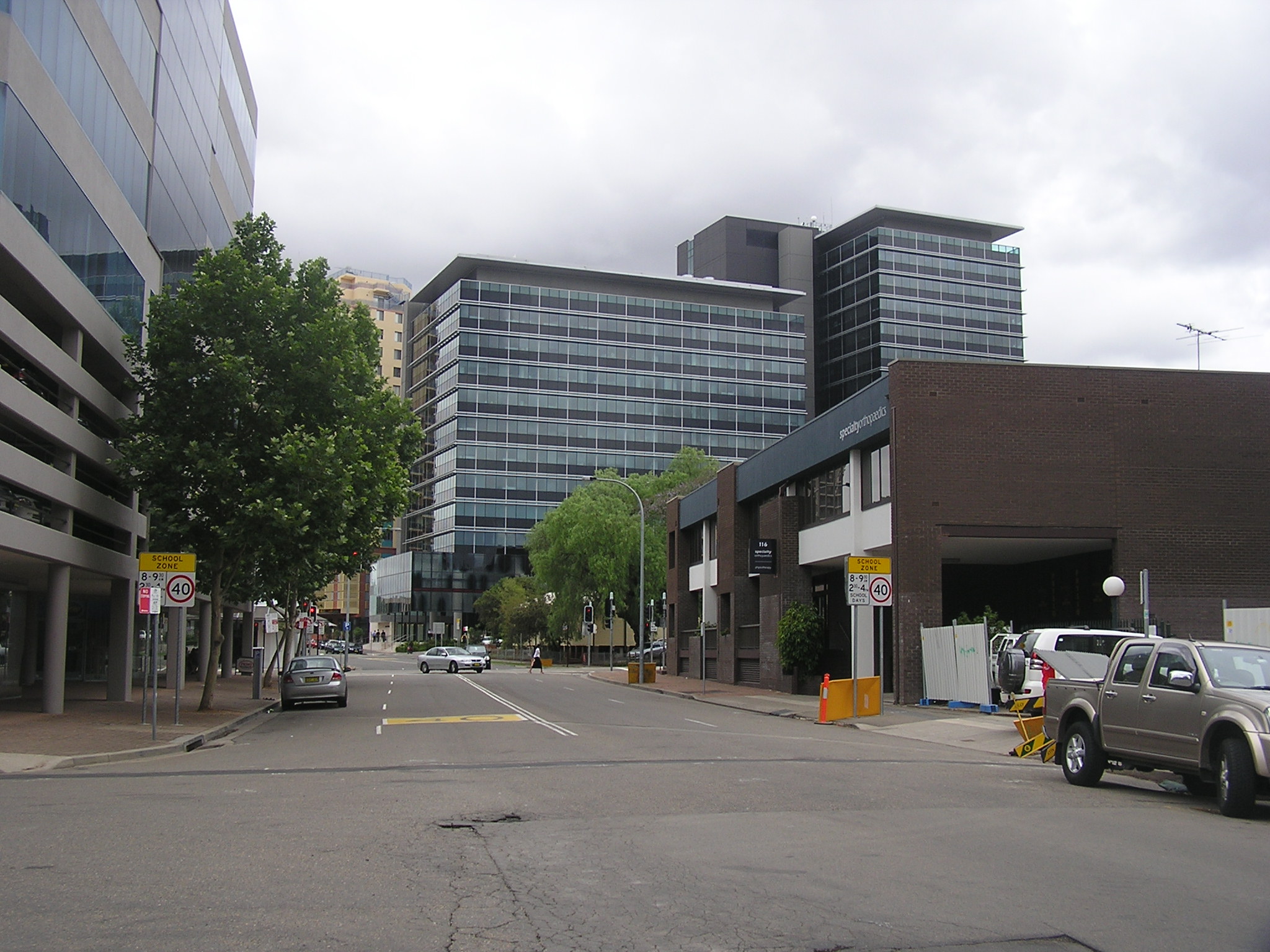
Above: Curtis Cheng Centre (NSW Police Headquarters) in 2007. Photograph taken by the Author.
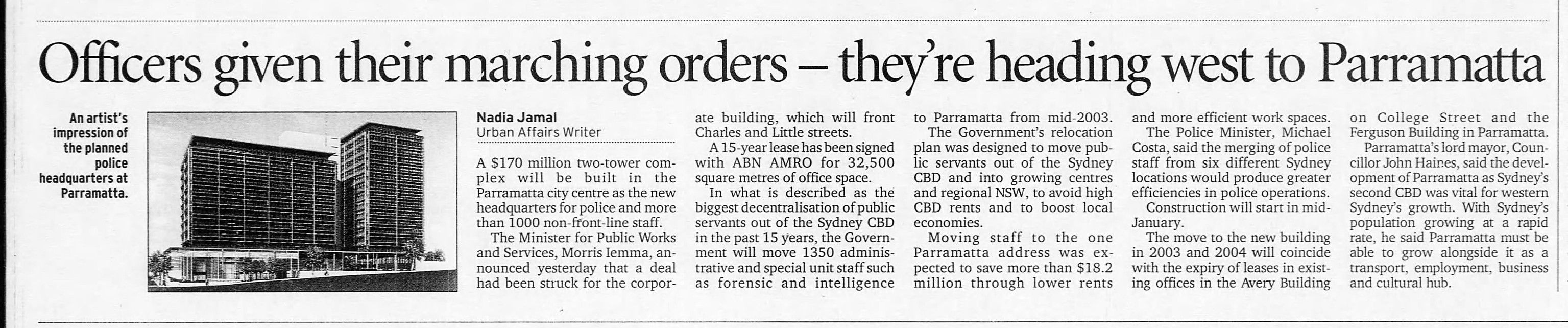
NSW Police traditionally had its headquarters in central Sydney. In 2001, the NSW Government announced that the NSW Police Headquarters would relocate to Parramatta from their existing location in the Avery Building in College Street.
This reflected the policy of the NSW Government to decentralise public servants from the Sydney CBD.
Source: Jamal, N. 2001. "Officers given their marching orders - they're heading west to Parramatta". The Sydney Morning Herald, December 19: 7.
It was reported at the time that it was the biggest shift in workers in fifteen years involving around 1350 workers.
As reported in The Sydney Morning Herald in 2001, the following reasons shaped the decision
Decentralisation of public servants to suburban and regional centres.
Reduce office leasing costs
Develop local economies
Relocation to Parramatta was in 2003 following completion of the building.
In 2016, the building was renamed the Curtis Cheng Centre to honour the service of Police Accountant Curtis Cheng, who was shot dead in the foyer in September 2015 by Farhad Jabar in an act of terrorism.
The former Avery Building was converted into an apartment complex with residents moving into the tower in 2011. It is known as The Residence Hyde Park.
Above: The Residences, Hyde Park. Photo taken by the Author (2012).