Monday, 17 October 2022
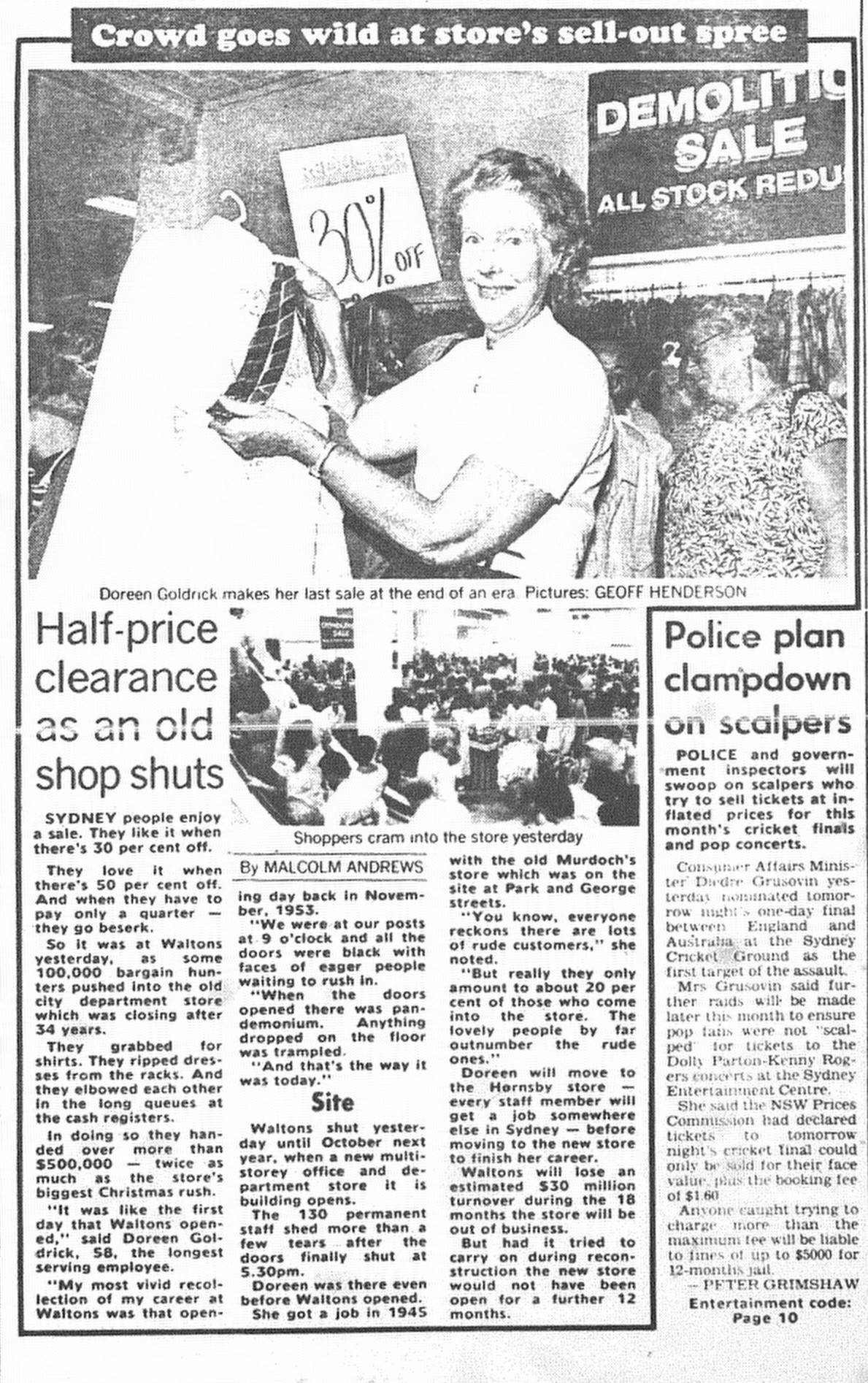
SYDNEY DEPARTMENT STORES: Waltons Town Hall closing day (1987)
Monday, 25 October 2021
The Evolution of the Citigroup Centre - New Skytower Article (1987)
In 2018, I presented a series of entries on the evolution of the Citigroup Centre at 2 Park Street, focusing on the proposals to redevelop the former Waltons site during the 1980's and 1990's.
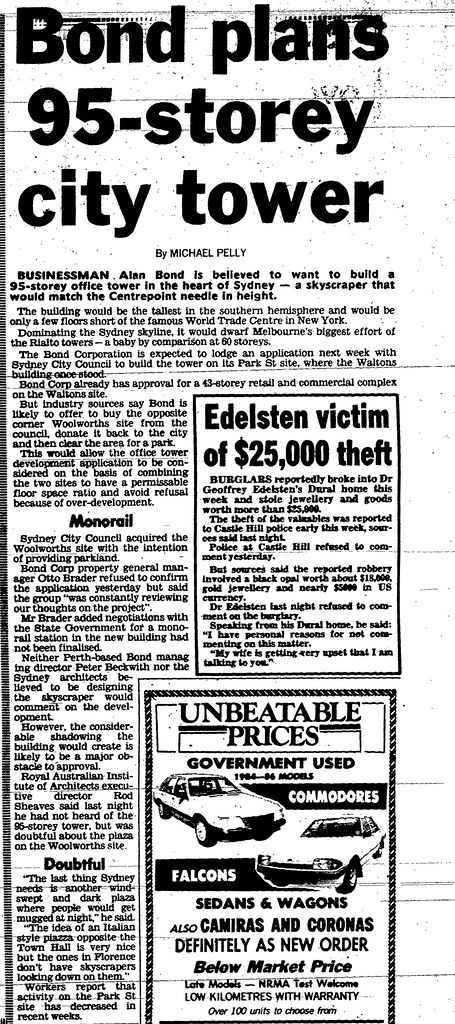
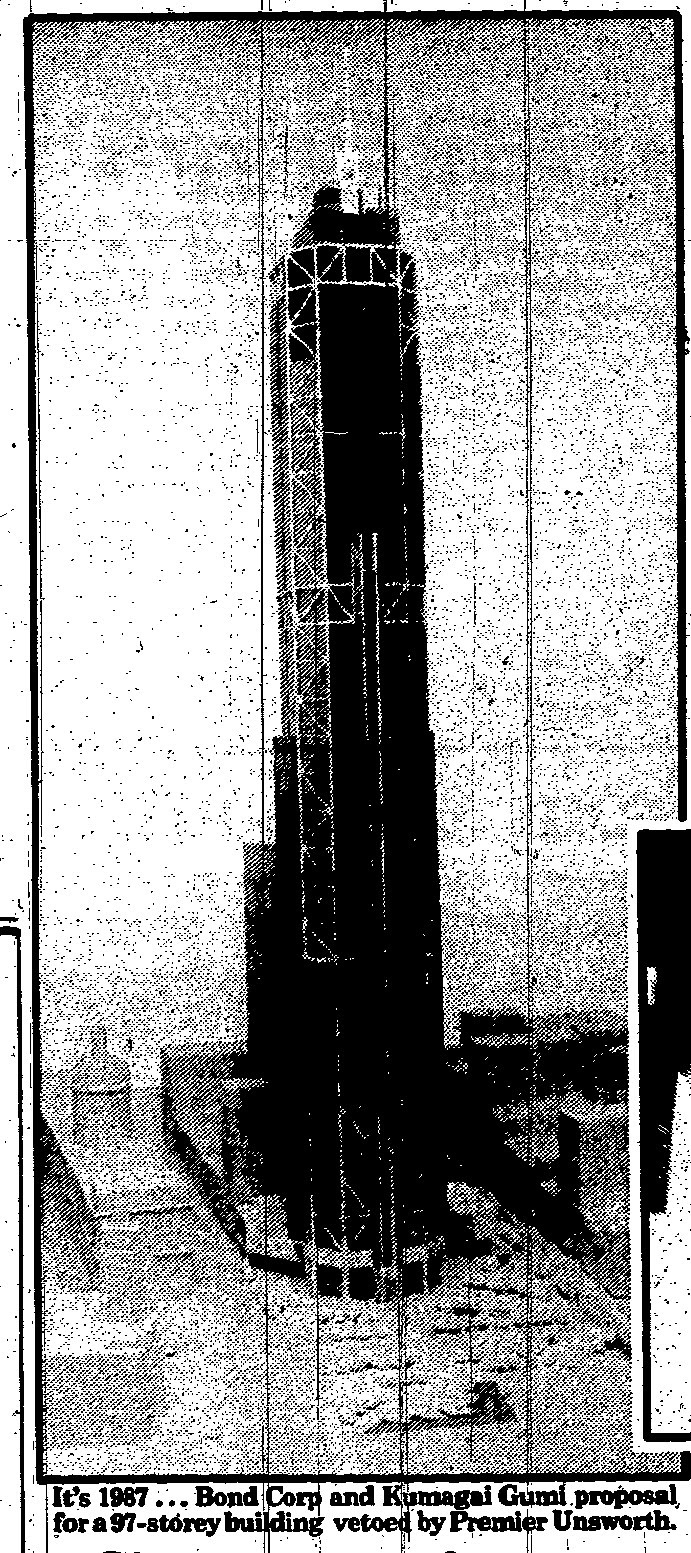
One entry focused specifically on a 1987 proposal for the 102 storey/421 metre tall Skytower to be built on the site. If built, it would have been the second tallest building in the world at the time. In 1987, the tallest skyscraper in the world was the 442 metre Willis Tower in Chicago.
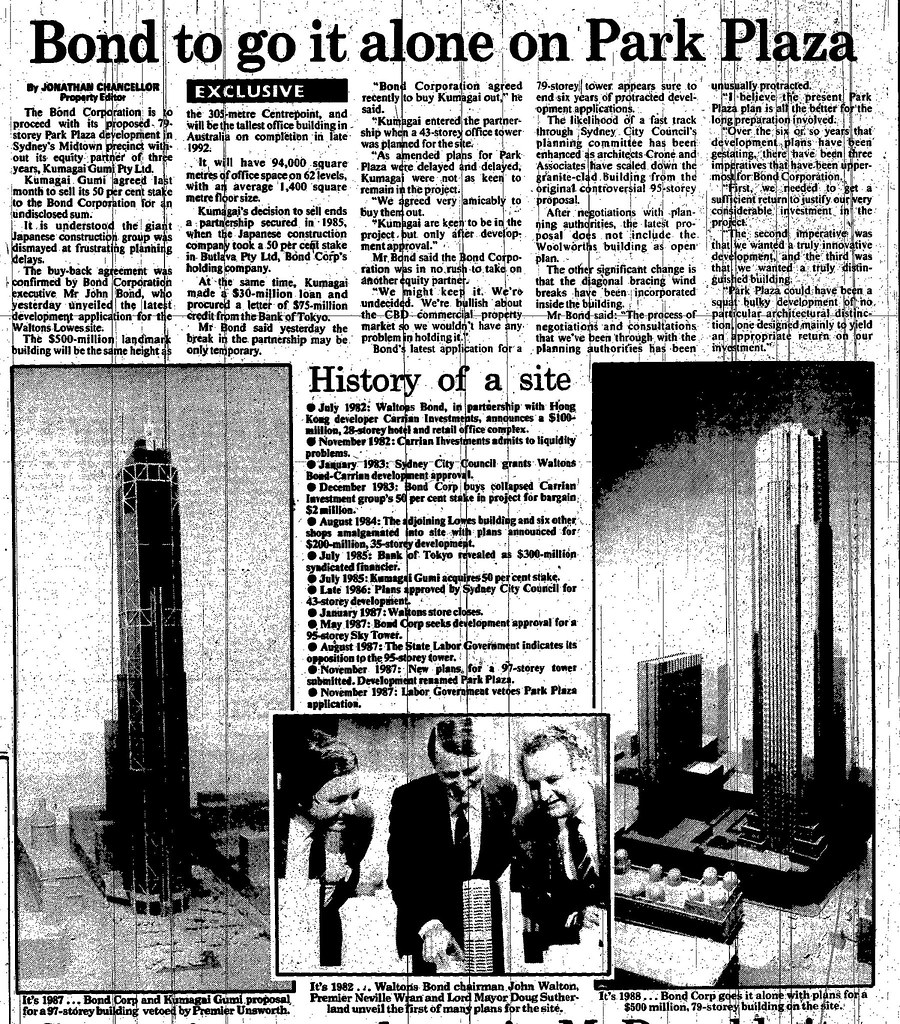
Recently as I was organising my collection, I came across a 1987 article from The Daily Telegraph that reported that the Bond Corporation were still confident that they would receive approval as they attended to planning problems and also shifted the tower towards Park Street to allow sunlight to filter to street level.
Source: Anon. 1987. "Bond is certain Skytower will get go-ahead". The Daily Telegraph, November 12: page unknown.
Monday, 14 January 2019
Remember This? - Waltons Town Hall Closing Down Sale (1987)
The date of closure was February 9, 1987. Below are several advertisements that were published in The Sunday Telegraph (February 1 and 8, 1987) and The Daily Mirror (February 6, 1987).
Below are the links to entries relating to the evolution of the site as we see it today.
Monday, 19 November 2018
SERIES: The Evolution of the Citigroup Centre - Citigroup Tower & Galeries Victoria in 2018
Over the past two months, I have posted about the drama just to build on the site which lasted nearly two decades. It took eighteen years from the release of the first proposal before the site was developed.
Coincidently, it has been eighteen years since the complex was opened to the public.
What have the past eighteen years been for the complex?
As for the tower itself, it has been popular with commercial firms attracted by premium grade office space. As of October 31, 2018, only level 8 was vacant. It's just not the quality of the office space that attracts the tenants, but also the location. It is nearly right above Town Hall railway station with direct access to the station, and easy walk to Pitt Street Mall, Hyde Park and Darling Harbour.
The Galeries Victoria has become a popular shopping centre within the Sydney CBD. It may lack the history or prestige of the Queen Victoria Building and Strand Arcade, it has shone in its ability to innovate how people shop in central Sydney.
The Sydney Arcade introduced Sydneysiders to enclosed laneway shopping, but the Galeries Victoria provided multiple laneways that connects to a square in the centre of the complex. Apart from escalators and staircases, skybridges were also constructed to link shops in each section.
In the square itself, there is a full height atrium, which allows natural light to filter in, even in the shadows of nearby towers.
| 2 Park Street rises over the full height atrium of The Galeries. |
With the retailing offering itself, it has also been innovative focusing on lifestyle, fashion and dining. JB Hifi opened their first CBD store in the basement level over a decade ago. Since then another four JB-Hifi stores have opened in central Sydney.
It is the only CBD shopping centre that has a furniture store - Muji. Freedom Furniture traded for a number of years as well. There are also retailers trading in the centre that you may not find elsewhere e.g. Kinkoyounya.
Finally the former Sydney Mechanical School of Arts Building (1836) is home to the popular Arthouse Hotel which opened in 2001.
I wonder what the next eighteen years will bring.
Previous Entries in the Series
- Original 1982 Scheme
- Park Tower (1986)
- Skytower (1987)
- Park Plaza (1988)
- Park Plaza IV (1988)
- Park Tower (1990)
- Park Tower II (1994)
- Citigroup Centre (2000)
As mentioned a fortnight ago, I have had to change the photo hosting location of images featured in this blog. Since then, all posts from 2014 have been checked and all images are available again for each entry. I am now working through posts from 2015.
Monday, 12 November 2018
SERIES: The Evolution of the Citigroup Centre - Citigroup Tower & Galeries Victoria (2000)
| The Citigroup Centre. The photo was taken by the Author (2018). |
Over the past few weeks, we have explored the evolution of the tower that we see at 2 Park Street today. We have covered over a decade and at least six or seven schemes. Now we have reached our final scheme - Citigroup Centre; the tower that we see today.
The Park Tower II proposal (1994) which I shared with you last week would set the parameters for the final design of the Citigroup Centre including height limits and the size of the building.
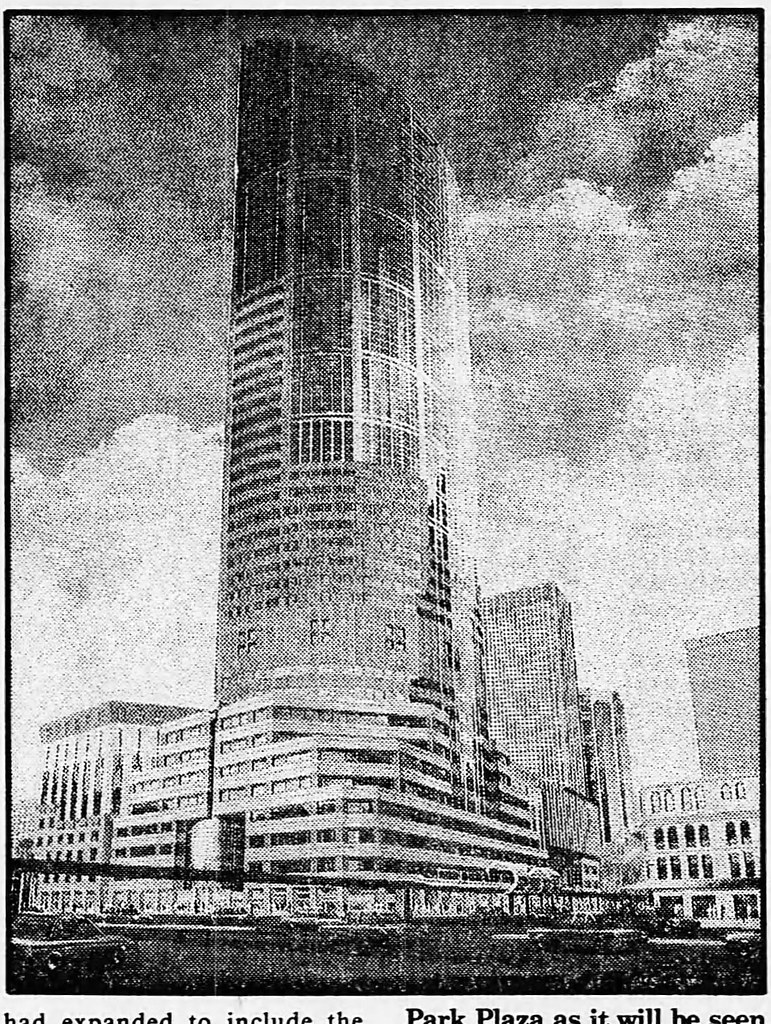
In 1996, Kumagai and Sogo unveiled new plans which were lodged with Sydney City Council. This one is quite similar to the 1994 scheme. The tower was 50 levels tall rising to a height of 243 metres (Tip of spire). The height to the roof is 206 metres.
There is only one spire in the postmodern design by Crone and Associates who despite the obstacles, still remained involved in the development.
Interest was high, most notably Citibank who wanted to consolidate their Sydney offices into the one building. At the time, they were based in Clarence Street. NIKE was interested in the retail space, seeking to open a three-level department store.
Source: Anon. 1996. "Squabbles put skyscraper in doubt". The Daily Telegraph, December 20: 4.
Council Approved the scheme on December 19, 1996. However, Citibank wanted 350 parking spaces which was refused. Citibank threatened to withdraw their interest if the spaces were not approved.
By August 1997, Ipoh (owners of the Queen Victoria Building) had purchased the $120 million retail component and Multiplex had been awarded the rights to construct the tower. MTM Funds Management and Bankers Trust would also team up to fund construction.
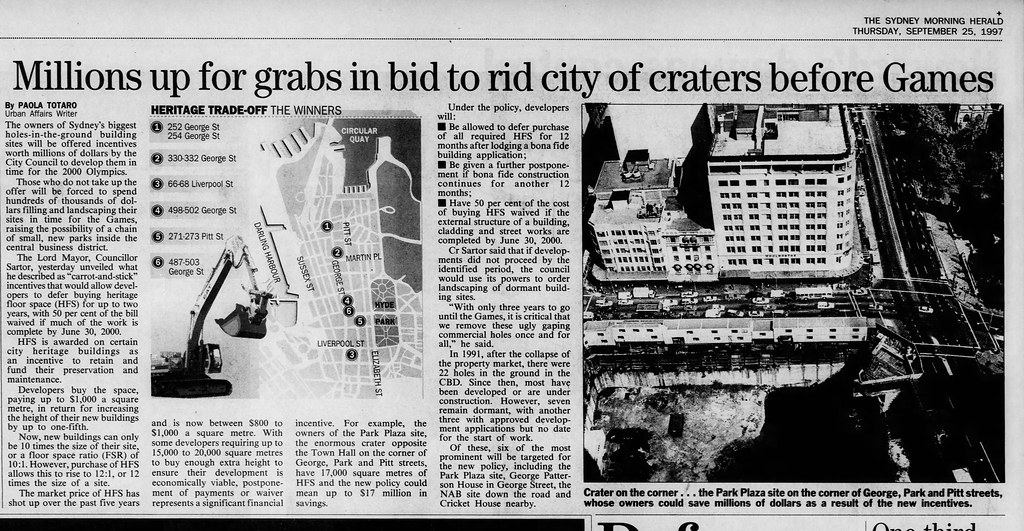
Sydney City Council had also been offering incentives to start construction on empty construction sites.
Source: Totaro, P. 1997. "Millions up for grabs in bid to rid city of craters before Games". The Sydney Morning Herald, September 25: 6.
By the start of 1998, the pieces were in place to construct the tower which was estimated to cost $600 million and be the largest office building built in Sydney since Grosvenor Place a decade before.
Source: Bourlioufas, N. "New plan for gaping city building site". The Sydney Morning Herald, January 21: 5.
In May, funding had been secured for the tower, which was estimated to cost $600 million to build. Citibank had also confirmed that it would act as the anchor tenant.
Source: Hughes, A. 1998. "Green light for $600 million Park Plaza complex. The Sydney Morning Herald, May 2: 102.
Construction commenced in May 1998 and was completed in July 2000. Galeries Victoria opened in late 2000. Below are a few photos from the ArchivePix Image Library at Sydney City Council
"Early" 1999
Source: Cole, T. 1999. Construction of Citibank Centre. Photograph. Accessed October 18, 2018, http://photosau.com.au/coslib/jpeg/017/017649.jpg
March 1999
Source: Cole, T. 1999. Construction of the Citibank Centre building. Photograph. Accessed October 18, 2018, http://photosau.com.au/coslib/jpeg/017/017124A.jpg
April 1999
Source: Cole, T. 1999. Citibank Centre building under construction. Photograph. Accessed October 18, 2018, http://photosau.com.au/coslib/jpeg/017/017150.jpg
The official opening was on August 30, 2000, conducted by the Lord Mayor - Frank Sartor.
The development of the site included a full restoration of the Sydney Mechanic School of Arts Building in Pitt Street, which is now the Arthouse Hotel.
Several years ago, The Galeries Victoria was renamed as The Galeries.
Next week, we look at the impact that the Citigroup Centre and The Galeries have had on Sydney since completion. The following week, we will answer the What if? question as to what might had it been if any of the rejected schemes became reality.
Previous Schemes
- Original 1982 Scheme
- Park Tower (1986)
- Skytower (1987)
- Park Plaza (1988)
- Park Plaza IV (1988)
- Park Tower (1990)
- Park Tower II (1994)
Monday, 5 November 2018
SERIES: The Evolution of the Citigroup Centre - Park Tower Scheme II (1994)
![]() |
| The citation is featured below. |
Last week, I looked at the Park Tower proposal from 1990 for the former site of Waltons. The start of the 1990s saw Sydney (and Australia) enter the "recession that we had to have". Business confidence had been dampened reducing demand for office space. In addition, the property market had collapsed while the city experienced an oversupply in office space as existing projects were completed.
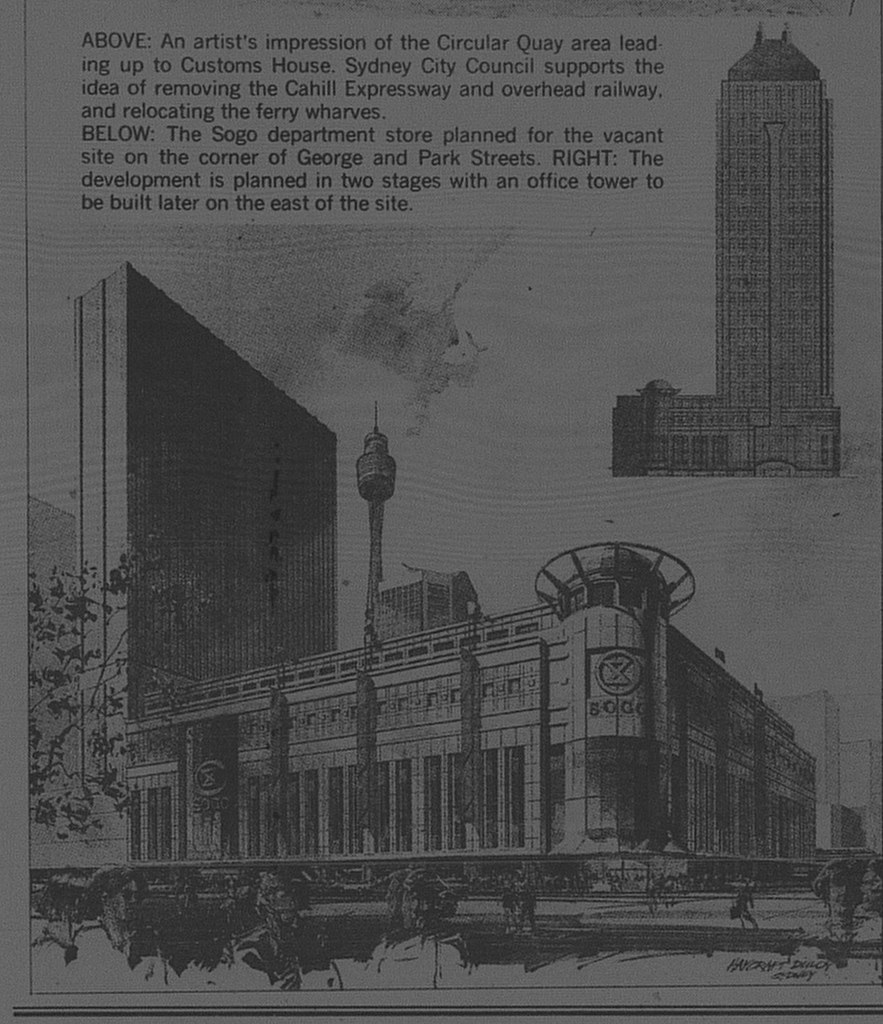
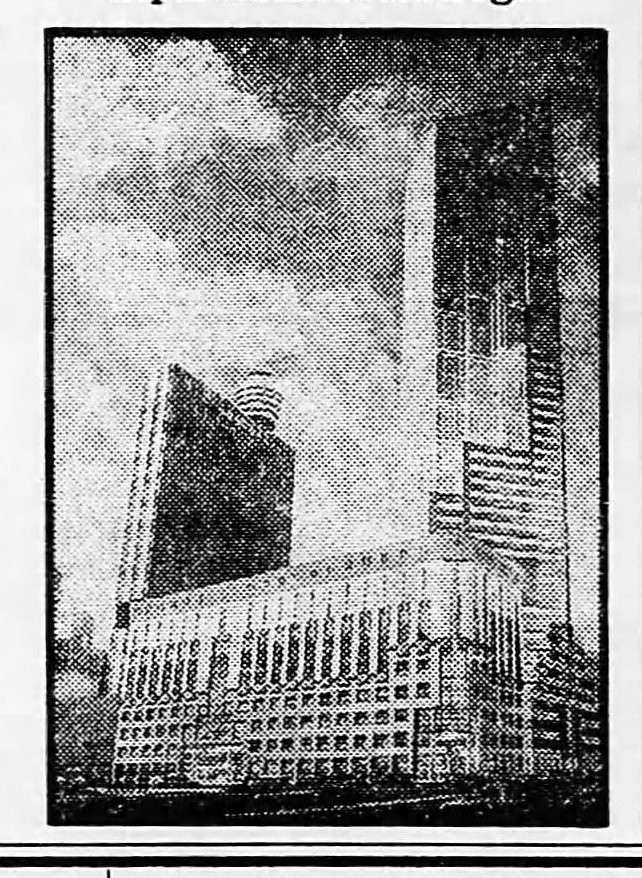
It is this scheme that would form the basis for the tower that would eventually be built, noting the height, setbacks at the top of the tower but also the addition of two spires; which would be reduced to one in the final approved scheme
The artist's impressions were from an article in The Daily Telegraph Mirror that was published in April 1994.
Source: Jones, M. 1994. 'New Sydney to be 'living work of art'. The Daily Telegraph Mirror, April 19: 5.
The complex was proposed to be built in two stages with the retail podium in stage one including a Sogo Department store with the office tower to be built later.
By September, there was speculation that commencement of construction of the department store would commence.
Source: Reeves. 1994. "Department store set to fill eyesore hole". The Sydney Morning Herald, September 20: 9.
But despite the plans, the site would remain dormant for longer. Next week, we will see the light emerge when I post about the tower we see today and the accompanying Galeries Victoria.
Previous Schemes
Monday, 29 October 2018
SERIES: The Evolution of the Citigroup Centre - Park Tower (1990)
It was now March 1990. A year earlier, the Bond Corporation had sold the site to a Japanese Consortium comprising Japanese companies Kumagai Gumi and Sogo (Japanese Department Store chain). The total cost was approximately $278 million.
The new proposal was designed by Crone and Associates and Kisho Kurokawa, known as Park Tower. The podium would contain a shopping centre anchored by the Japanese department store chain Sogo with the tower rising above it.
Source: Chancellor, J. 1990. "48 storey tower for city's centre". The Sydney Morning Herald, March 6: 32.
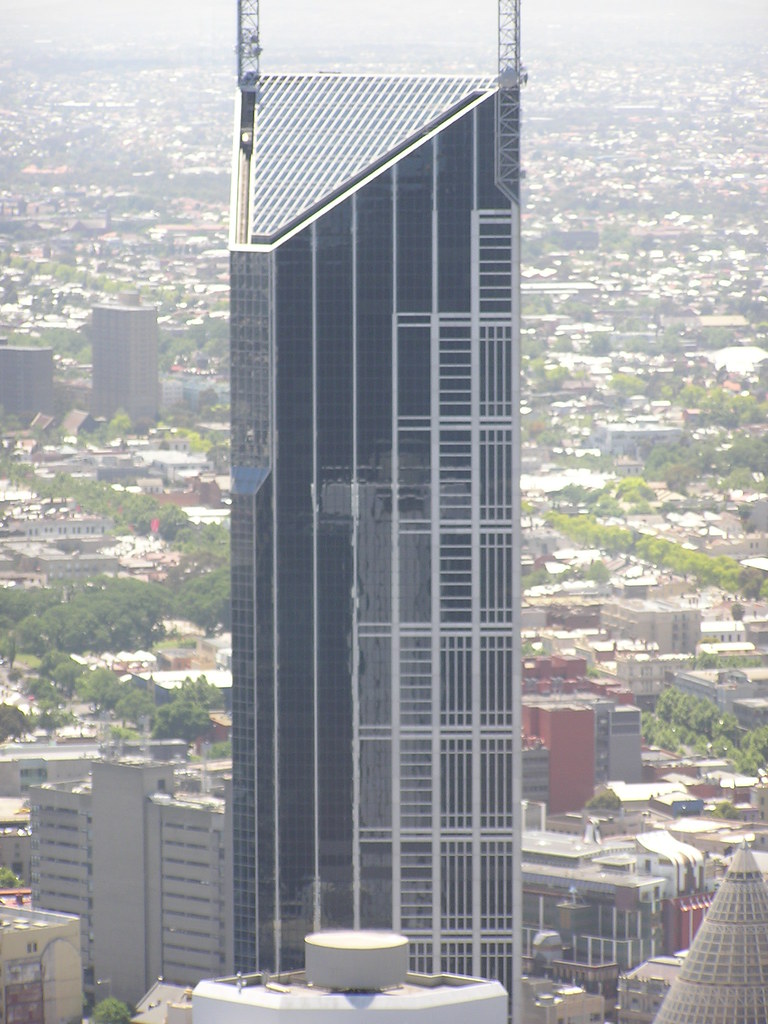
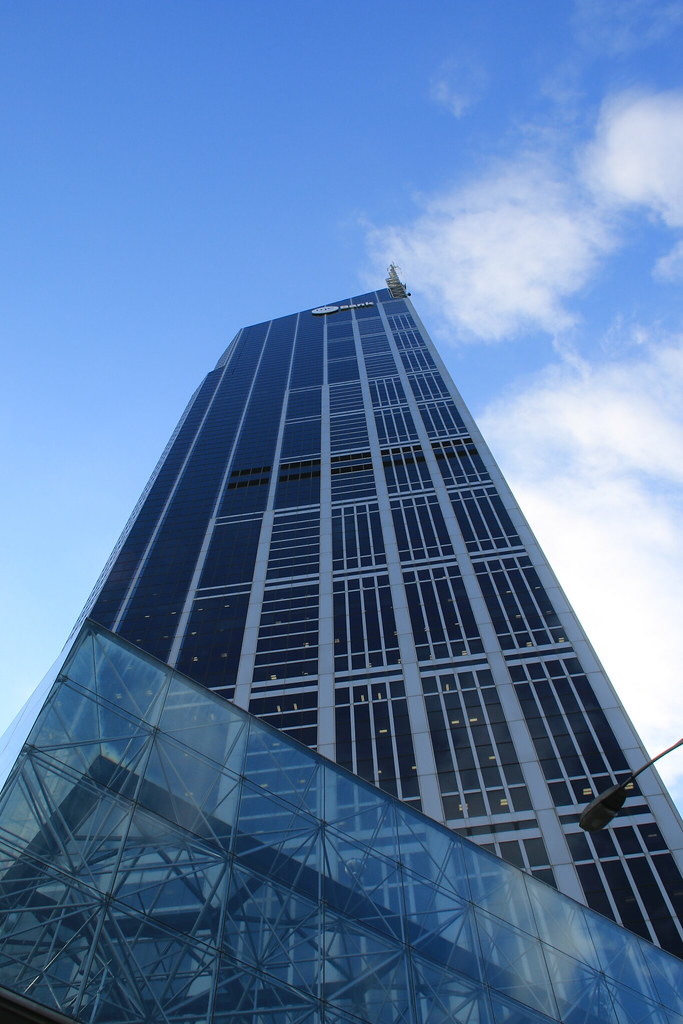
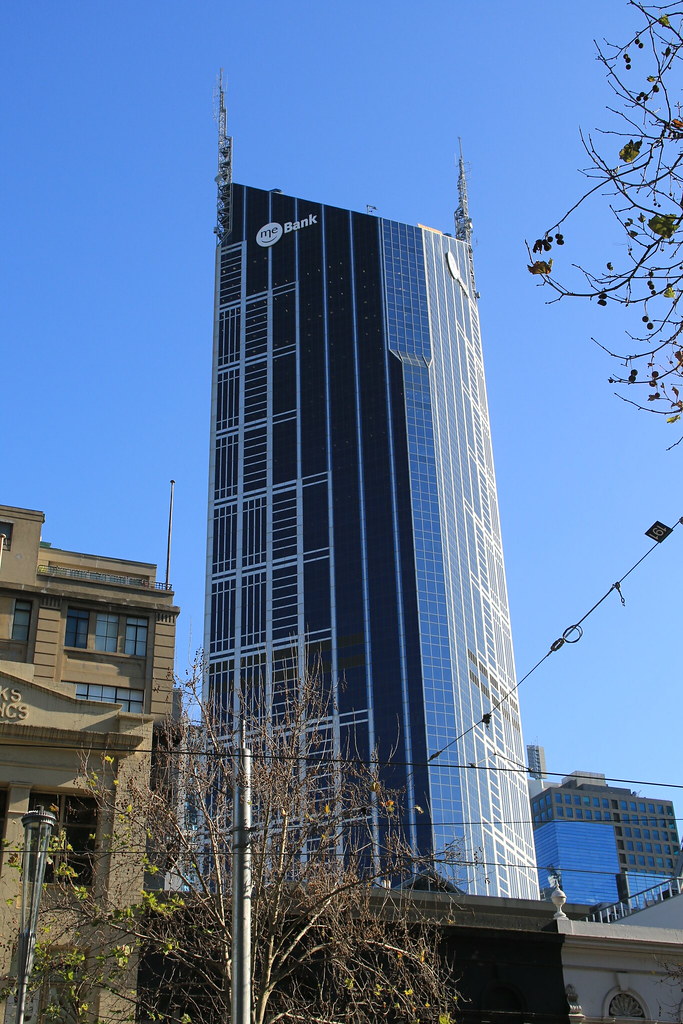
The design of the tower itself is similar to Melbourne Central in Melbourne, which is triangular shaped. Kisho Kurokawa was the architect for the office and retail complex.
![]() |
| The photo was taken by the Author (2005). |
![]() |
| The photo was taken by the Author (2015). |
![]() |
| The photo was taken by the Author (2015). |
Melbourne Central has two antennas, whereas Park Tower would have nil.
Soon afterwards, Sydney (and the rest of Australia) faced the recession that we had to have, which would only delay construction more. The hole would remain empty for even longer.
Previous Schemes
Monday, 22 October 2018
SERIES: The Evolution of the Citigroup Centre - Park Plaza IV(1988)
![]() |
| A render of Park Plaza IV. A citation is featured in the article below. |
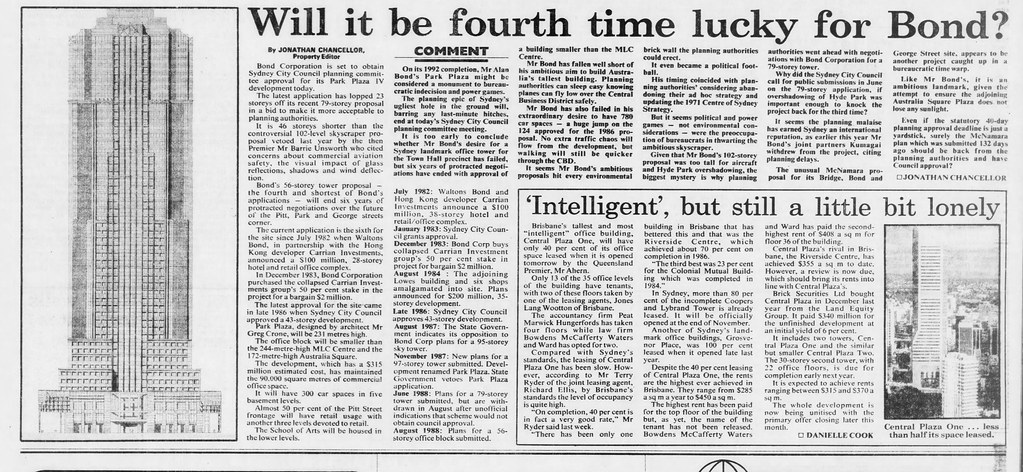
Last week, we looked at another setback for the Bond Corporation in their attempts to build a major tower on the former Waltons Department Store site in Park Street when plans for a 79-level office tower were scrapped, knowing that the plans were not going to be approved.
Source: Chancellor, J. 1988. "Will it be fourth time lucky for Bond?". The Sydney Morning Herald, September 13: 30.
In September, plans were unveiled for a scaled-down 56-level tower, which had similar setbacks to the 79-level scheme. Crone & Associates continued to remain as architects.
It would be the last proposal bought forward by the Bond Corporation. In January 1989, it sold the site to a Japanese Consortium comprising Japanese companies Kumagai Gumi and Sogo (Japanese Department Store chain) for approximately $278 million.
Previous Schemes
Monday, 15 October 2018
SERIES: The Evolution of the Citigroup Centre - Park Plaza (1988)
![]() |
| Bond Corporation's Park Plaza Scheme of 1988. Full citation can be found further down this entry. |
Monday, 8 October 2018
SERIES: The Evolution of the Citigroup Centre - Skytower (1987)
![]() |
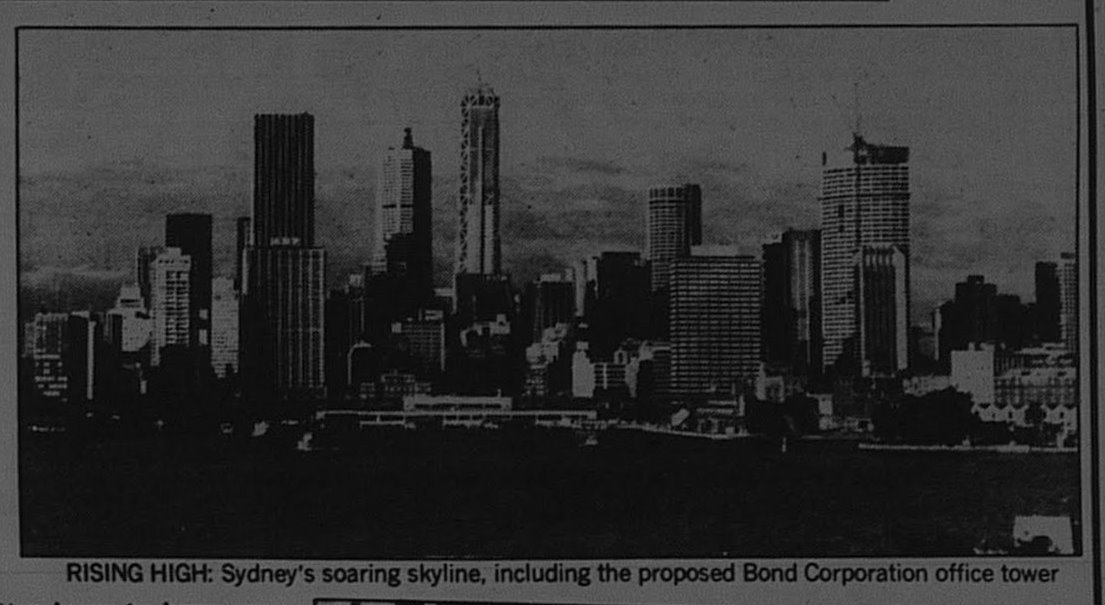
| Above: The Daily Mirror published an artists impression of how Skytower would appear as seen from Kirribilli in October 1987. |
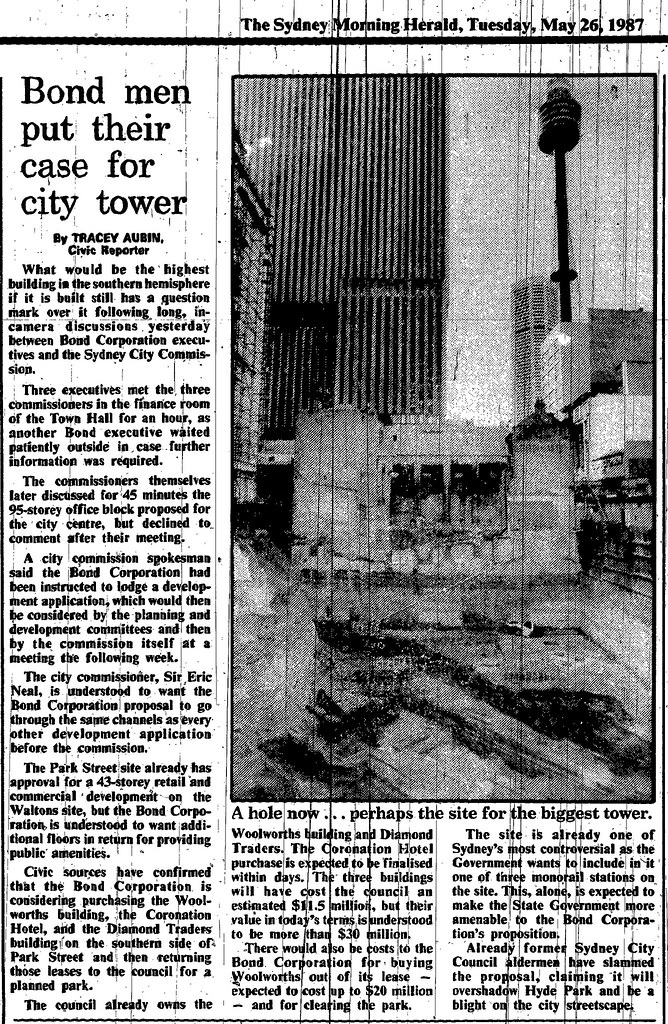
In 1987, Alan Bond continued to pursue the redevelopment of the Waltons Site in Park Street. In February, the Waltons store closed and was demolished ahead of construction.
![]() |
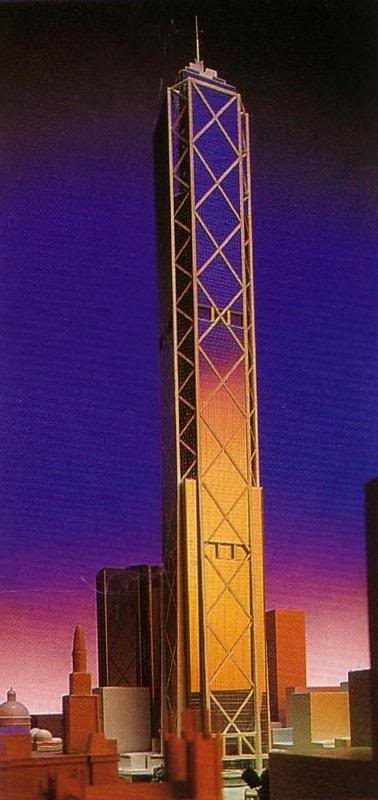
| Above: A colour render of Skytower. This was sourced from the Skyscrapercity Forums but the author and publisher are unknown. |
Source: Aubin, T. 1987. "Bond men put their case for city tower". The Sydney Morning Herald, May 26: 7.
![]() |
| An enlargement of the model above as published on the front page of the June 29, 1987 edition of The Daily Telegraph. |
The Royal Australian Institute of Architects also had their own concerns. President Lawrence Neild questioned the financial viability of the structure given that lift cores would need to take up space on the lower floors. Overshadowing, wind patterns and excess car parking (1000 proposed spaces) were identified as concerns.
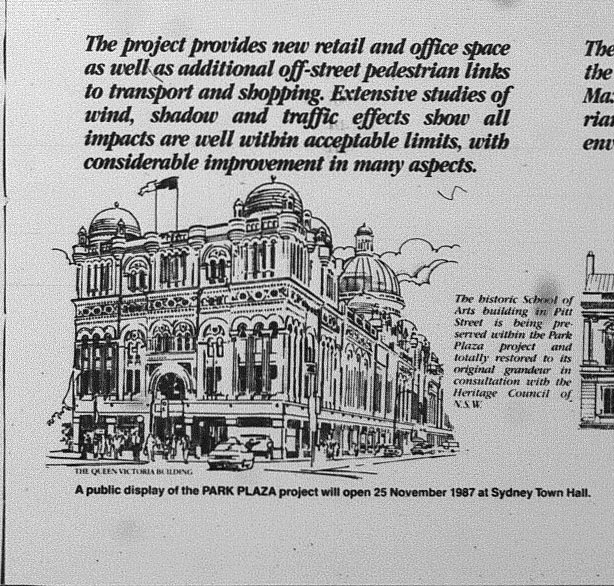
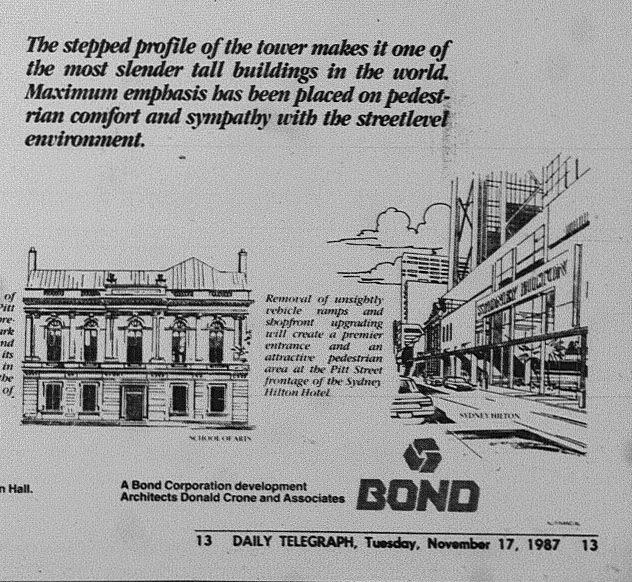
Given the concerns, it was not going to be approved. In fact, it was rejected twice - firstly in August 1987 (95 level scheme) and then November 22 (102 level scheme), just two days prior to the public exhibition of plans. Despite the rejection, Bond Corporation proceeded with the public exhibition to gain public support.
It was reported by The Sydney Morning Herald on December 1 that design revisions would result in a reduction of height by 30 levels.
Therefore, Bond Corporation were sent back to the drawing board.
Next week, we will look at his attempt at a scaled down Park Plaza.
Monday, 1 October 2018
SERIES: The Evolution of the Citigroup Centre - Park Tower (1986)
Last week, I had mentioned of two schemes that followed the initial 1982 scheme that was bought forward by Bond Waltons. One was for a 35 level tower and another for 43 levels. I had no information on those schemes but assumed that they were very similar schemes with additional floors.
Richard Braddish, modelmaker at Sydney City Council contacted me during the week and provided me with an illustration of the 43 level scheme. I do not know who was the publisher was so I cannot provide a proper citation. I thank Richard for his contribution and providing information to assist me with this entry (but also with the upcoming entries).
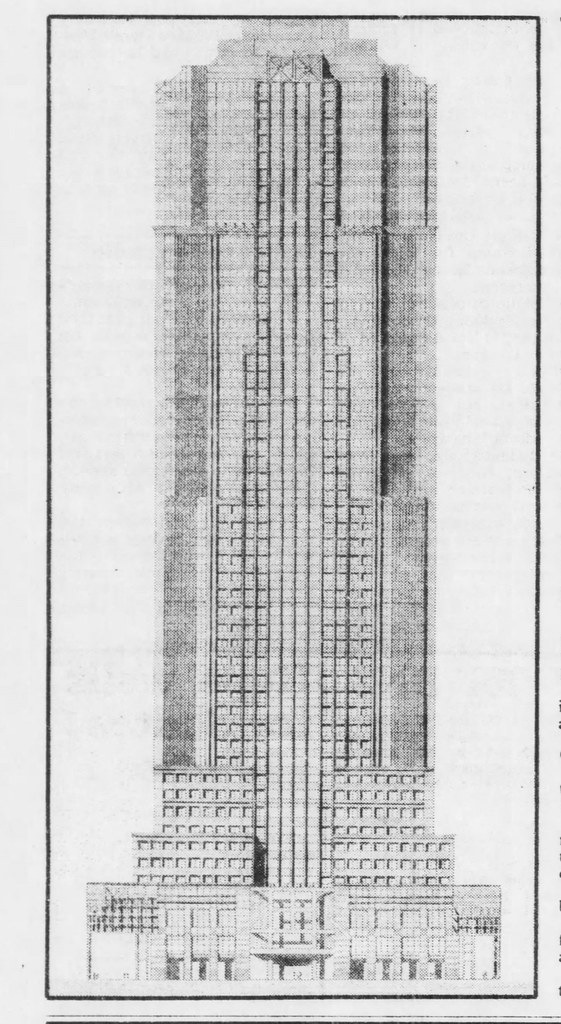
The 43 level scheme is dated from 1986 and was named Park Tower. Like the 1982 scheme, the tower was located towards the south-east corner of the site. The height of the building was 176 metres.
While the entire building has a glass facade, I could some identify some similarities with 108 St Georges Terrace in Perth (Commonly known as the Bankwest Tower) which was under construction at the time for the Bond Corporation. The tower was to be triangular shaped but elements of the tower glass facade were also being embedded.
I am surprised that they went for a flat roof instead of an architectural feature or setbacks. One of the sides faced north-west, which I found odd given that office buildings in Sydney seek to maximise the harbour and ocean views provided by facing towers to face north and east like at the ANZ Tower (2013) which faces northeast to provide maximum exposure to views. It also maximises solar access on each floor.
Next Week, I will finally look at Skytower as Alan Bond sought to reach for the skies and make his mark on Sydney.