Monday, 9 July 2018

1990: Highrise apartment scheme for the Hotel Sans Souci (Mick Moylan's) site - Sans Souci

I have developed an interest of the former Hotel Sans Souci which was owned by Mick Moylan and the former Prince of Wales Hotel.

Karen Pentland wrote The Pub on the Point for the 2013 Ron Rathbone History Prize organised by the former Rockdale City Council. It is recommended and contains some great oral accounts, especially from its final years.

However, I am curious as to what led to its closure and conversion into a residential estate.

My memories of Mick Moylans (as the locals refer) go back to my days as an infant. I attended the Sans Souci Community Pre School (1989-90) which was a short walk up Clareville Avenue at Sandringham.

In the late 1980's Mick Moylan's had opened an outlet of the Billabong Family Bistro's which from my understanding were a national chain of fast casual dining restaurants. This was posted recently (below) to the St George District Memories and Old Shops Australia Facebook Groups. The newspaper advertisement was published in the December 22, 1988 edition of The St George and Sutherland Shire Leader. 
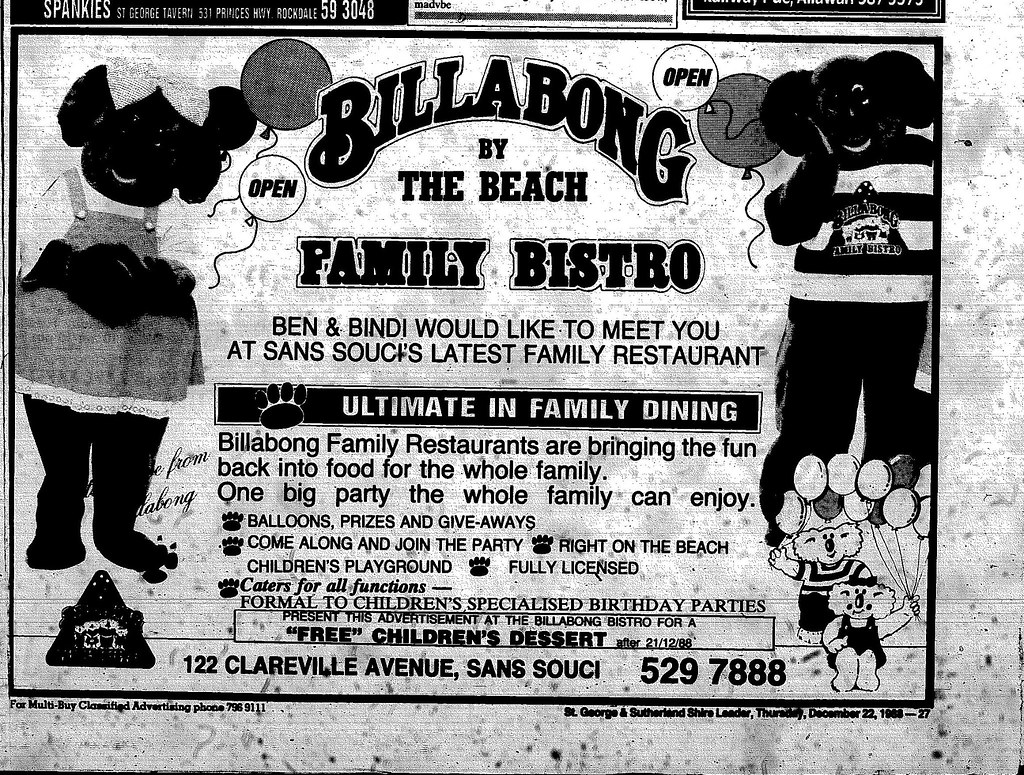
Source: Billabong Family Bistro. 1988. "Untitled" (Advertisement). The St George and Sutherland Shire Leader, December 22: 27. 

I recall going to birthday parties there during my pre school days and even had my sixth birthday there in 1990. Bill & Bindy were dressed in a more professional koala costume than the advertisement shows. My brother also had his sixth birthday there in 1992. I remember going to the beach outside Mick Moylans in January 1993, and recall seeing fences around the site. Mick Moylan's was gone forever; to be replaced with a residential estate.
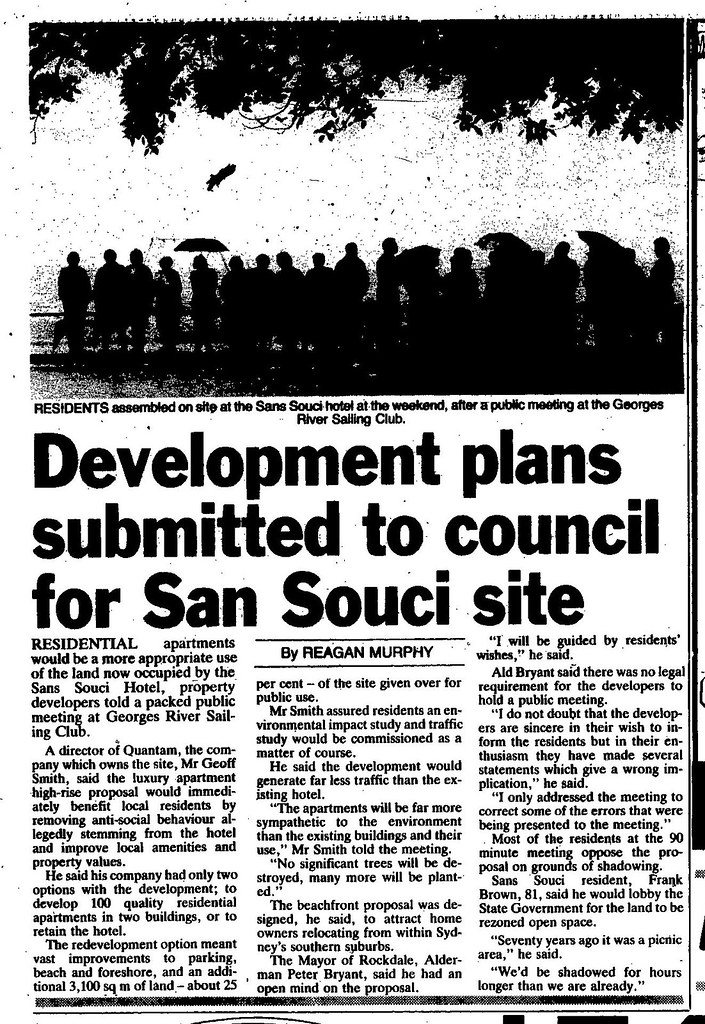

Source: Murphy, R. 1990. "Development plans submitted to council for San [Sans] Souci site". The St George and Sutherland Shire Leader, April 12, 31.

The earliest source that suggested residential development on the site was from 1986 when The St George and Sutherland Shire Leader reported that the owner Laurie Beaumont was exploring options for housing including three storey unit blocks or single homes. Under planning guidelines, Rockdale Council would permit construction of free standing dwellings. However, there would be a loss of parking for beach users and a road would be required for access to the boat ramp.


Source: Anon. 1986. "Homes plan for hotel landmark". The St George and Sutherland Shire Leader, February 6, 11.

In 1990, plans ramped up when proposals for two six level buildings were unveiled to maximise public access. Norfolk pines and the famous Moreton Bay fig trees would be retained. A bistro or restaurant would be also be included. Mick Moylans would still have a presence of some sort on the site.
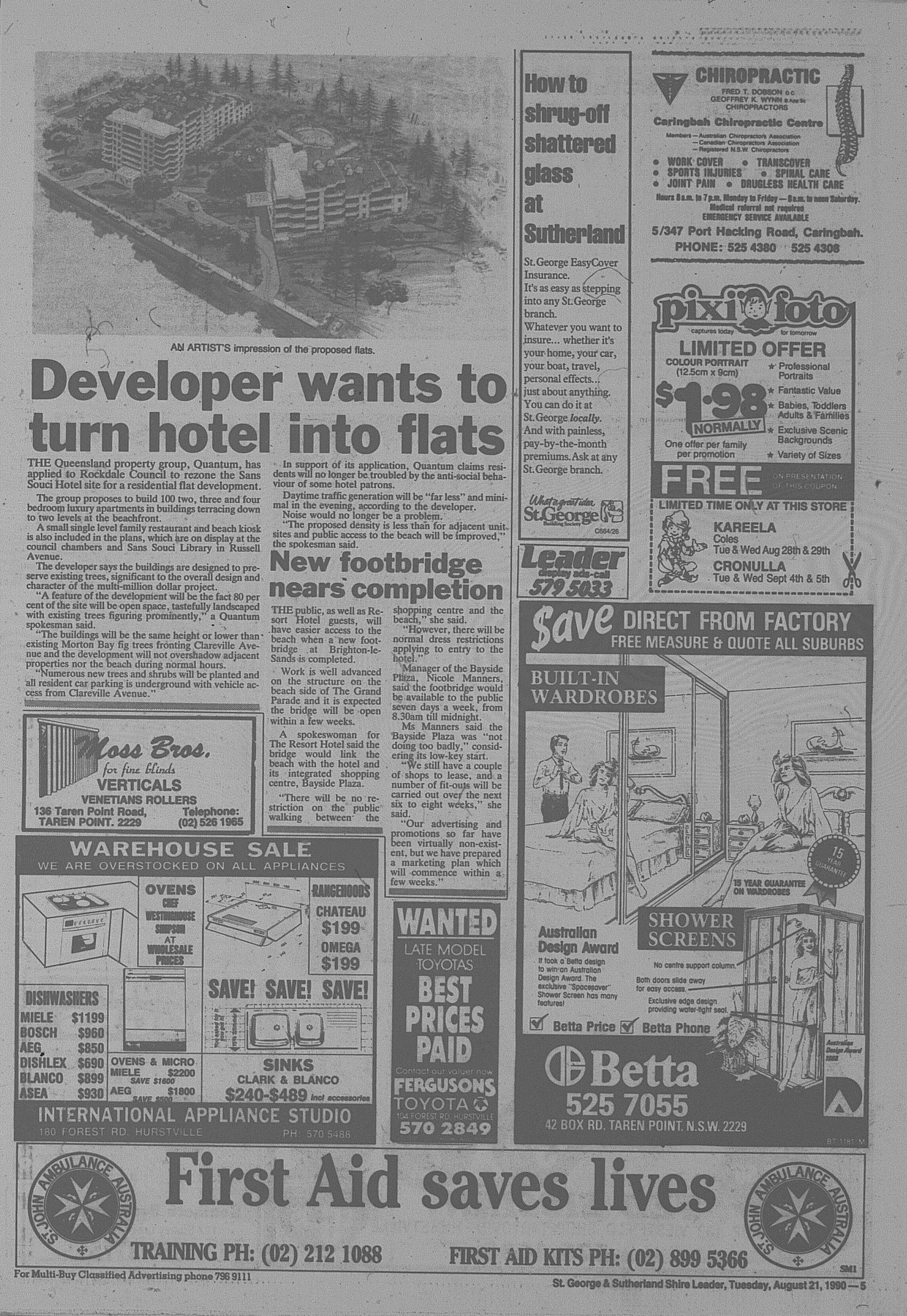


Source: Anon. 1990. "Developer wants to turn hotel into flats". The St George and Sutherland Shire Leader, August 21: 5. 

This plan didn't proceed and Rockdale Council approved the construction of 15 luxury townhouses to form The Sandringham estate. It is a gated development. Public beachfront access was retained with a path running along the beachfront.

The boat ramp was also lost.

I have not yet found further details as to how the scheme was scaled back and why. Neither have I found as to when in 1992 did Mick Moylan's close. Was it even announced?

The What if question comes into mind had the council approved the twin six storey apartment towers?
  • We would still have "Mick Moylans" in some form even if under another name.
  • The Beach Kiosk may have been converted into a cafe going by the conversion of Kiosks at Brighton-Le-Sands and Dolls Point in recent years into cafes. Ramsgate Beach ended up with a restaurant.
  • The Moreton Bay fig would probably still be on the beachfront.
  • The Norfolk pines and Cook Pine that were knocked down may have removed irrespective, whether it was in 1990's or more recent years. 
  • The public would have possibly more access to the beachfront with the boat ramp retained. 
Below are photos of the former Sans Souci Hotel site as seen from Dolls Point (2017). Photos taken by the author. 


Saturday, 7 July 2018

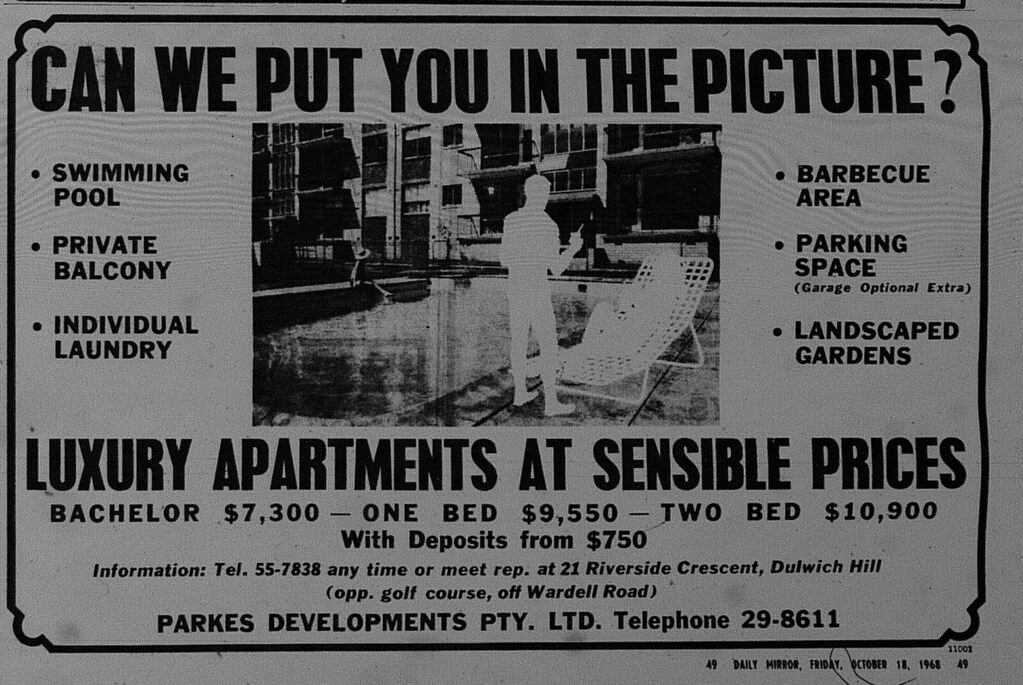
Property Advert of the Week: 21 Riverside Crescent, Marrickville/Dulwich Hill (1968)

In 1968, apartments were for sale at 21 Riverside Crescent in Marrickville (Advertised as Dulwich Hill).


Source: Parkes Developments Pty. Ltd. 1968. "Can We Put You In The Picture?" (Advertisement). The Daily Mirror, October 18: 49.

Monday, 2 July 2018

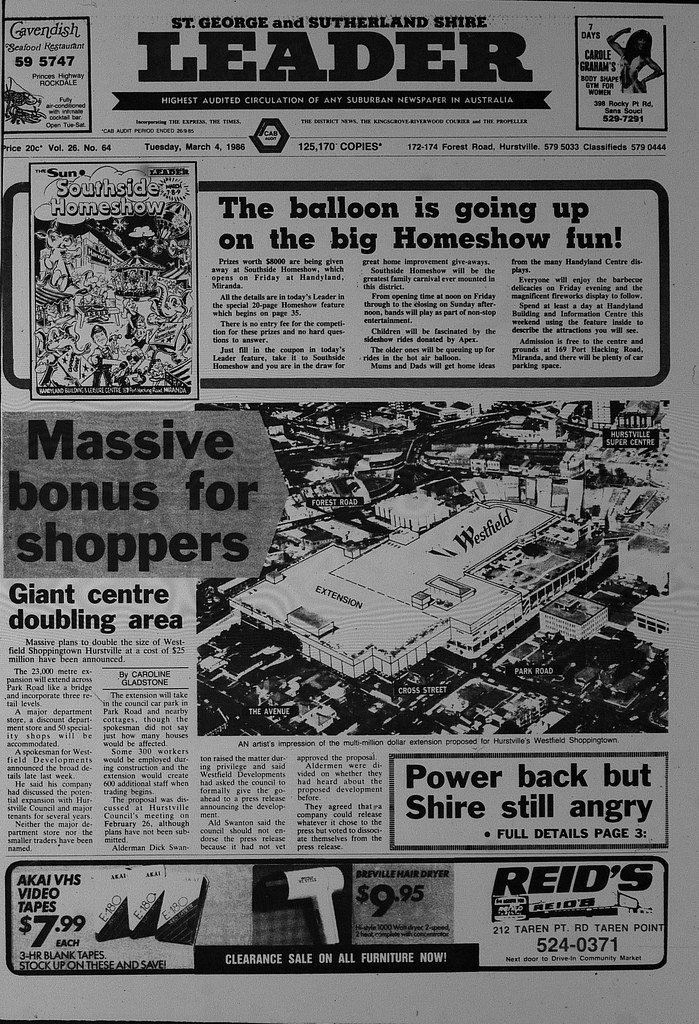
NEVER BUILT SYDNEY: Early concept for the expansion of Westfield Hurstville (1986)

Just eight years after opening in 1978, Westfield were already planning for an expansion of its shopping centre at Hurstville.

An early concept plan would see the centre cross over Park Road; in effect turning the street into a tunnel and would not reach The Avenue as the centre eventually did.

Note that there was no plans for a cinema but were intent on a major department store (secured Grace Bros) and discount department store (secured Kmart).

Snowy Hill Park was to be retained, but was eventually replaced with parking.


Source: Gladstone, C. 1986. "Massive bonus for shoppers: Giant centre doubling area". The St George and Sutherland Shire Leader, March 4: 1. 


Saturday, 30 June 2018

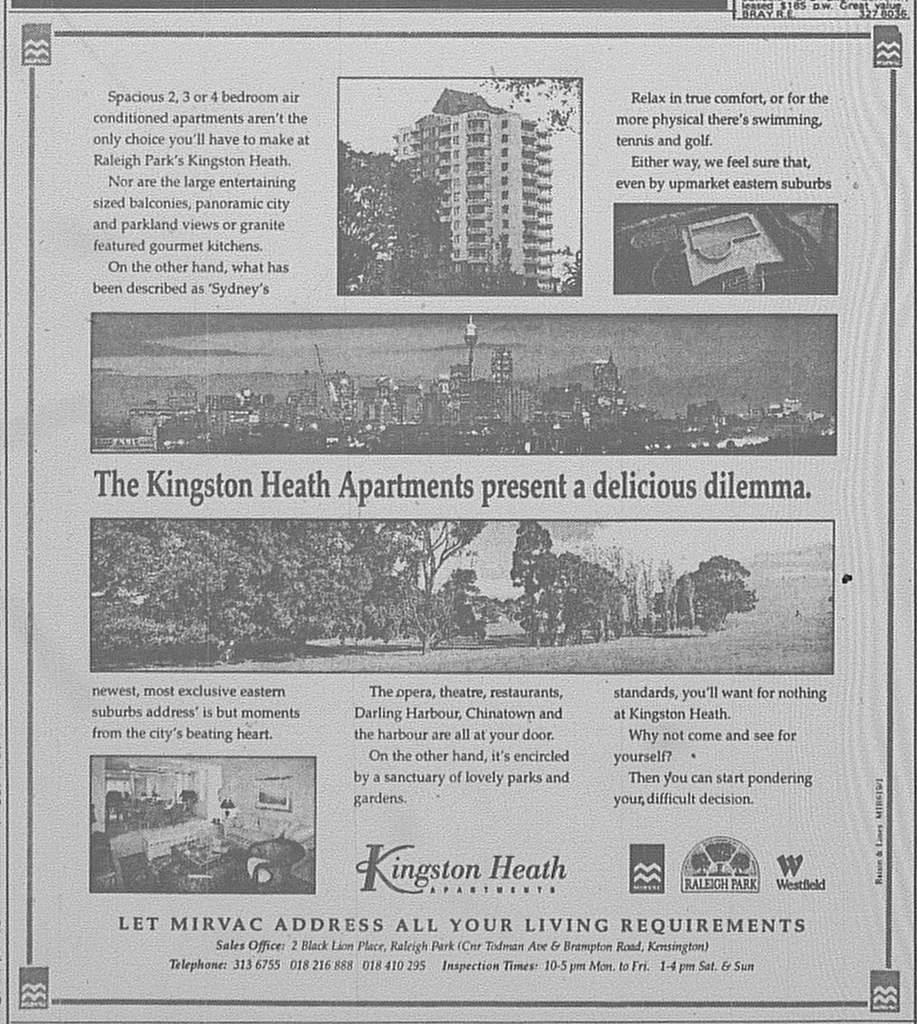
Property Advert of the Week: Kingston Heath (1995)

Below is an advertisement from 1995, promoting apartments in the Kingston Heath tower at Raleigh  Park.


Source: Mirvac. 1995. "Kingston Heath Apartments" (Advertisement). The Sydney Morning Herald, June 24: 87.

Monday, 25 June 2018

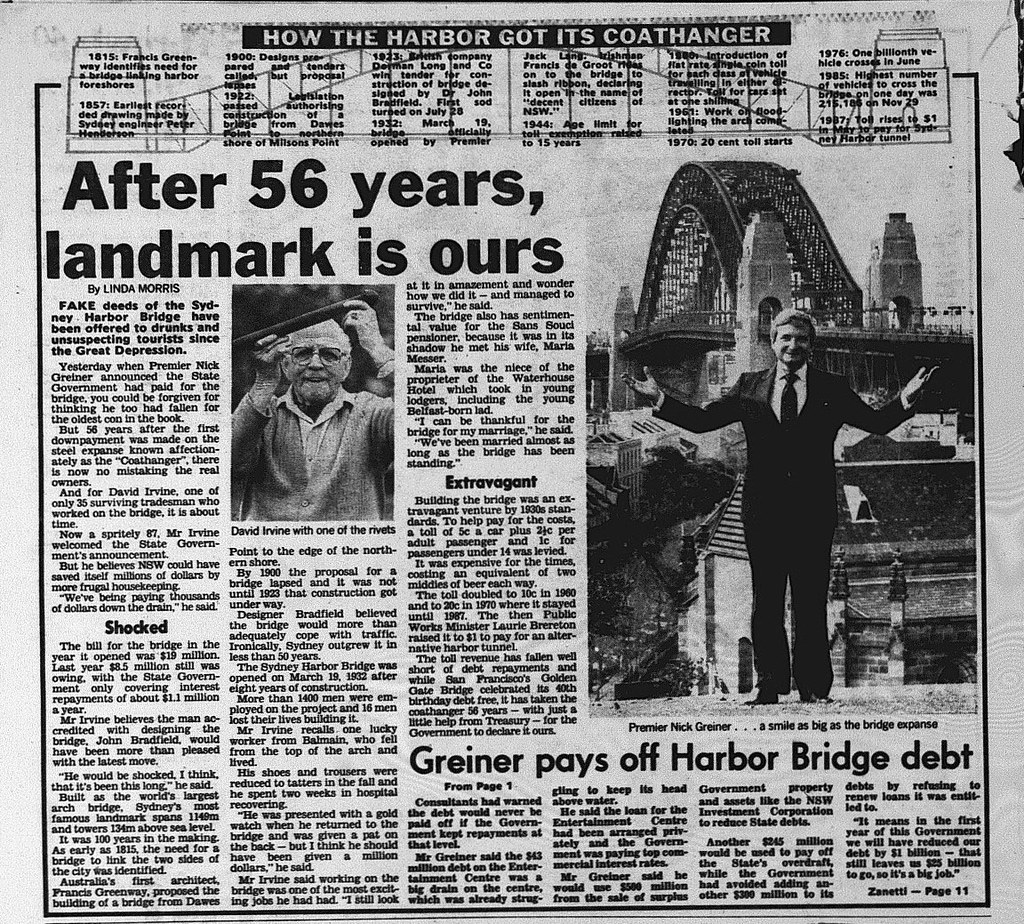
1988: Harbour Bridge debt is finally paid off...but the tolls stayed

After 56 years, the people of NSW finally paid off the cost of building the Sydney Harbour Bridge in 1988. However, the toll was still be levied to pay for the under-construction Sydney Harbour Tunnel.

Fast forward 30 years and the toll revenue is generally used for road projects across NSW. However, there is speculation by some that the current southbound toll ($2.50 to $4 depending on the time of day) could increase.

In Sydney, once a toll goes up on road, its hard to end. Even where it's been abolished (M4), it only has taken a few years for their return.

Below is coverage from the July 25, 1988 edition of The Daily Telegraph.


Saturday, 23 June 2018

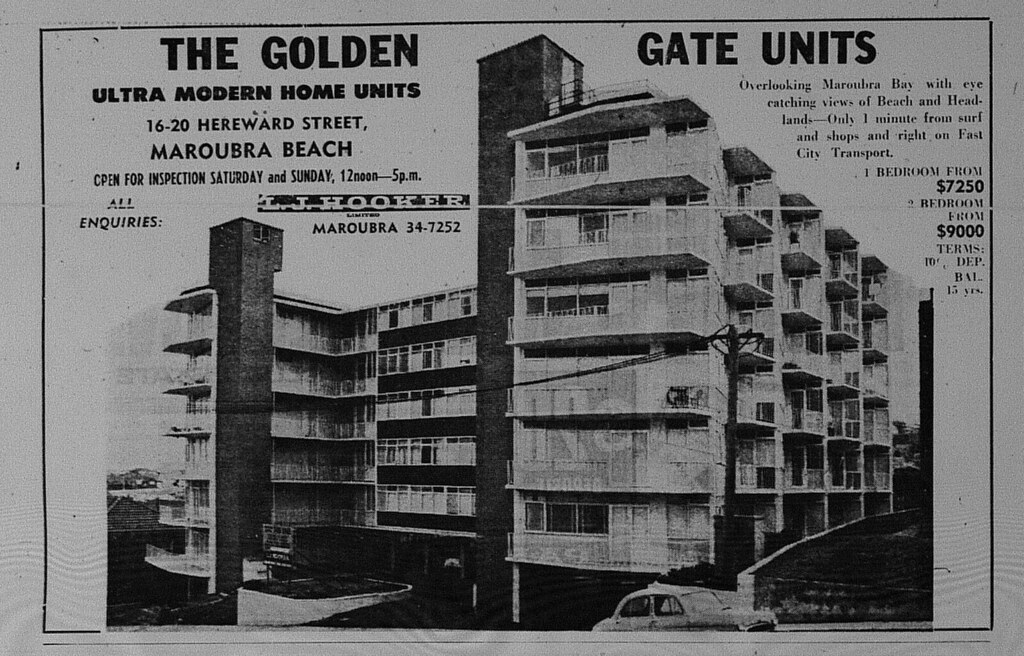
Property Advert of the Week: The Golden Gate Units, Maroubra Beach (1968)

This week, I share an advertisement by L. J. Hooker of Maroubra advertising apartments in the Golden Gate Units in Hereward Street at Maroubra Beach.


Source: L. J. Hooker Maroubra. (1968). "The Golden Gate Units (Advertisement)". The Daily Mirror, October 18: 48. 

Monday, 18 June 2018

1971: The Birth of Thursday Night Shopping

Coverage from The Daily Telegraph on December 11, 1971.

Extended retail trading hours in Sydney have their origins back in 1971, but not in the way one might see it. It was introduced in response to industrial action by Government bus drivers in November and possible industrial action on the rail network. With Christmas nearing, retailers had lost a significant amount of trade.

Above: The industrial action that bought on the changes...
To support retailers, The Askin Government quickly passed legislation to permit retailers to trade through to 9pm on December 16, 23 and 30, 1971.

Sydneysiders voted with their feet to the introduction of night shopping. Traffic in central Sydney was in bedlam on the night of December 16, 1971.


Above: Coverage from the December 17, 1971 edition of The Daily Telegraph. 

In 1972, the Shop Assistants Union called for night trading to be shifted to Fridays. The union wanted an end to Saturday trading altogether. Shop Assistants under the new regime would work five day weeks e.g. 5.5 days one week and 4.5 days on alternate weeks. Some retailers also called for the end of Thursday night trading, claiming that it had led to a drop in profits.

This was despite retailers such as Franklins reporting increased customers and profits i.e. 14 % of weekly trade was now on Thursday night across its supermarkets.

The Sydney Morning Herald supported the shoppers in its editorial on July 15, 1972. It gave Sydneysiders another option to shop at their own pace during a normal week and could avoid the Saturday rush as shops were permitted to trade through to 12pm.

A decade later in 1984, there was an attempt to extend night trading to Friday evenings but was not successful. Meanwhile, Saturday afternoon trading was introduced to great success. I remember as a young child that shops closed at 4pm on Saturdays.

Fast forward to today, where retailers are free to trade as they wish under the Shop Trading Act (2008) [NSW] except on restricted trading days which are:
  • Good Friday
  • Easter Sunday
  • Christmas Day
  • Anzac Day (until 1pm)
In 1992, Coles commenced trading 24 hours during the week at selected stores, though it is no longer in practice with midnight closings. Other supermarket chains followed with extended trading throughout the 1990s.

Other retailers have moved towards longer trading hours in the past decade. Kmart in 2009 commenced 24-hour trading at selected Sydney stores. 

Myer in the Pitt Street mall trades until 7pm most evenings with later trading on Thursdays (9pm) and Fridays (8pm). David Jones also trade similar hours in their city stores. 

The deregulation of trading hours during the week (and weekends) has benefited shoppers in providing flexibility to shop when needed and accommodates the myriad of commitments that one may have during the week.

Related Entries on Retail Trading Hours

1992: Introduction of Sunday Trading
1984: Introduction of Saturday afternoon retail trading

Saturday, 16 June 2018

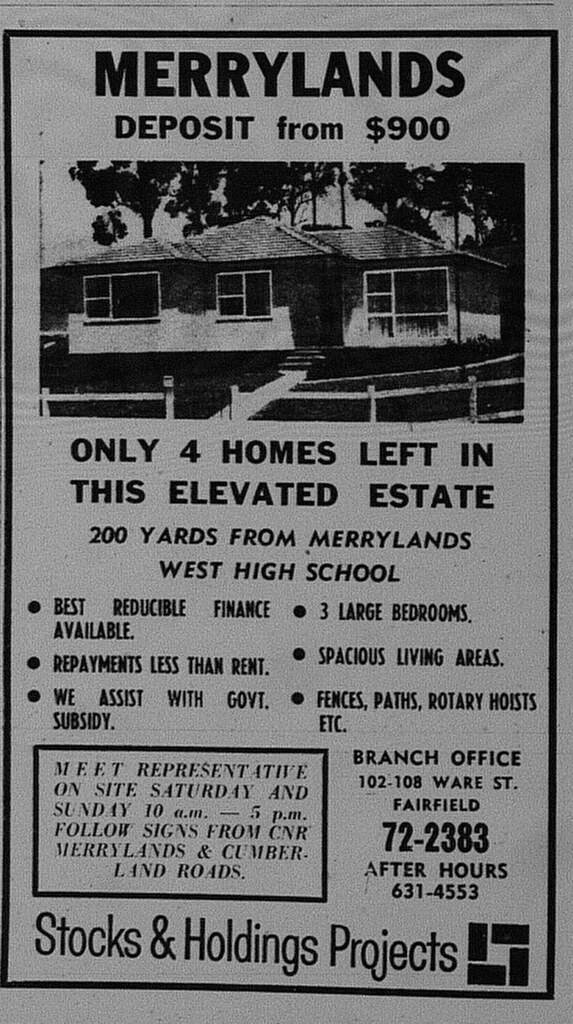
Property Advert of the Week: Merrylands West estate (1968)

Below is a 1968 advertisement from Stocks and Holdings advertising new homes at Merrylands West.


Source: Stocks & Holdings Projects. 1968. "Untitled" (Advertisement). The Daily Mirror, October 18: 68. 

Monday, 11 June 2018

1972: Feature on Transport Oriented Developments at Sydney Train Stations

Here is a 1972 article from The Sydney Morning Herald reporting on Transport Oriented Developments in the airspace above Sydney Train Stations but also developments on railway land.


Source: Anon. 1972.  "Railways in big deal with developers". The Sydney Morning Herald, August 16: 3.

The developments did proceed at Chatswood, North Sydney (built in two phases in the 1970s and 1980s), Kogarah (scaled down from the initial proposal), Redfern (Twin TNT Towers opposite the station) and Yennora.

It was proposed that Liverpool Station would end up with two office buildings but d
id not eventuate.

Saturday, 9 June 2018

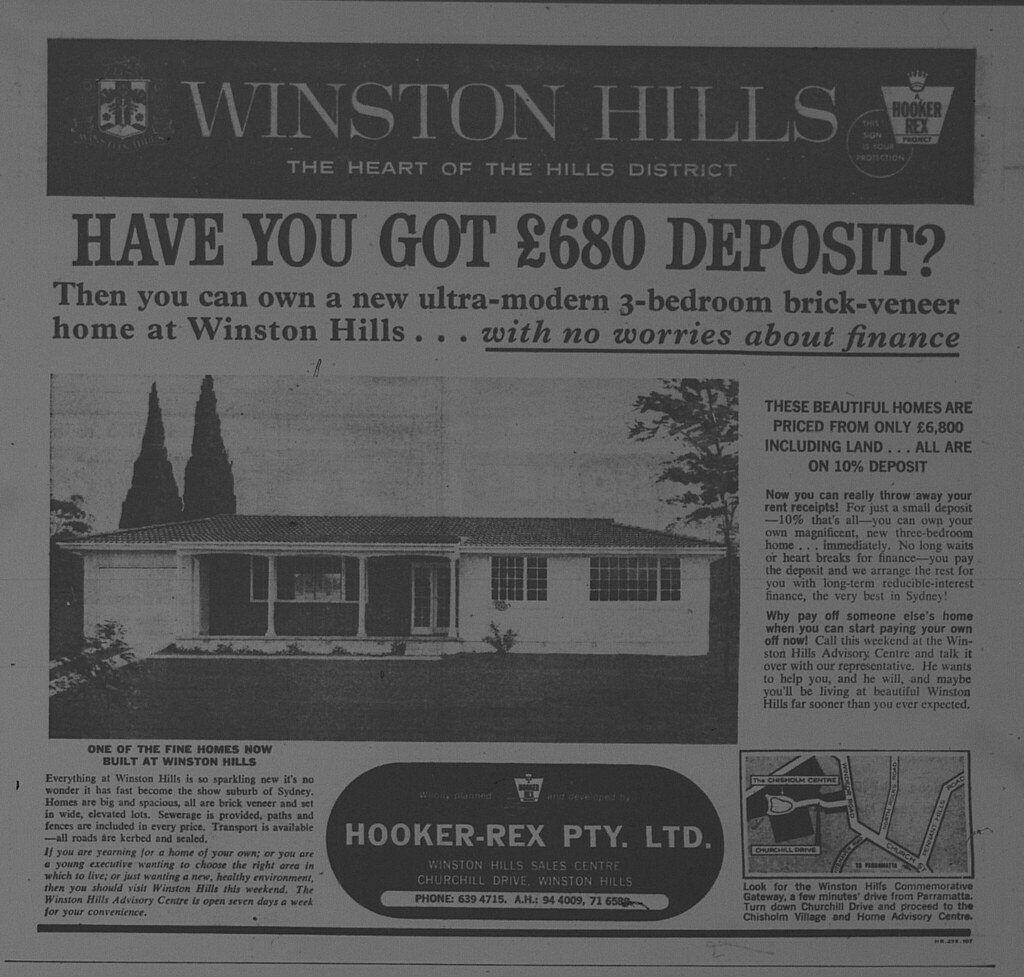
Property Advert of the Week: Hooker-Rex Homes at Winston Hills (1966)

In 1966, one was promised an "ultra modern" home at Winston Hills on a deposit of 680 pounds ($1360). Hooker-Rex were allowed in advertise in pounds as part of the two-year transition phase following the introduction of decimal currency in February 1966.


Source: Hooker-Rex Pty. Ltd. 1966. "Winston Hills" (Advertisement). The Sun, October 7: 66.