Showing posts with label hotels. Show all posts

Monday, 3 August 2026

2001: Top of the Town Restraurant Closes

Before conversion to apartments in 2003, the Top of the Town Motel (Originally Top of the Cross Motel) at Darlinghurst operated between 1966 and 2001. 

It was famous for its restaurant on the 14th floor with expansive views into central Sydney, Sydney Harbour and the eastern suburbs. 

In July 2001, the famous restaurant closed. In its final years (1998-2001), it had evolved into a "Manhattan-style nightspot" and was trading as a restaurant bar. Businesswise, the venue had done well, but the motel itself had fallen victim, like its nearby competitors, to competition from central Sydney CBD hotels and a post-Olympics oversupply of hotel rooms. 

Top of the Town June 10 2001 sunday telegraph 20
Source: McCabe, K. 2001. "Nightspot to close". The Sunday Telegraph, June 10:20. 

Monday, 8 June 2026

VISIONS OF SYDNEY: Bondi of the future exhibition - revisited (1968)

Bondi of the Future Ad November 13 1968 Wentworth Courier 19 enlarged

Sourced from: Grace Bros Bondi Junction. 1968. "See Bondi of the future" (Advertisement). The Wentworth Courier, November 13: 19.

Back in 2014, I posted an entry which would appear under Never Built Sydney, focusing on a 1968 Exhibition at Grace Bros, Bondi Junction, involving University of New South Wales Architecture students displaying their visions for Bondi in the year 2000.

I have posted this entry under Visions of Sydney as it aligns with "never builts" or future visions for redevelopment of suburbs that never proceeded or were early or alternate schemes or in this instance, university students predicting how Bondi may look over thirty years into the future.

Below is a newspaper advertisement from Grace Bros showing one of the proposed schemes. It is the same featured from the article I posted back in 2014, but with Ben Buckler in the foreground. Its familiar midrise unit blocks would not have survived. It would have been completely rebuilt from scratch, incorporating a mixture of residential and tourist development. Having a hotel located there would have utilised not just the views of the beach, but also those of the ocean. If the idea had evolved into a real proposal and then been built, it would likely have been amongst Sydney's most famous hotels, simply for its headland location.

Bondi of the Future Ad November 13 1968 Wentworth Courier 19

Source: Grace Bros Bondi Junction. 1968. "See Bondi of the future" (Advertisement). The Wentworth Courier, November 13: 19.

And there is one feature from The Wentworth Courier (20 November 1968) that either shows another scheme or could be part of the initial scheme. I think the featured model could be one of how Campbell Parade may have been envisioned as looking in the year 2000.If so, much taller, larger buildings were predicted line the strip than in 2000 and 2026, six decades later. 

Bondi of the Future November 20 1968 Wentworth Courier 4 enlarged Bondi of the Future November 20 1968 Wentworth Courier 4

Source. Anonymous. 1968. Untitled. The Wentworth Courier, November 20: 4. 

Related Entry

NEVER BUILT SYDNEY: Bondi of the Future Exhibition (1968)


Monday, 4 May 2026

NEVER BUILT SYDNEY: Regent Hotel - Early Scheme (1978)

In 1978, the NSW Government announced plans to construct what would become the Regent Hotel (now Four Seasons Hotel), one of Sydney's most prestigious and famous hotels. The hotel was opened in 1982 with 531 rooms.

Did you know that the 30-storey hotel had a different design proposal when it was announced? Below is a 1978 article from The Sydney Morning Herald.

Regent Hotel August 23 1978 SMH 10

Source: Anonymous. 1978. "$40m luxury hotel planned for Quay". The Sydney Morning Herald, August 23: 10. 

Monday, 9 March 2026

1973: Boulevard Hotel Opening

The Boulevard Hotel on William Street was opened in 1973. At the time of opening, it was one of the leading hotels to stay in Sydney, despite being on the fringe of the Sydney CBD. At the time of opening, it had a five-star rating and, for years, attracted celebrities and "A"- listers in search of a Sydney abode. 

Famous guests who have stayed at the hotel include Frank Sinatra, Muhammad Ali, Sammy Davis Jr., and John Wayne. 

Below is a newspaper advertisement from the time of opening in 1973. It was reported to have opened in late April, but I could not find any items confirming a fixed opening date.

Boulevard Hotel Opening Ad June 27 1973 Wentworth Courier 25

Source: The Boulevard Hotel. 1973. "The Boulevard. Sydney's new international hotel" (Advertisement). The Wentworth Courier, June 27: 25.

The Boulevard Hotel, five decades later, is no longer a five-star hotel and is currently a four-star hotel, managed by ACCOR. The swimming pool, once available to guests, has since been removed, and Level 25 has been converted to a function room.


Monday, 15 May 2023

NEVER BUILT SYDNEY: 1 Oxford Street Hotel (1970)

1 Oxford Street is a 27-level office tower, completed in 1982 that occupies the corner of Oxford Street and Wentworth Avenue.

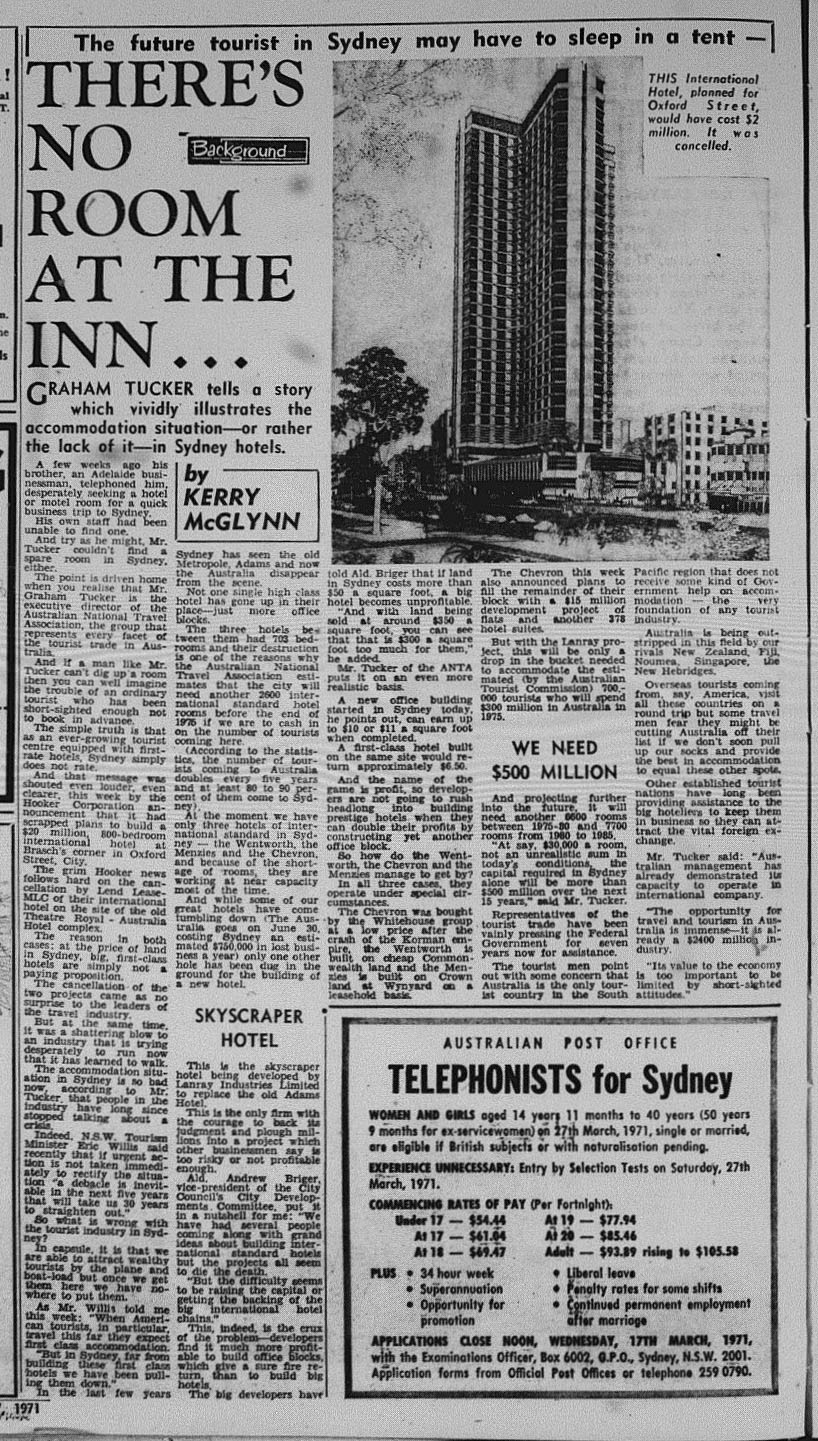
Did you know that early plans for the site called for a hotel tower instead of an office tower? Below is a proposal from 1970.

1 Oxford Street Tower January 7 1970 daily mirror 3

Source: Anon. 1970. "Australia in the 70s: Room for 1100 in a space age hotel". The Daily Mirror, January 7: 3. 

The tower was similar in height with 29 stories rising to around 350 feet (106 metres). The rooms would accommodate a total of 800 guests and also included a convention centre with a capacity of 1100 people along with a rooftop restaurant. The developer Hooker Projects would oversee planning and construction and hoped to sell the tower to a hotelier. In March 1971, Hooker Corporation announced that the hotel would not proceed likely due to financial returns and the price paid for land in Sydney. Its axing was despite increased demand for luxury international hotels in Sydney associated with increased demand for jet air travel.

1 Oxford Street March 7 1971 sunday telegraph 40

Source: McGlynn, K. 1971. "There's no room at the inn...". The Sunday Telegraph, March 7: 40.

Monday, 1 May 2023

NEVER BUILT SYDNEY: Hoyts Cinema Centre Tower (1969)

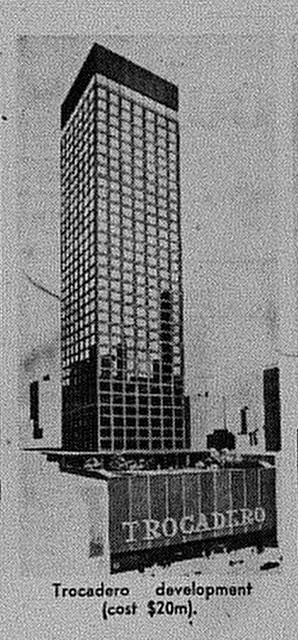
Trocadero - Sydney buildings July 21 1969 SMH Australia Unlimited 33

Sourced from: Anon. 1969. " Up, Up and away is a theme song". The Sydney Morning Herald Australia Unlimited Supplement 1969, July 21: 33. 

Did you know that early plans for the Hoyts Cinema Centre (now incorporated into Event Cinemas) in George Street had plans for a highrise tower rising above it?

Sydney City Council approved plans in 1969 for a 44-level hotel tower to rise on the site of the Trocadero. In the podium, a five-screen cinema complex would be built as part of the development. 

Trocadero June 8 1969 daily telegraph 9

Source: Anon. 1969. "Five-Cinema Skyscraper for Trocadero Site". The Daily Telegraph, June 8: 9.

The Trocadero was closed in 1971. Next week, I will look at a second proposal for the site. 


Monday, 2 January 2023

Remember This? Hotel Metropole Advertisement (1968)

Remember This? has returned for the annual summer run, where I share material that would not normally be suited to our regular weekly postings and an opportunity to share interesting finds that I encounter.

This week I share a 1968 newspaper advertisement for the Hotel Metropole, which was located on the current site of the Governor Macquarie Tower (facing Young, Bent and Phillip Streets). The hotel traded between 1890 and 1970 when it was demolished for CAGA House, a thirty-storey office tower which itself was demolished in 1992 for the Governor Macquarie Tower.

Rooms were available for as little as $6 per night, but a standard room cost around $12.50 per night. According to the RBA Inflation Calculator, $6 equated to around $78.30 in today's money, which is still cheap by Sydney standards for a hotel room if you were seeking a room on a low budget. For a double or twin room, it was equivalent to around $163 a night. 

Hotel Metropole Ad June 4 1968 daily telegraph 5

Source: Hotel Metropole. 1968. "Hotel Metropole" (Advertisement). The Daily Telegraph, June 4: 5. 

Monday, 30 May 2022

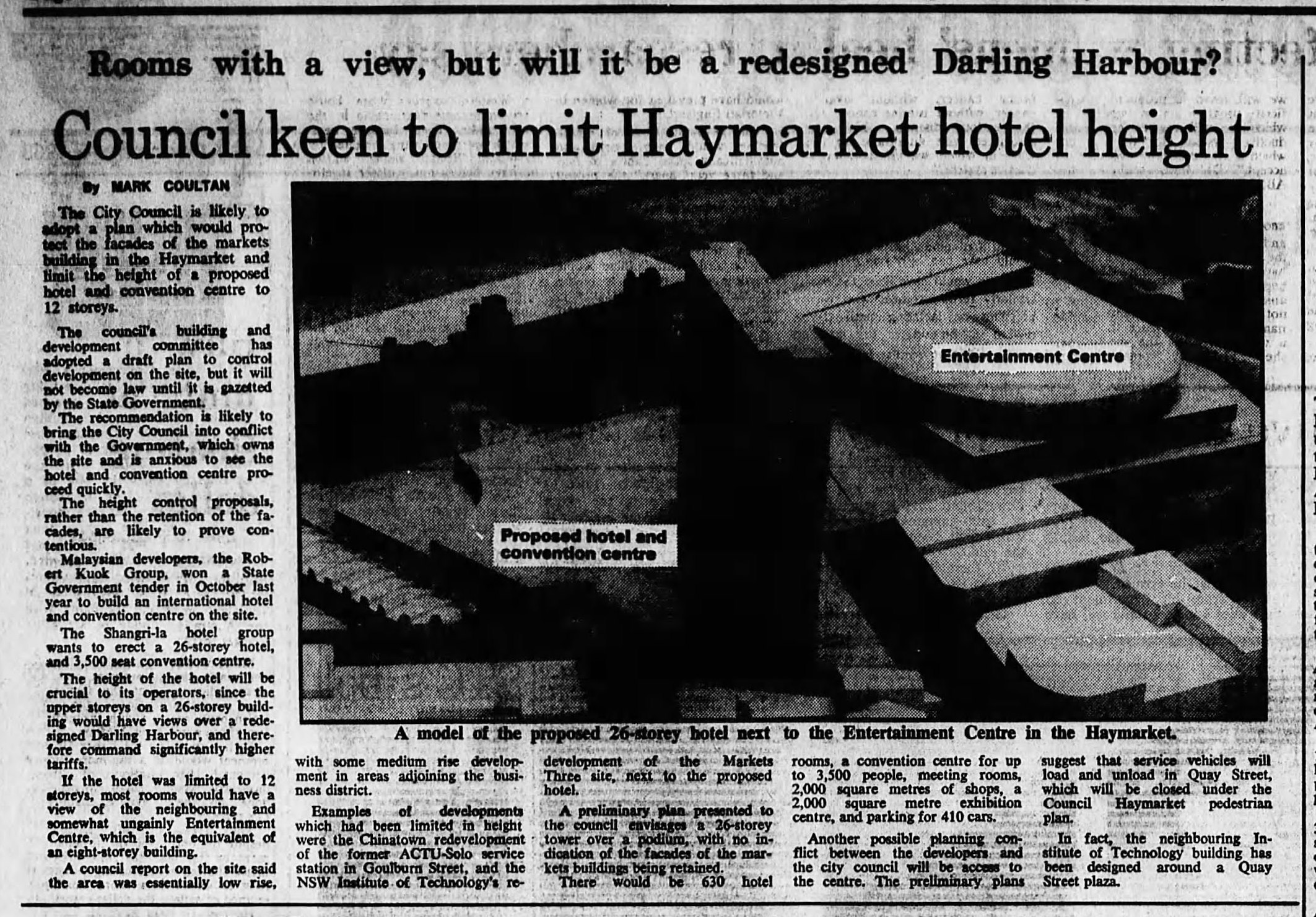
NEVER BUILT SYDNEY: Shangri-La Hotel, Haymarket (1983)

In 1982, plans were unveiled to build a 26 level hotel and convention centre atop what is presently Paddys Markets at Haymarket. It would be managed by the Shangri-La Hotel Group. Sydney City Council were keen to have it cut to twelve storeys. 

It was planned with the impending redevelopment of Darling Harbour but also to take advantage of being at the door of the newly completed Sydney Entertainment Centre. 

Haymarket Hotel Proposal December 5 1983 SMH 2

Source: Coultan, M. 1983. "Council keen to limit Haymarket hotel height". The Sydney Morning Herald, December 5: 2. 


Monday, 18 October 2021

1965: How the Wentworth Hotel got its name

Wentworth Hotel August 26 1965 SMH 14

Source: Anon. 1965. "New hotel is Wentworth". The Sydney Morning Herald, August 26:14. 

The Wentworth Hotel in Phillip Street is one of Sydney's most prestige hotels and has been operating since 1965. Originally developed by Qantas, the hotel is currently part of the Sofitel group of hotels. 

I found an article from The Sydney Morning Herald that was published on August 26, 1965 that explains how the hotel got its name. 

The public were asked to provide submissions - Qantas Hotel was suggested, but was dismissed as Qantas would not own the hotel. Matilda and Waltzing Matilda were also other names suggested. 

In the end it was named the Wentworth Hotel for the following reasons:

  • Continue the name and tradition of the original Wentworth Hotel in George Street which Qantas was due to close and demolish for the Qantas Centre (Suncorp Centre).
  • Tribute to William Charles Wentworth who has been recognised as the founder of constitutional government in NSW.

Monday, 26 April 2021

NEVER BUILT: Northbourne Central (1987)

Full Citation below.

In 1987, a development application was lodged with Sydney City Council for the Northbourne Central Development. It comprised of a 60 level office block on the site of the Sydney Harbour Marriott Hotel. This would have included 26 levels of hotel space with up to 400 rooms and a separate 10 storey office tower.


Source: Pelly, M. 1987. "Quay hotel plan to earn $3m per year".  The Daily Telegraph, March 12: 5.

The development was slated to have cost $1 billion to build or $2 billion in todays money to build. 

In July, the development application was rejected by Sydney City Council. Concerns were raised over the height of tower, shadowing of Macquarie Place, excess parking, traffic and wind.

Source: Anon. 1987. "Council report rejects $1bn Quay project". The Daily Telegraph, July 28: 16. 

The plan was an upsized version of the proposed Ramada Hotel Tower which was lodged in 1984.


Source: Glascott, J. 1984. "Diamonds on the skyline". The Sydney Morning Herald, May 22: 2. 

Ultimately the Ramada Hotel Tower (the original proposal) proceeded and was completed in 1988.


Monday, 1 March 2021

1988: Hotel Intercontinental Sydney & Protecting View Corridors

Hotel InterContinental Sydney. Photo taken by the Author (2020).

The Hotel InterContinental Sydney is one of the best hotels to stay with a five star rating. It has been open since 1984 and was built on the site of the former Treasury Building, which was incorporated into the hotel.

In 1988, its owner - English Tycoon and owner of the hotel Lord Alistair McAlpine purchased the adjoining Transport House (1938) for $69 million dollars, outbidding Sid Londish and a Japanese consortium.

He bought the building because he was worried that a future development of the site would block the views of the Opera House and Sydney Harbour which allowed the hotel to charge a premium for its a visitors. This was his justification for the price. Londish only bid $45 million. 

Transport House as viewed from Phillip Street. Photo taken by the Author (2021).

His vision was to incorporate Transport House into the InterContinental Hotel. Today, it is still owned by the hotel but provides office space. It has been listed by the NSW Government on the State Heritage Register. In 2019, there was a proposal to build a ballroom atop the building, but Sydney City Council raised heritage and visual concerns.

Looking back at McAlpine's decision, it has proven to be a wise decision. Apart from rental on the office space in Transport House and the ability to extend the hotel onto the site, the hotel has never had to worry about the loss of harbour views. It has allowed for the hotel to continue to charge a premium and remain as one of the leading hotels for visitors to Sydney. Imagine the loss of income from rooms had he not bought the building, and the impact would be more than $69 million in the long term.

And also it saved another old building from potential demolition.


Source: LaHarnar, N. 1988. "Lording It Over The $69m View". The Daily Mirror, November 30: 5. 

Monday, 9 March 2020

NEVER BUILT SYDNEY: Club Med proposal for the Malabar Headland (1988)

Below is a "never built" proposal by Club Med to build a resort on the Malabar Headland encompassing the site of the ANZAC Rifle Range.


Source: Benns, M. 1988. "Club Med lines up a rifle range...and shooters raise a stink". The Daily Telegraph, April 8: 5. 

Development of the Malabar Headland has arisen from time to time. In 2015, rumours circulated that part of the headland would be redeveloped into housing.

Monday, 10 February 2020

1968: Highrise Swimming pools

Below is an article published in The Sun Herald on July 7 1968 on the construction of swimming pools in highrise buildings in Sydney.


Source: Anon. 1968. "Floating on top of skyscraper". The Sun Herald, July 7: 98. 

Park Regis which completed that year would house the highest swimming pool in Australia - 45 levels above ground.

Towards Circular Quay, the Travelodge Hotel at the corner of York and Margaret Streets' was building its own pool - 28 levels above the ground.

More than fifty years later, its standard for highrise hotel and apartment blocks to have a swimming pool on offer to its occupants. Some will offer views while others don't as they are located on the lower levels of the building.

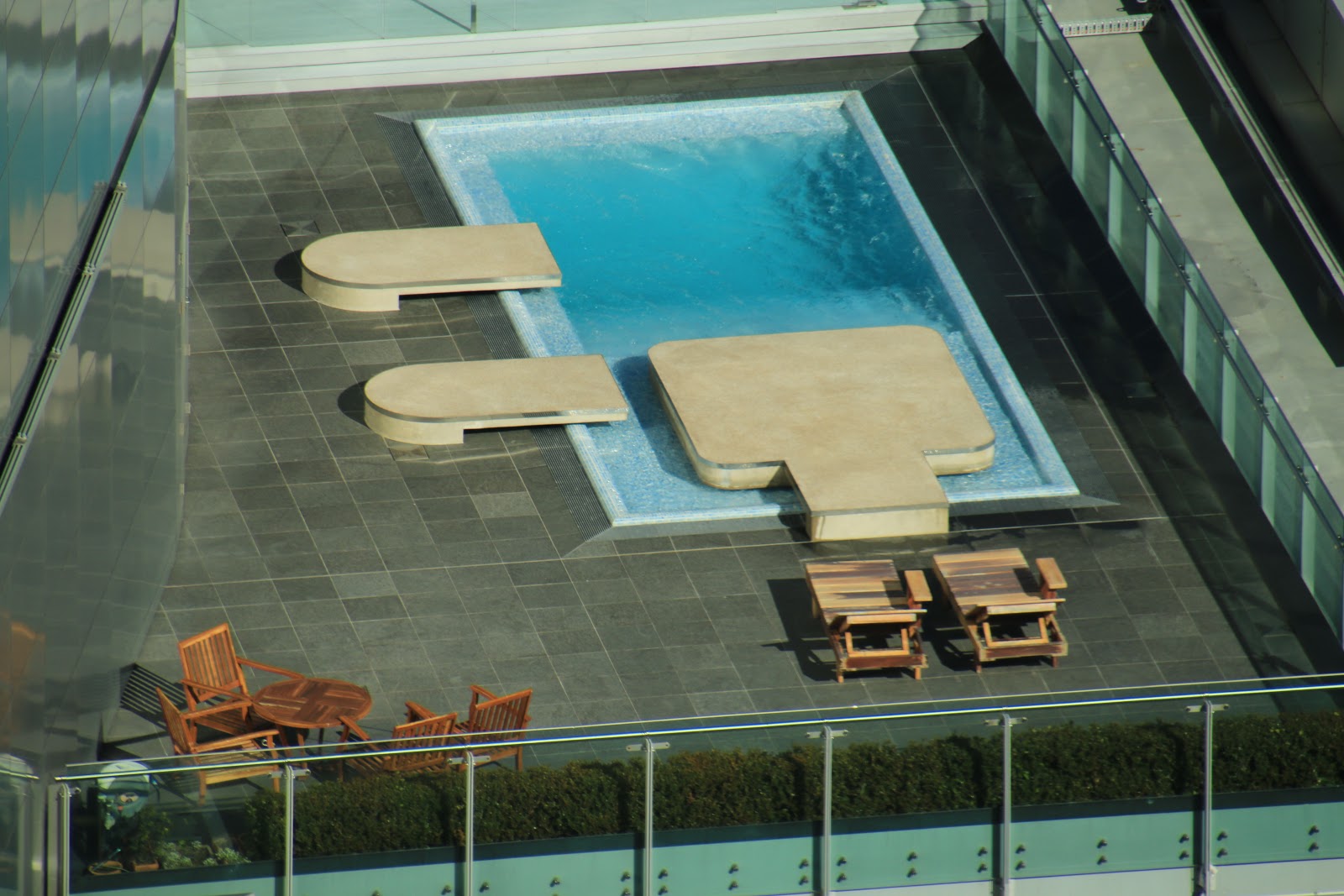
Currently, the highest rooftop pool in Sydney is not the Park Regis, but the pool located in the penthouse atop the ANZ Centre in Pitt Street, completed in 2013.

The swimming pool atop the ANZ Centre as viewed from Sydney Tower. Photo taken by the author (2018). 
Today, the highest indoor swimming pool in Sydney is located on level 61 of World Tower, but they do have pools on two separate floors to cater for those residing in the lower sections of the tower.

The swimming pool and spa on level 61 of World Tower. Photo taken by the author (2004). 

Monday, 9 July 2018

1990: Highrise apartment scheme for the Hotel Sans Souci (Mick Moylan's) site - Sans Souci

I have developed an interest of the former Hotel Sans Souci which was owned by Mick Moylan and the former Prince of Wales Hotel.

Karen Pentland wrote The Pub on the Point for the 2013 Ron Rathbone History Prize organised by the former Rockdale City Council. It is recommended and contains some great oral accounts, especially from its final years.

However, I am curious as to what led to its closure and conversion into a residential estate.

My memories of Mick Moylans (as the locals refer) go back to my days as an infant. I attended the Sans Souci Community Pre School (1989-90) which was a short walk up Clareville Avenue at Sandringham.

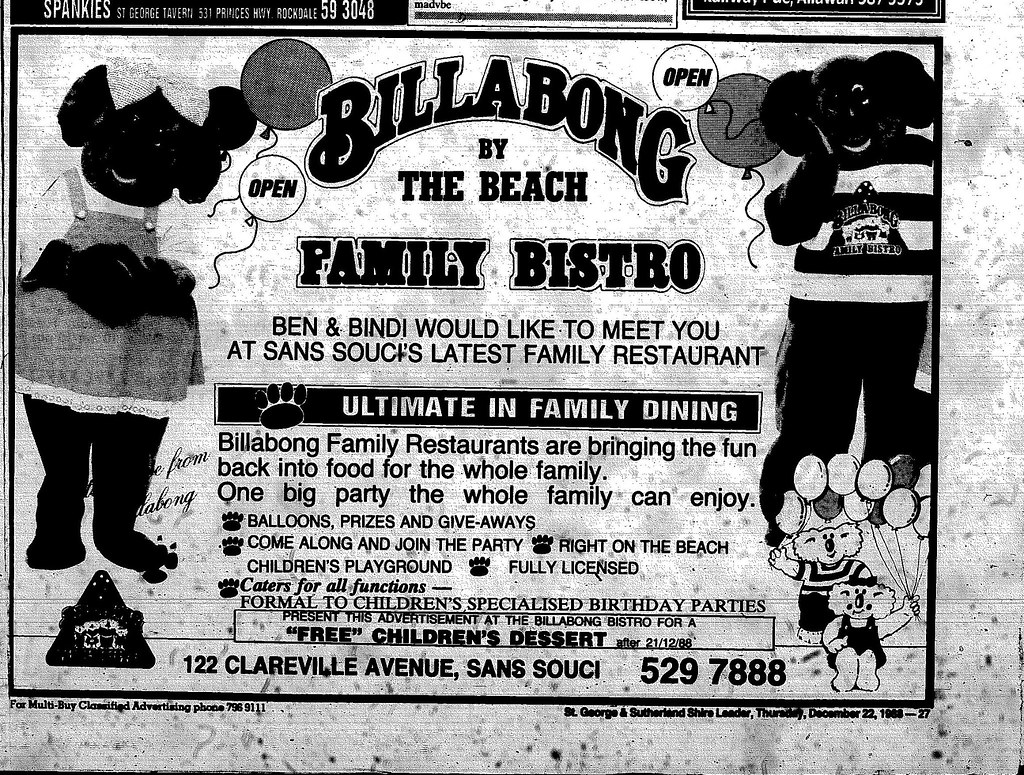
In the late 1980's Mick Moylan's had opened an outlet of the Billabong Family Bistro's which from my understanding were a national chain of fast casual dining restaurants. This was posted recently (below) to the St George District Memories and Old Shops Australia Facebook Groups. The newspaper advertisement was published in the December 22, 1988 edition of The St George and Sutherland Shire Leader. 

Source: Billabong Family Bistro. 1988. "Untitled" (Advertisement). The St George and Sutherland Shire Leader, December 22: 27. 

I recall going to birthday parties there during my pre school days and even had my sixth birthday there in 1990. Bill & Bindy were dressed in a more professional koala costume than the advertisement shows. My brother also had his sixth birthday there in 1992. I remember going to the beach outside Mick Moylans in January 1993, and recall seeing fences around the site. Mick Moylan's was gone forever; to be replaced with a residential estate.


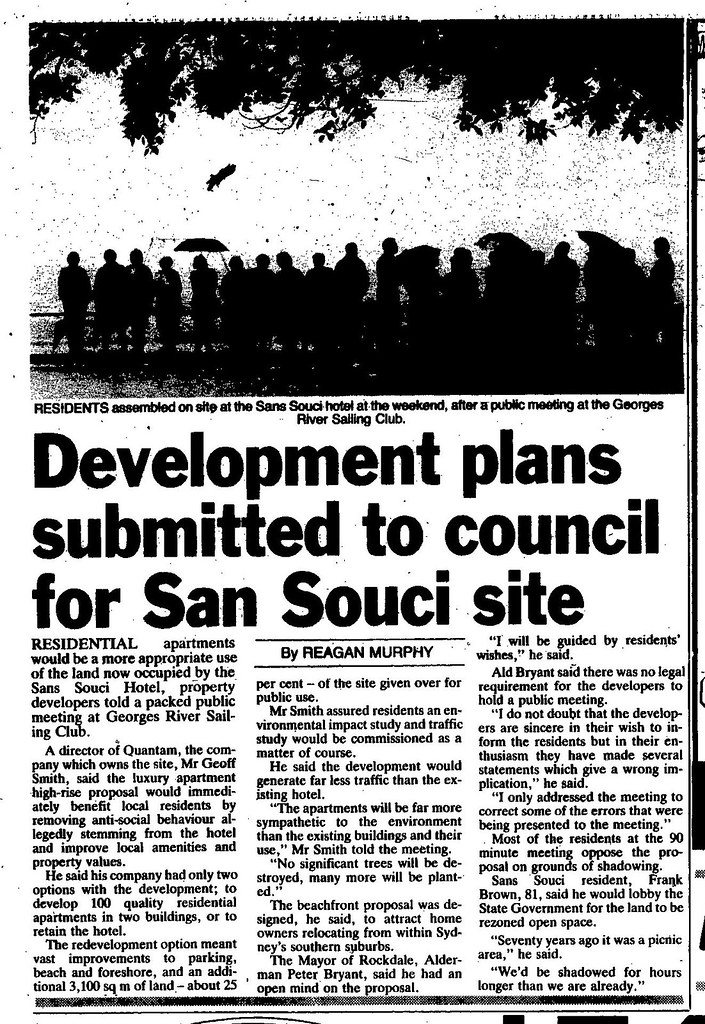
Source: Murphy, R. 1990. "Development plans submitted to council for San [Sans] Souci site". The St George and Sutherland Shire Leader, April 12, 31.

The earliest source that suggested residential development on the site was from 1986 when The St George and Sutherland Shire Leader reported that the owner Laurie Beaumont was exploring options for housing including three storey unit blocks or single homes. Under planning guidelines, Rockdale Council would permit construction of free standing dwellings. However, there would be a loss of parking for beach users and a road would be required for access to the boat ramp.


Source: Anon. 1986. "Homes plan for hotel landmark". The St George and Sutherland Shire Leader, February 6, 11.

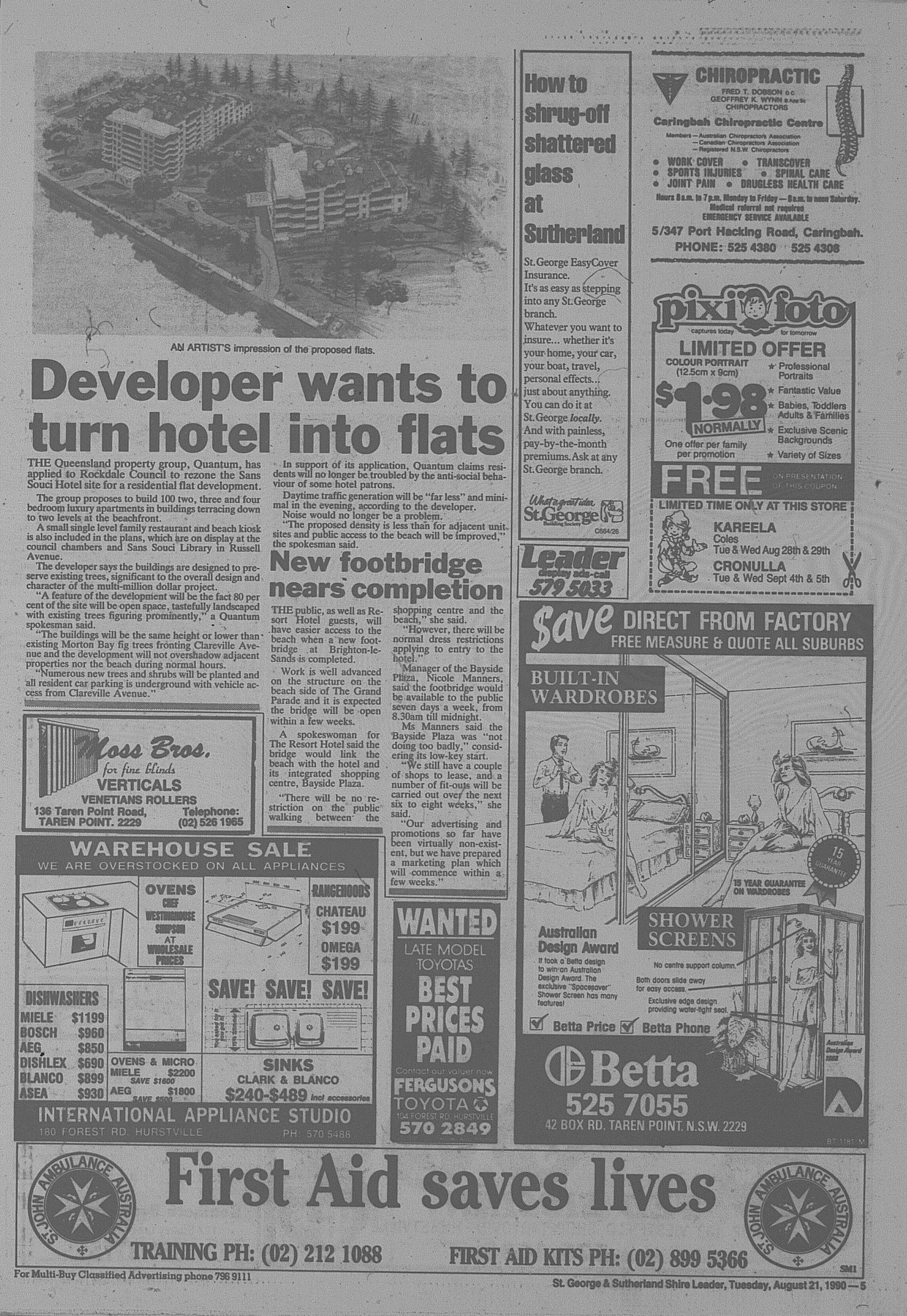
In 1990, plans ramped up when proposals for two six level buildings were unveiled to maximise public access. Norfolk pines and the famous Moreton Bay fig trees would be retained. A bistro or restaurant would be also be included. Mick Moylans would still have a presence of some sort on the site.


Source: Anon. 1990. "Developer wants to turn hotel into flats". The St George and Sutherland Shire Leader, August 21: 5. 

This plan didn't proceed and Rockdale Council approved the construction of 15 luxury townhouses to form The Sandringham estate. It is a gated development. Public beachfront access was retained with a path running along the beachfront.

The boat ramp was also lost.

I have not yet found further details as to how the scheme was scaled back and why. Neither have I found as to when in 1992 did Mick Moylan's close. Was it even announced?

The What if question comes into mind had the council approved the twin six storey apartment towers?
  • We would still have "Mick Moylans" in some form even if under another name.
  • The Beach Kiosk may have been converted into a cafe going by the conversion of Kiosks at Brighton-Le-Sands and Dolls Point in recent years into cafes. Ramsgate Beach ended up with a restaurant.
  • The Moreton Bay fig would probably still be on the beachfront.
  • The Norfolk pines and Cook Pine that were knocked down may have removed irrespective, whether it was in 1990's or more recent years. 
  • The public would have possibly more access to the beachfront with the boat ramp retained. 
Below are photos of the former Sans Souci Hotel site as seen from Dolls Point (2017). Photos taken by the author. 


Monday, 11 September 2017

NEVER BUILT SYDNEY: Donald Trump and Sydney's proposed casino (1986) - NEW FINDINGS

Last year, I shared some material relating to a proposal by Donald Trump to construct a casino resort complex on the eastern side of Cockle Bay at Darling Harbour.

This week, NSW Cabinet papers from 1987 were made to the public. In addition, The Australian last month had revealed information relating to how the Unsworth Government (1986-1988) handled his proposal to build a casino resort and will provide a short summary of the material.

Above: Donald Trump's Casino Resort proposal for Darling Harbour (1986).

We now have a model of what Trump's resort would have looked like which was published in The Australian on Friday. As I mentioned, Harry Seidler was commissioned as the architect by Trump. The hotel tower reminds me of Shell House in Melbourne.

Sydney was being promised something special. It would look quite dated by today's standards and perhaps a redevelopment might have been in order.

Last year, I referred to a report from The Sydney Morning Herald from May 1987. Trump had tried to evade police checks required for operators of casinos in NSW. Cabinet Minutes show that while the concept had "public appeal", a NSW Police Board Report had suggested that Trump had links to the Mafia. Financial viability was also identified as a concern by CIBC Australia.

While the Darling Harbour Redevelopment Authority and the Casino Operations Board were satisified with the Trump proposal, it (along with three other proposed schemes) were rejected by Cabinet.


Monday, 14 November 2016

1986: Donald Trump and Sydney's proposed casino

Darling Park could have been home to Donald Trump's Hotel and Casino Resort. Photo was taken by the Author.
Donald Trump has been elected in the past week as the President of the United States, succeeding Barack Obama.

And it just happened in this past week, I came across a 1990 clipping from The Daily Telegraph where the man himself revealed plans to build one of his famous casino resorts here in Sydney, and that led me to finding out a little more his plans.

His unsuccessful quest to build a casino in Sydney dates back to 1986 when Barrie Unsworth was the Premier of NSW.

The proposed location was not where The Star casino is located. It was planned for Darling Harbour on the current site of the Darling Park office complex and Cockle Bay Wharf.

On November 10, 1986, Trump's intentions to seek a casino licence were reported in The Sydney Morning Herald. 

The hotel and casino complex would be designed by architect Harry Seidler, who would be flown to view his casino's in Atlantic City, New Jersey to guide him in creating the design.

Trump's position was:

Sydney's a wonderful city. and if properly done, this could be a tremendous success for Sydney and everyone involved.  It's a great concept, if it's well executed.

He did face competition with up to a fifteen tenders involved and was shortlisted as one of five tenders in December 1986. In May 1987, Trump had been eliminated with Genting and Civil & Civic the only contractor remaining. They also would eventually be dropped.

Like the scrutiny with James Packer & Crown Resorts in terms of police and government checks with his project at Barangaroo, Trump appeared to try to advert these checks as reported by The Sydney Morning Herald in May 1987. Think about his reluctance to give details as part of his presidential campaign relating to his business dealings.


Source: McLean, P. 1990. "Trump bid on cards for casino". The Daily Telegraph, January 10, 7. 

Trump continued his campaign for several years and it bubbled back to the surface in 1990. He told The Sun Herald on April 22, he said Sydney would have one of the world's greatest casino's. Another interesting comparison with James Packer who wants Sydney to have the world's greatest casino. He did feel that the State Government wasn't interested.

We probably lost an opportunity from the same ineptness from our politicians that Trump seems to believe is plaguing politicians in his home country. If you look at the history of his "empire" of three casinos, they were doomed to fail. His third casino Trump Taj Mahal opened in 1990 in  Atlantic City. Upon opening it was the world's biggest casino. Struggling to pay debts, the casinos were floated on the American Stock Market as Trump Hotels and Casino Resorts in June 1995.

Financial problems continued to plague the Casino's with Trump in charge and the company declared bankruptcy in 2004. It is believed that Trump moved away from the company in 2006 and still battled with threats of bankruptcy for the next decade. It was not helped by the Global Financial Crisis of 2008-09

Two of his Atlantic City casino's no longer exist Trump Plaza closed in 2014, Trump Taj Mahal closed this year. However, his third casino in Atlantic City - Trump Marina was sold and is now a second incarnation of the Golden Nugget Atlantic City Brand.

So if Sydney did have a Trump Hotel & Casino, it would still be around.

It's obvious that the State Government would not want a casino to close. It might have meant a change in management at worst to keep it going.

Sydney is a major international city and a popular tourist destination for international tourists. Atlantic City has had competition from Las Vegas and closer to home in the United States, the rise of gambling in New York, Pennsylvania and Maryland and preference for air travel.

As for location, it would have been located as mentioned on the current site of the Darling Park complex and Cockle Bay Wharf.

But even if Trump Sydney was turning over a profit, it may have had to subsidise the operations in Atlantic City and service the debt. It may have not even been enough to save them.

Had Trump been put in a position to sell, it would probably have been too late for Crown to buy the casino with preparations for his Barangaroo Casino Resort well advanced in 2014.

Then again its only predictions.

Monday, 30 May 2016

EVOLUTION OF WORLD SQUARE: Hordern Towers is completed (1999)

Continuing on in our series on the evolution of World Square, we will look at the completion of the first major building at the World Square site - Hordern Towers which would be completed in 1998.

Last week, I covered the years that the site was vacant and merely a hole in the ground. The challenge was to restart work in some capacity. In 1994, a Malaysian consortium landed the northeastern section of the site at the corner of Pitt and Liverpool Streets. Under the 1985 scheme, the tower slated for that site was to be for a hotel.

That was set to become a reality:


Source: House, K. 1994. "$50m-$100m hotel, unit plan stirs World Square". The Sydney Morning Herald: October 20: page unknown.

By 1997, work was well and truly underway impressing then-Lord Mayor Frank Sartor.


World Square recovery may 27 1997 smh 32

Sources:

1. Totaro, P. 1997. "Up up and away as building work takes off in city's largest crater". The Sydney Morning Herald, May 27: page unknown.

2. Hughes, H. 1997. "World Square on road to recovery". The Sydney Morning Herald, May 27: 32. 

 In 1999, Hordern Towers was now ready for business.


Source: Tsvdaridis, D. "Small corner of World Square open for business". The Daily Telegraph, September 10: 21.

Hordern Towers was designed by Davenport Campbell & Partners rising to a height of 156 metres. There are 48 floors with  278 apartments spread over 31 levels. A hotel (Rydges World Square) occupies the remaining levels. The retail component would be integrated into the World Square shopping complex as the remaining stages were built.

I've included at the bottom several photos that I have taken over the years of the tower.


Monday, 23 May 2016

EVOLUTION OF WORLD SQUARE: The abandoned site (1991)

Last week, I focused on the approval and early stages of construction of the failed World Square development in central Sydney before industrial disputes and financial problems forced the collapse of the project in 1990.

World Square would remain mostly idle for a decade, though by the end of the 1990's the first steps towards the evolution of what we see there today.

The collapse of the World Square project happened to coincide with a property crash in Sydney along with the 1990-91 recession, which stifled demand for development in central Sydney. Over 20 sites in central Sydney would be affected by the recession with projects simply abandoned despite excavation works taking place.

Ipoh felt inclined to let the recession "do its work" and believed it could still turn a profit. Still, nothing happened. The site was now inviting wildlife.

Even building just the podium would do? Could Sydney retailing have been transformed forever?


Source: Nance, J. 1991. World Square project may open in '93". The Sunday Telegraph, July 28: 19. 


In 1993, Sydney was successful in its bid to host the 2000 Olympic Games and the push was on to have the site developed for the games.

Just a year later, there was a proposal to build a major carpark.


Source: Gibson, A. 1994 "From huge hole to carpark". The Sunday Telegraph, January 9: page unknown. 


By 1995, work had begun on the carpark to be built by Grocon containing 600 spaces. This would be the first step in bringing the site to life.


A year later, a new proposal had come to life for two towers. This does not include Hordern Towers which was being developed separately. The corner of Goulburn and Pitt Street would no longer have a tower, but a smaller building comprising of hotel and serviced apartments. 


Source: Totaro, P. 1996. "Tallest Building for our biggest hole. The Sydney Morning Herald, February 14: page unknown. 


Source: Anon. 1996. "Grand plan for empty city square". The Daily Telegraph, March 1: 9. 

Interestingly, this proposal also came up in 1996, but just to develop 680 George Street. 


Source: Skelsey, M. 1996. "Things are looking up in George Street". The Daily Telegraph, November 30: 19. 

Next week, I'll look at Hordern Towers, which would become the first major development on the site to be completed. 

Monday, 16 May 2016

EVOLUTION OF WORLD SQUARE: Kenzo Tange turns World Square into a Lotus Flower (1985)

Continuing on in our series in the evolution of World Square, we move forward to 1985, where a fourth tower is introduced into the World Square development. The idea of introducing a fourth tower was to make the towers form a lotus flower.


Source: Shanahan, S. "Four towers to replace Anthony Horderns". The Sydney Morning Herald, December 2: 2.

In 1986, the Anthony Horderns Building was demolished even though the $1 billion project had yet to be formally approved. In the same year, the NSW Government assumed planning control of the site. Planning and Environment Minister (and future Premier) Bob Carr was handed power to approve the development, which he did in April 1987.


Aubin, T & Coultar, M. 1987. "Approval for World Square". The Sydney Morning Herald, April 7: 3

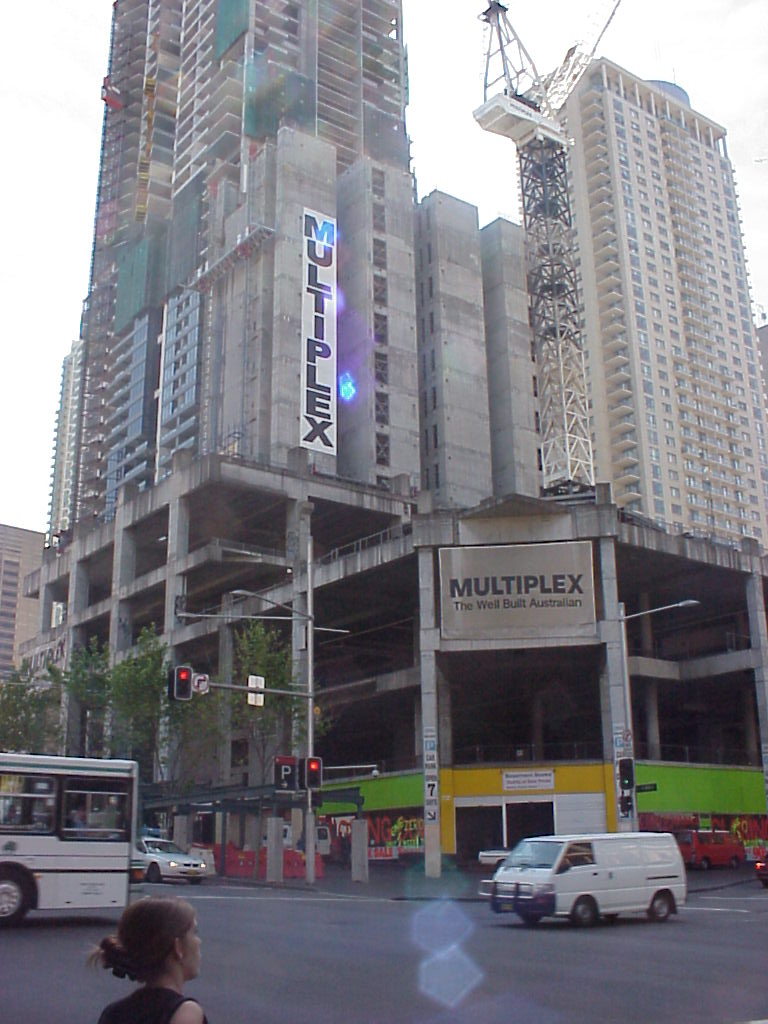
By the end of the decade and the site had been dug to 30 metres below street level. On the corner of George and Goulburn Streets, one of the office towers (George Tower) was well under construction, with work beginning in December 1988. This tower would become 680 George Street.


Above: The office tower at the corner of George and Goulburn Street was under construction in 1990 when work stopped. This was taken in October 2002 just before work recommenced on its construction. Photos were taken by the Author.

However disputes with unions and workers would fuel the collapse of the project in mid-1990 and for over a decade, we would see inactivity at the site.

Next week we will look at the idle years at World Square and Hordern Towers. Then we will move onto the gradual formation of World Square as we see it today.