Monday, 9 October 2023

Sydney Opera House Turns 50 - Newspaper preview features (1973)

With the Sydney Opera House turning fifty on October 20, my next two entries will focus on its official opening by Queen Elizabeth II on that day in 1973.

This week will focus on selected material from newspapers in the days leading up to the opening. Next week will be a selection of newspaper clippings relating to opening day itself.

Newspapers published special features, supplements and wrap-arounds.

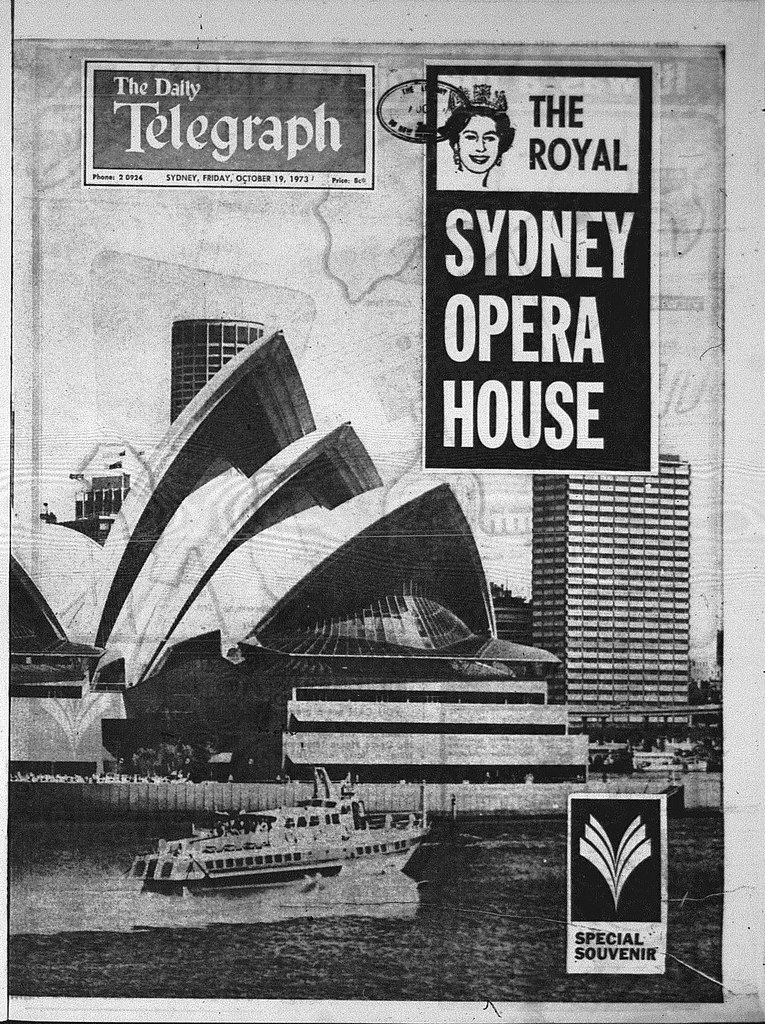
The Daily Telegraph - 19 October 1973
Wrap around with a photograph of the Sydney Opera House with the Sydney skyline rising behind it.

Sydney Opera House Opening Supplement October 19 1973 daily telegraph (1)BSydney Opera House Supplement October 19 1973 daily telegraph (1)

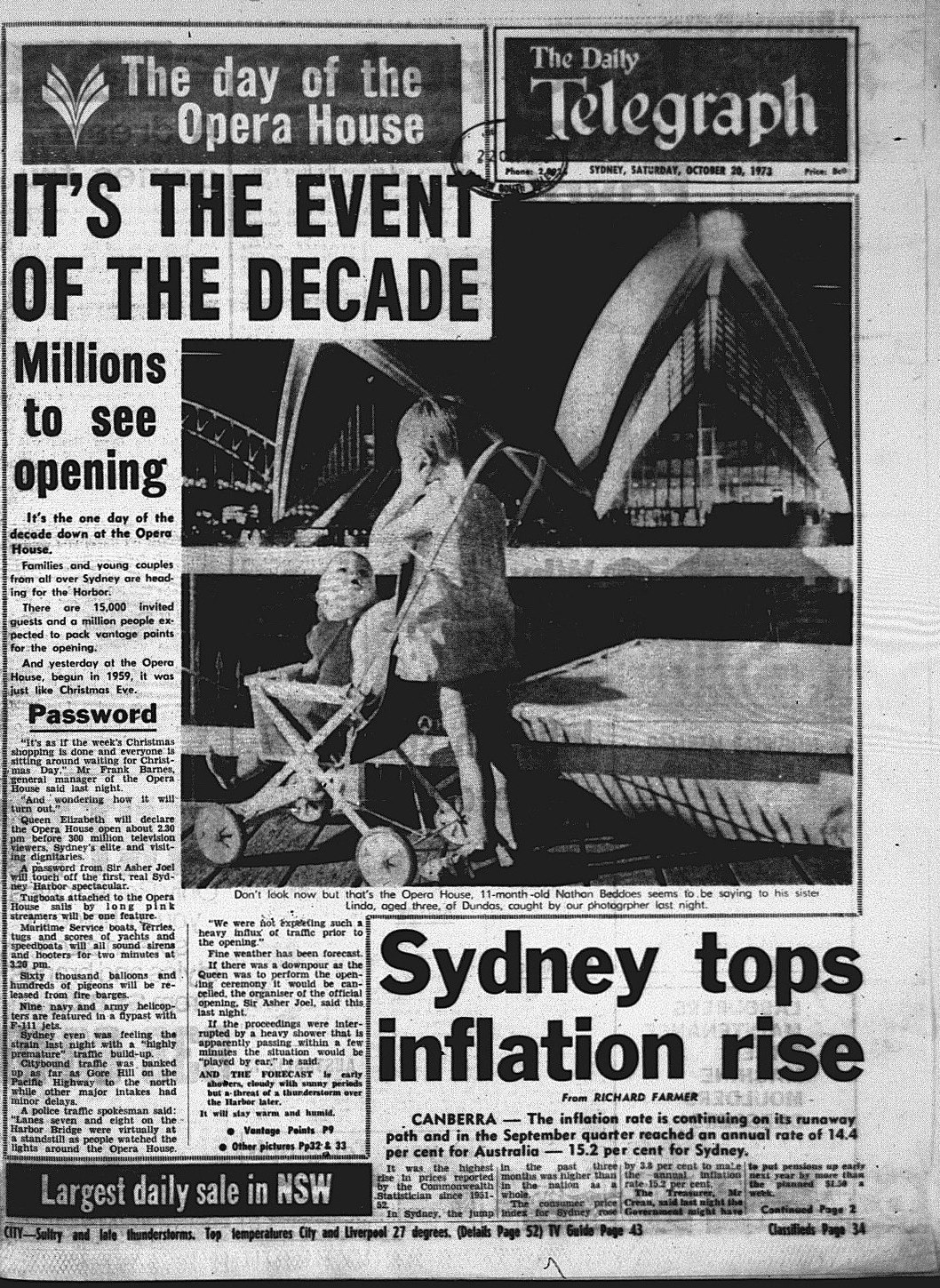
The Daily Telegraph - 20 October 1973
Front page

Sydney Opera House Opening Supplement October 19 1973 daily telegraph (1)A

The clipping below contains two photos of decorations at Circular Quay, including special lighting being draped from office blocks at East Circular Quay.

 Sydney Opera House Opens October 20 1973 daily telegraph 32

The Sun - 11 October 1973
Page 1
Special Souvenir Cover. 

 Sydney Opera House Supplement October 11 1973 The Sun (1)

The Sun - 17 October 1973
Map of festivities and features for opening day.

Sydney Opera House Opening October 17 1973 The Sun 4

The Sun - 19 October 1973
The article below reports that the city was to have its biggest day of celebrations in its history as Sydney siders gathered on the shores of Sydney Harbour to take part in the festivities. 

Sydney Opera House Opening October 19 1973 The Sun 7

Source: Anon. 1973. "It's party night in Sydney!". The Sun, October 19: 7. 

The Sydney Morning Herald - 15 October 1973 
A souvenir supplement was published. Some clippings are featured. 

Sydney Opera House Supplement October 15 1973 SMH 1 Sydney Opera House Supplement October 15 1973 SMH 3-4 Sydney Opera House Supplement October 15 1973 SMH 5

Saturday, 7 October 2023

Property Advert of the Week: The Gazebo (2001)

The Gazebo at Kings Cross operated as a hotel between 1969 and closed in "the 1990s", though I tend to believe that it closed in 2001 when apartments went on sale in the former hotel. The conversion to apartments was completed in 2005. 

Why the decision to convert to apartments? Following the Sydney Olympics in 2000, there was an oversupply of hotel rooms in Sydney. There was also an increased preference for travellers to stay in Central Sydney, and for hotel operators in Kings Cross, it was more economical to convert hotels into apartment blocks. 

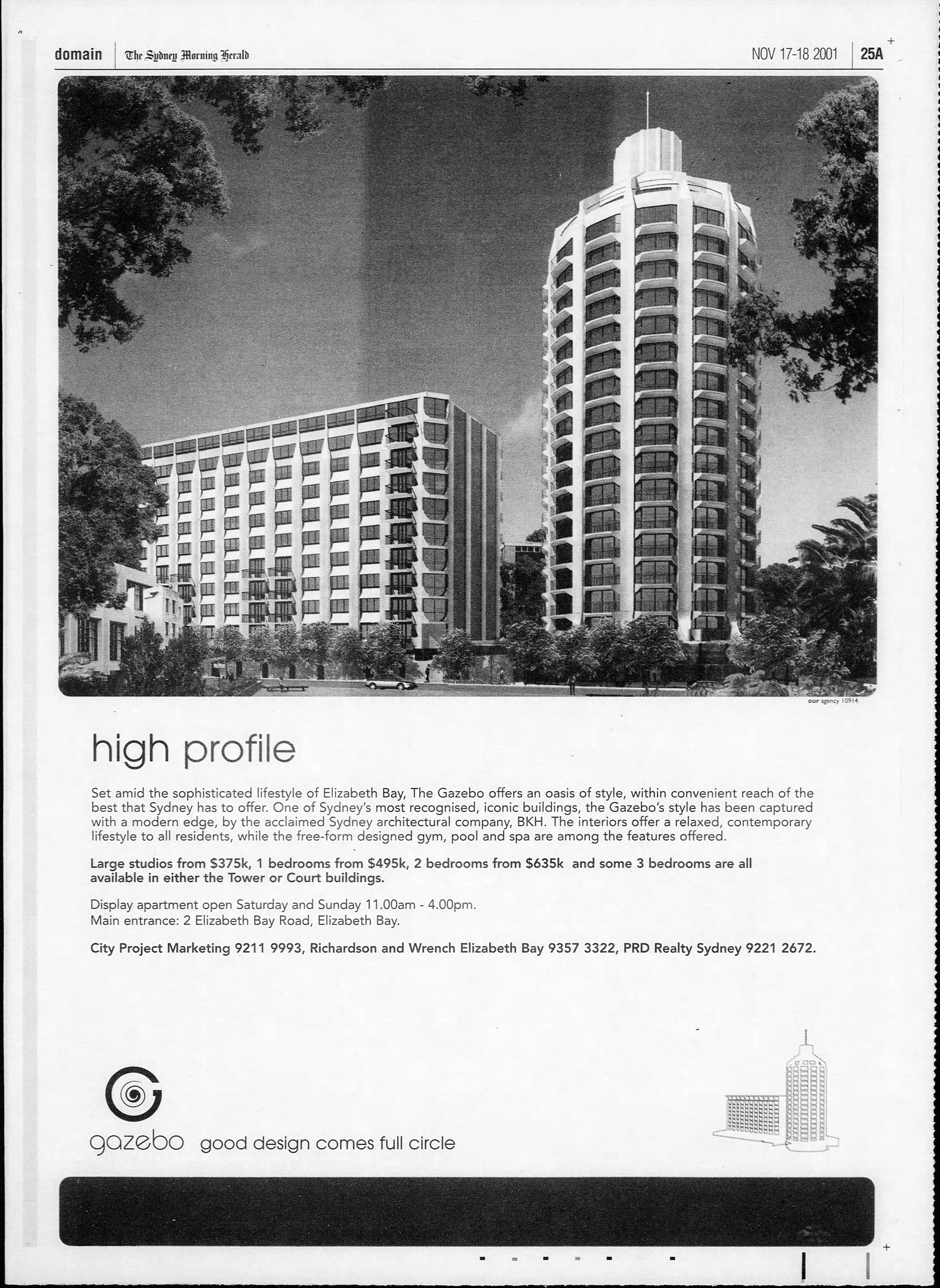
In the newspaper advertisement below from 2001, large studios were on sale from $375 000, 1 bedroom apartments from $495 000, 2 bedrooms from $635 000. Three-bedroom apartments were on sale, but prices were not advertised.

  Gazebo Advertisement November 17 2001 SMH 25A Domain

Source: City Project Marketing. 2001 "gazebo... good design comes full circle" (advertisement). The Sydney Morning Herald, November 17: 25A (Domain Liftout).

Monday, 2 October 2023

1992: Cityrail's controversial timetable

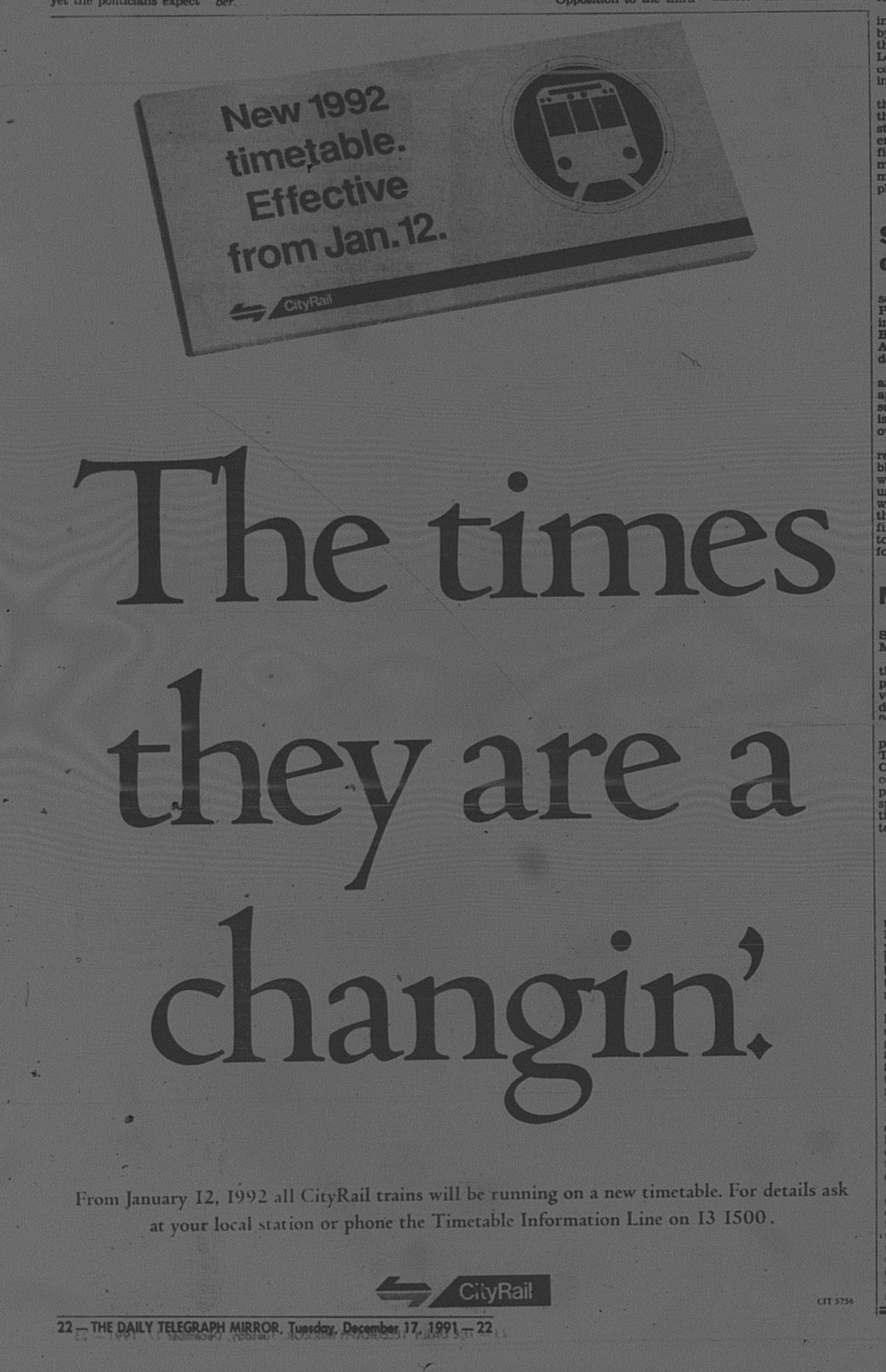
Cityrail 1992 Timetable Ad December 17 1991 daily telegraph 22

Source: Cityrail. 1991. "The times they are a changin'." (Advertisement). The Daily Telegraph Mirror, December 17: 22. 

Rail Timetable January 12 1992 Daily Telegraph 16 

Source: Nance, J. 1992. "Rail commuters rattled". The Sunday Telegraph, January 12: 16.

Any change to public transport timetables in Sydney will always incur at least some criticism or controversy. It may affect one line or route or the entire network.

Given that trains are our more patronised mode of public transport in Sydney, any changes to timetables will impact more commuters than buses and ferries, and hence receive more attention. Changes to train timetables often flow onto bus timetables where bus routes connect with rail services.

You may remember the changes from a particular year, because they may have impacted you directly.

In 1992, I was seven years of age and being a child did not have to rely on trains to get around, but Cityrail made changes to its timetables, which at the time were controversial. This entry provides an overview of why.

Why a new timetable?

In 1991, the NSW Government decided to retire the red rattler trains due to safety concerns associated with open doors in their carriages, which was to be completed in 1993. Most of the remaining carriages were retired in January 1992 and were to be confined to the Bankstown and Inner West lines until their final withdrawal the following year. 

Meanwhile, Tangara carriages (known as T set) were still being rolled out across the network following their introduction in 1988 and continued to be rolled out to suburban lines until 1994, with the outer suburban G set version rolled out in 1994 and 1995.

Also, Cityrail sought to increase services to outer suburban stations. 

What were the changes?

  • Reduced off-peak services
  • Longer wait times for connections with other lines
  • An additional 2500 seats were made available for commuters during peak hours.
  • Reductions in peak-hour services on the Bankstown, North Shore and Western Lines
  • Additional services from Campbelltown to the Sydney CBD.
  • Reductions in services on the Illawarra Line.
Why the controversy?

As mentioned, services were reduced, longer connection times and reduced services on lines impacted workers, especially those who travelled in shoulder or off-peak periods.

For the majority of commuters, they were inconvenienced, whether it meant having to change trains, longer dwell (waiting times) or having to alter their travel times. Delays and cancellations also added to the difficulties experienced.

Despite an additional 2500 seats added to existing peak-hour trains, reduced service frequencies meant that trains were more crowded. Below are clippings from a special feature that was published in The Sydney Morning Herald on February 7, 1992 (page 4).

New Train timetable February 7 1992 SMH 4

Transport advocacy group Action for Public Transport called for the restructuring of some lines to improve efficiency and hence capacity, such as the Bankstown Line and better turnarounds at Berowra.

Cityrail timetable changes January 22 1992 daily telegraph 20

Source: Anon. "Train service 'a mess'". The Daily Telegraph Mirror, January 22: 20.  

The State Government was forced to act, altering timetables. The first round of changes was "small".  Cityrail claimed to have received 26,000 calls, with many supporting the new timetable, especially the replacement of red rattler trains with modern carriages. Shadow Transport Minister Brian Langton (ALP, Kogarah) called for the timetable to be axed while the ALP had received thousands of complaints via a special hotline that they set up. Mr Langton himself was a rail commuter and saw firsthand for himself the impact it was having on his travels and those of his fellow constituents. 

Cityrail Timetable Review February 8 1992 daily telegraph 11

Source: Jones, S. 1992. "New review of Cityrail timetables". The Daily Telegraph Mirror, February 8:11. 

Later that month, a further 100 changes to the timetable were to be implemented over the following months. Some services would receive extra carriages, while some services would be altered to either have more stops or fewer stops.
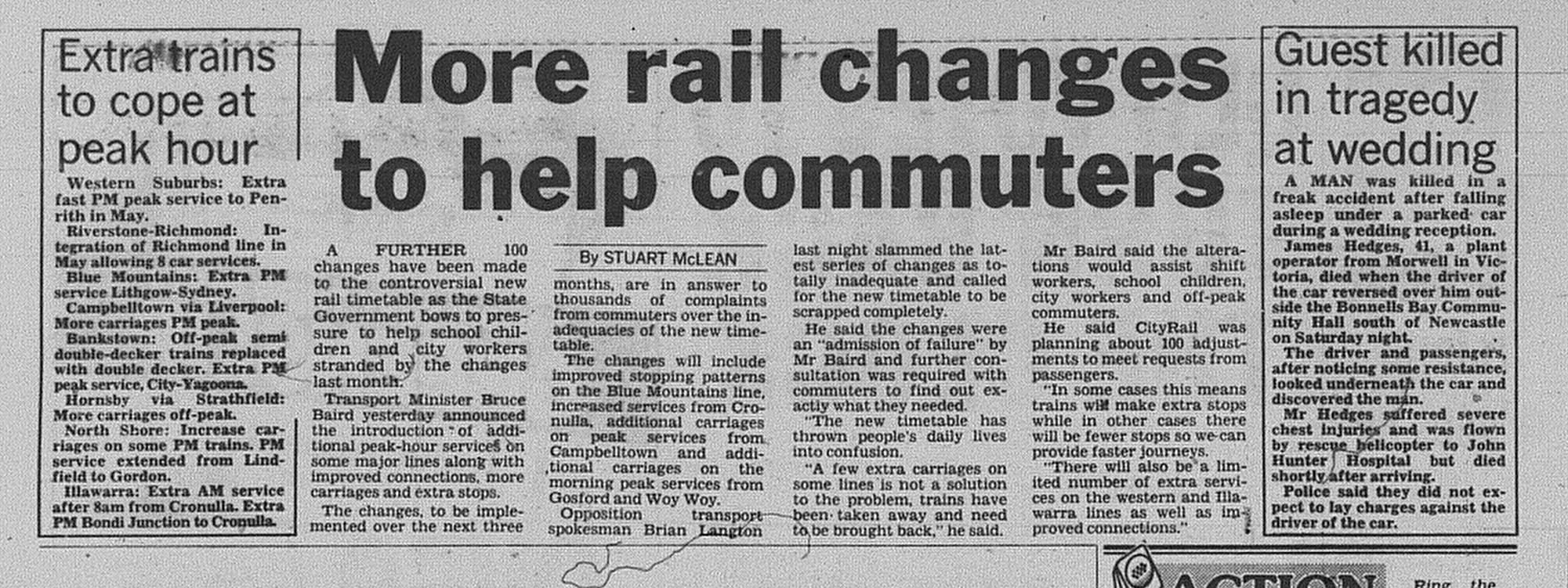
  Rail timetable changes February 24 1992 daily telegraph 18 

Source: McLean, S. "More tail changes to help commuters". The Daily Telegraph Mirror, February 24: 18. 

Additional Reading

Action for Transport (N.S.W.). 1992.  "New Cityrail timetable," Action for Public Transport (N.S.W.) Media Release Newsletter, no 1 (February 1992), https://www.aptnsw.org.au/newsletters/19921.html  

Saturday, 30 September 2023

Property Advert of the Week: Henley Homes Super Display Village Ad (1998)

Below is a 1998 newspaper advertisement for the Henley Homes Super Display Villages, which were located at Glenwood, Hoxton Park and Prestons. They also had one located on the Central Coast.

  Henley Homes Ad January 3 1998 daily telegraph homes section 4-5  

Source: Henley Properties Group. 1998. "A new super display village," (Advertisement). The Daily Telegraph, January 3: 4-5 (Homes Liftout).

Monday, 25 September 2023

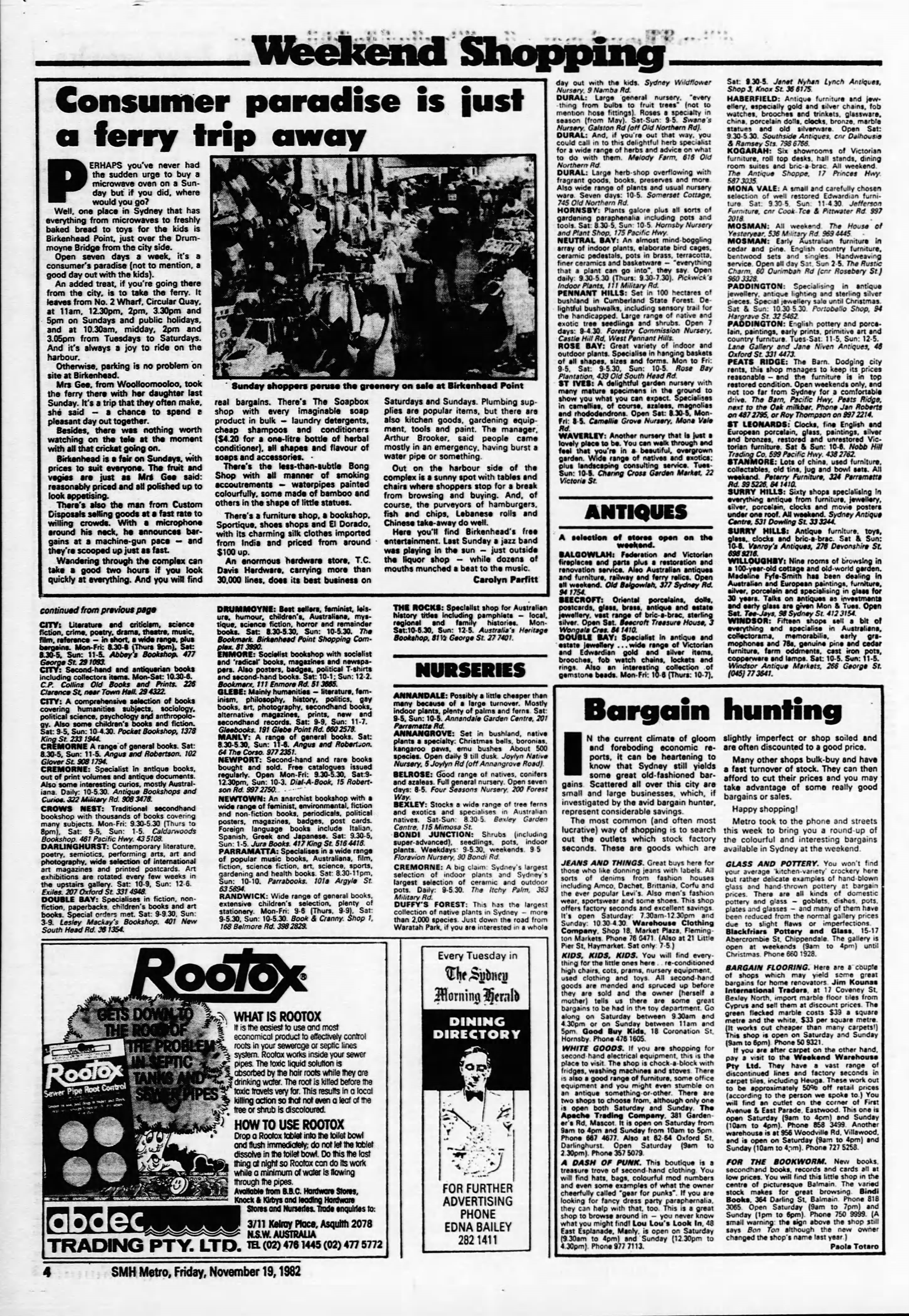
1982: Weekend Shopping - SMH Feature

Forty years ago, retail trading hours for shops were heavily restricted on weekends. Shops were required to close at noon on a Saturday and were not permitted to trade on a Sunday. By the 1980s, major retailers such as Harvey Norman, Norman Ross and Waltons were challenging the laws by identifying loopholes with either success or failure.

Extending retail hours on weekends was opposed by the unions, citing the right of workers to have Sunday off and continued throughout the decade, though by the end of the decade, Sunday trading would be phased in, though gradually into the 1990s. 

Meanwhile, a court ruling in 1982 by Jim Macken in the NSW Industrial Commission raised concerns about big businesses i.e. Harvey Norman and Norman Ross extending their trading hours at the expense of small businesses, which relied on the weekend trade for their survival.

The Sydney Morning Herald's weekly Metro liftout published a feature in 1982 that provided Sydneysiders with a guide to shopping on weekends once the shutters went down at noon on Saturdays.

Reporter Mary Lord spent one weekend exploring the metropolitan area to see what was open on weekends and this is what she unearthed:

  • Birkenhead Point offered "everything" on a Sunday.
  • Manly offered options for "After-hours shopping" including clothing stores, bookstores and chemists.
  • Kings Cross - most of the usual shops were open but 'very little" could actually be bought on Sundays
  • Harvey Norman, Auburn - "mecca" on Parramatta Road, which attracted "more buyers at weekends".
  • Norman Ross & Waltons conducted "warehouse sales" at Homebush, Homebush Bay or Granville as they would not be subject to general shop laws.
  • Hardware stores - smaller stores were open on weekends.
  • Hudson's in Miranda was "open at back and staffed by management only"
I have included the feature below with a full citation.

Source: Lord, M. 1982. "The Weekend Shopper". The Sydney Morning Herald, November 19: 2-4 (Metro Liftout).

Weekend Shopping Feature November 19 1982 SMH Metro Liftout Weekend Shopping November 19 1982 SMH Metro 3 Weekend Shopping November 19 1982 SMH Metro 4

Saturday, 23 September 2023

Property Advert of the Week: Avalon Land Release (1962)

Below is a newspaper advertisement promoting a land release at Avalon in 1962. Blocks were on offer from £1000 ($2000).

 Avalon Paradise Gardens Ad April 14 1962 daily telegraph 46

Source: Stapleton's. 1962. "Avalon Paradise Gardens Home Sites" (Advertisement). The Daily Telegraph, April 14: 46.

Monday, 18 September 2023

1974: End of the Lugarno Ferry

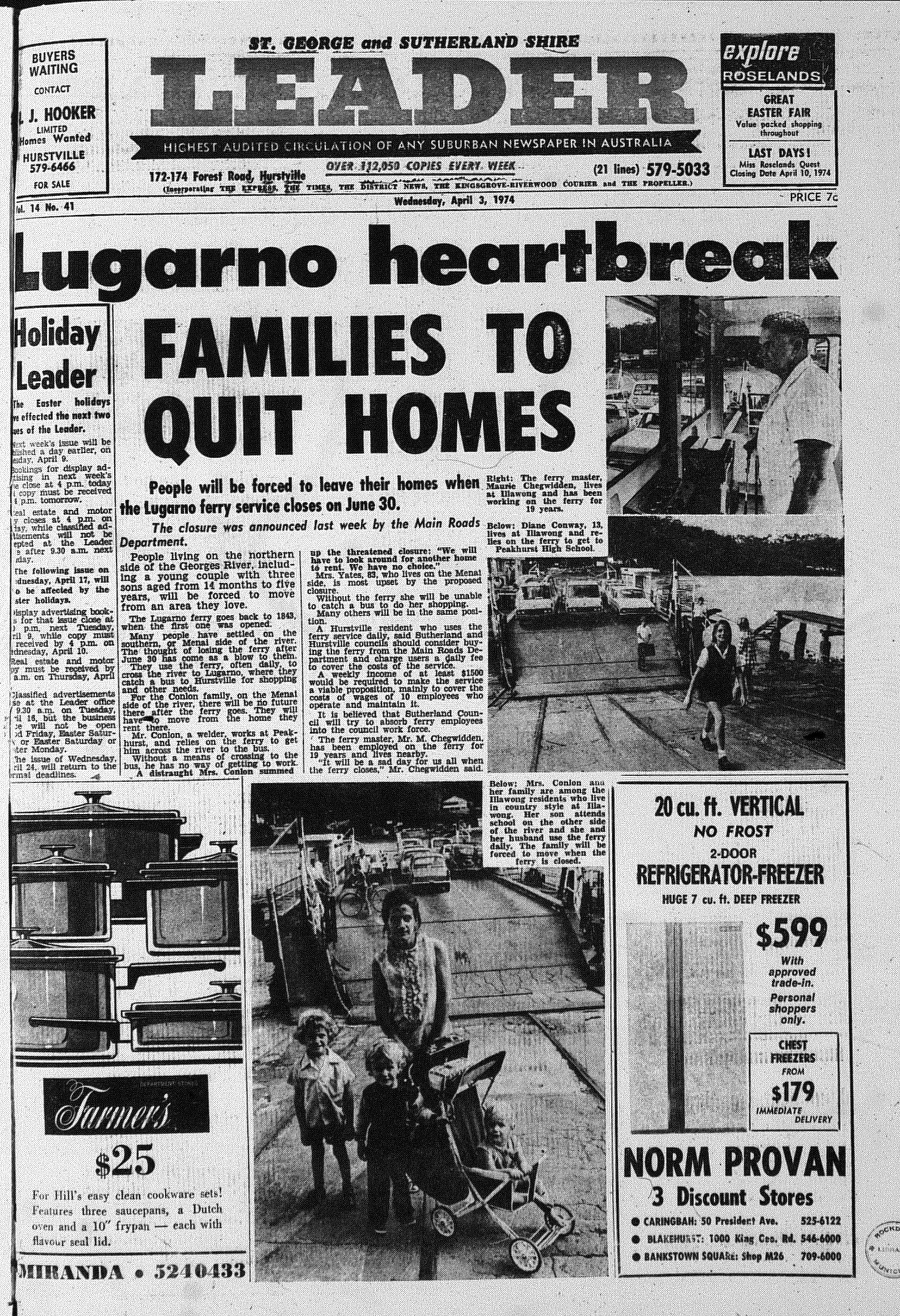
The opening of the Alfords Point Bridge in 1973 resulted in the end of the Lugarno Ferry. The Lugarno Ferry was a punt service carrying vehicles and people across the Georges River between Lugarno and Illawong. 

In March 1974, it was announced by the Main Roads Department that the ferry service would conclude on June 30 1974. It was not received well in Illawong, with some residents indicating that they would be forced to move homes.

Lugarno Ferry April 3 1974 The Leader 1
Source: Anon. 1974. "Lugarno heartbreak: families to quit homes". The St George and Sutherland Shire Leader, April 3: 1. 

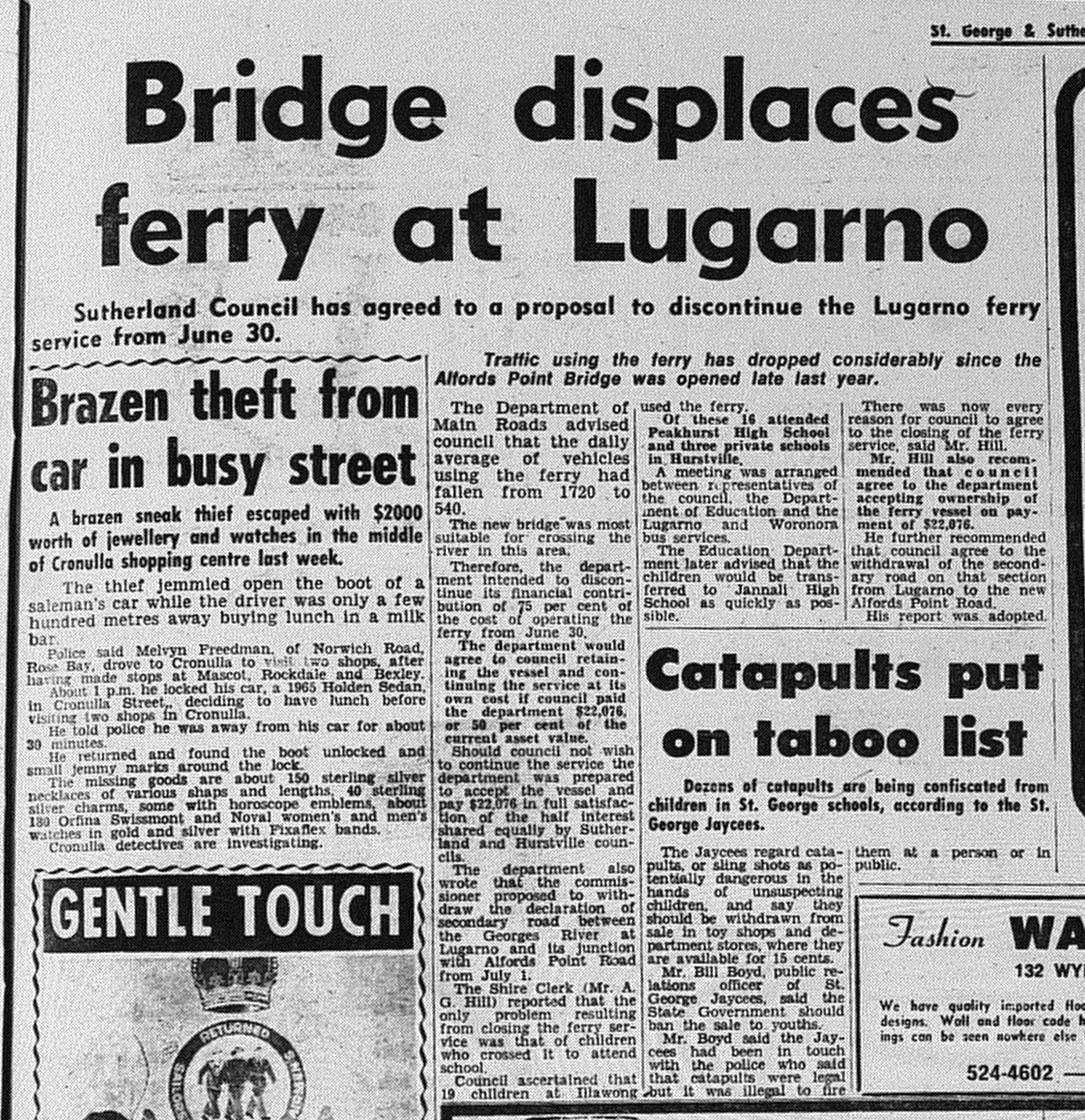
Sutherland Council backed the proposal given that daily patronage was averaging 540 vehicles, down from 1720 prior to closure. 

Lugarno Ferry April 3 1974 The Leader 15
Source: Anon. 1974. "Bridge displaces ferry at Lugarno". The St George and Sutherland Shire Leader, April 3: 15. 


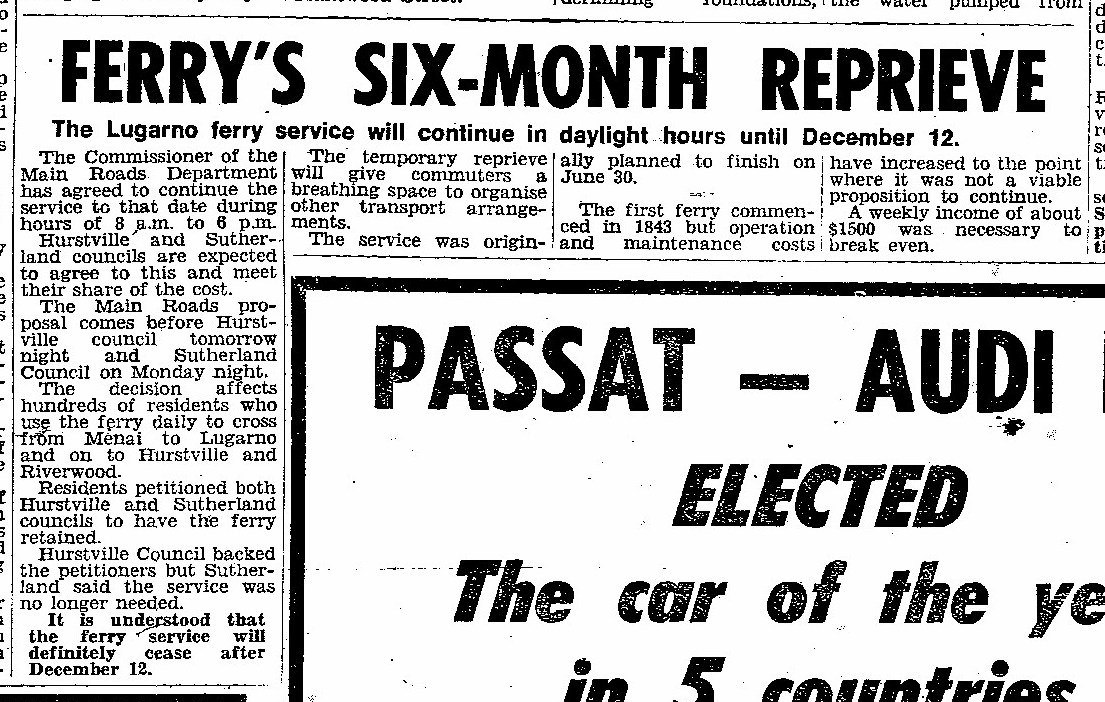
Lugarno Ferry June 5 1974 The Leader 3 
Source: Anon. 1974. "Ferry's six-month reprieve". The St George and Sutherland Leader, June 5:3. 

In June, it was announced that the ferry would close on December 12 1974. However, a reduced service would operate for the final five months of its operation.

While residents on both sides of the river were happy that the service would continue to operate in the short term, concerns were raised that youths and the elderly would be disadvantaged as they did not have cars and were dependent on the ferry to cross the river. 
  Lugarno Ferry to stay June 12 1974 The Leader 5
Source: Anon. 1974. "Ferry to stay". The St George and Sutherland Shire Leader, June 12: 5.

Residents had petitioned Hurstville and Sutherland Council to maintain the service. While Hurstville Council backed the residents, Sutherland Council believed that the service was "no longer needed". The costs of operating the ferry had become financially unviable in its final years of operation, even though the service did not provide a toll

Lugarno Ferry closes December 13 1974 SMH 9 
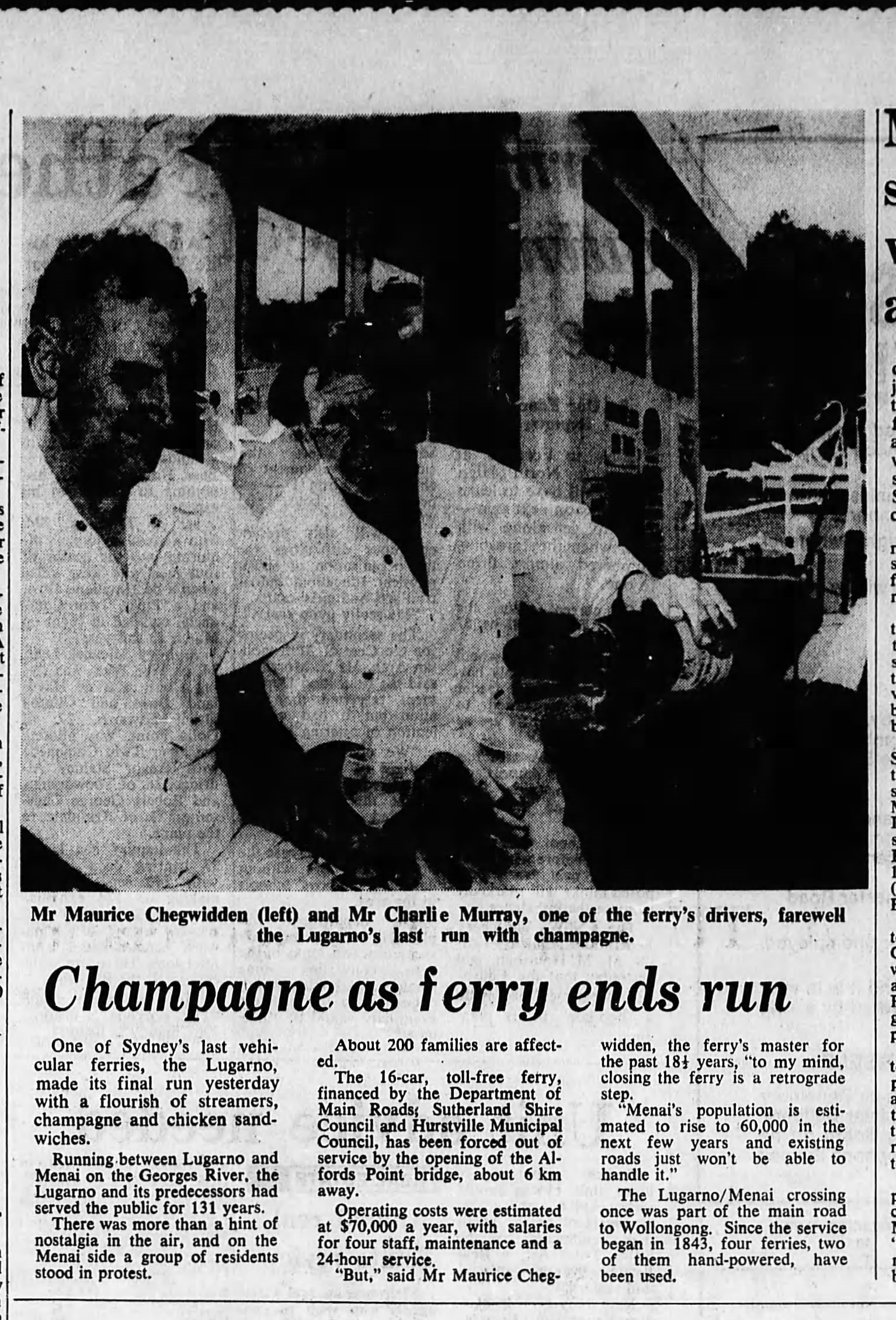
Source: Anon. 1974. "Champagne as ferry ends run". The Sydney Morning Herald, December 4: 9.

Lugarno Ferry December 18 1974 The Leader 3
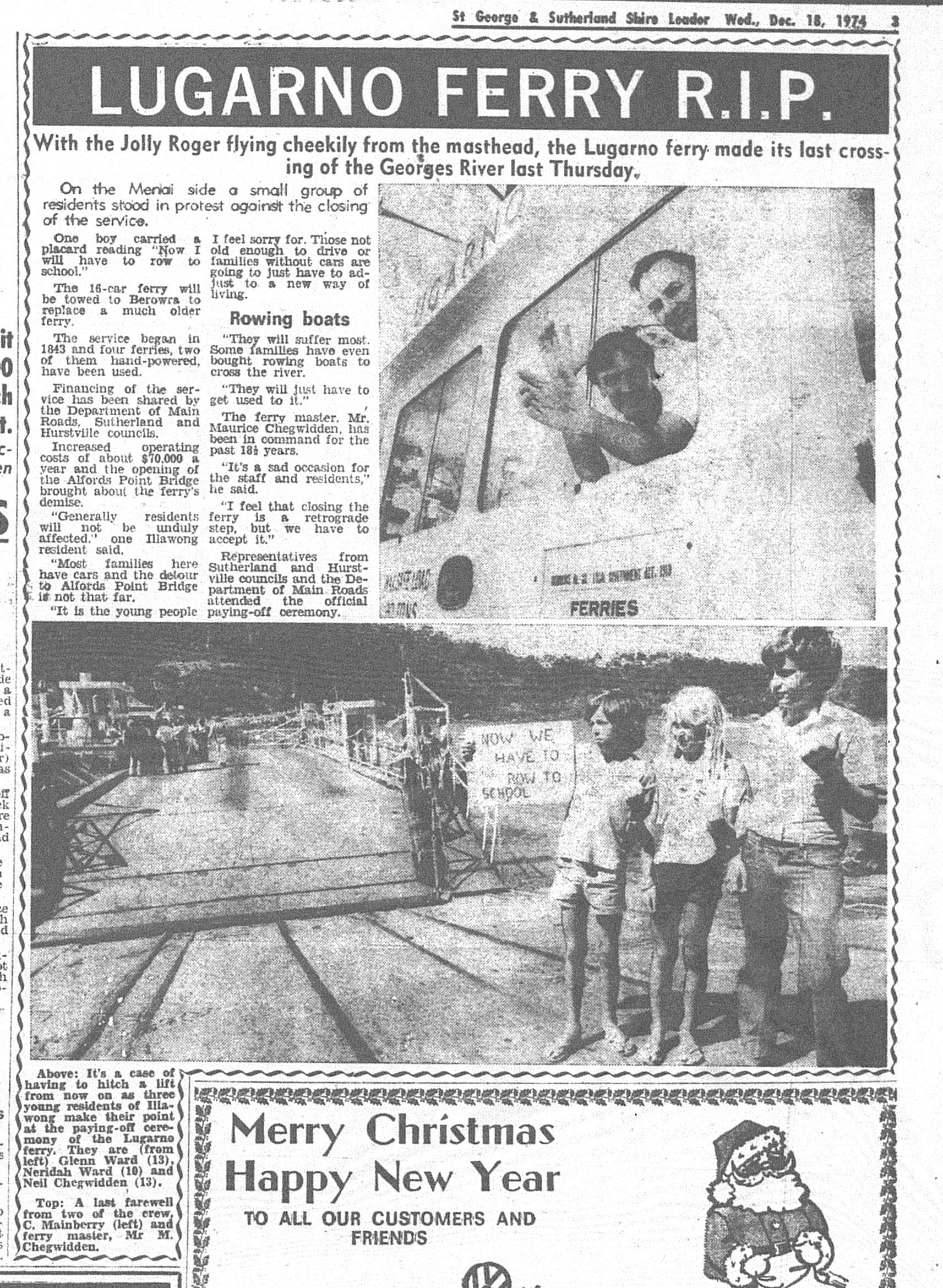
Source: Anon. 1974. "Lugarno Ferry R.I.P". The St George and Sutherland Shire Leader, December 18: 3. 

December 12 1974, saw the ferry undertake its final run after 131 years of operation. There was a ceremony to mark its closure involving representatives of Sutherland and Hurstville Councils along with the Department of Main Roads. The ferry was relocated to Berowra.

Related Entries


Saturday, 16 September 2023

Property Advert of the Week: King Street Wharf (2000)

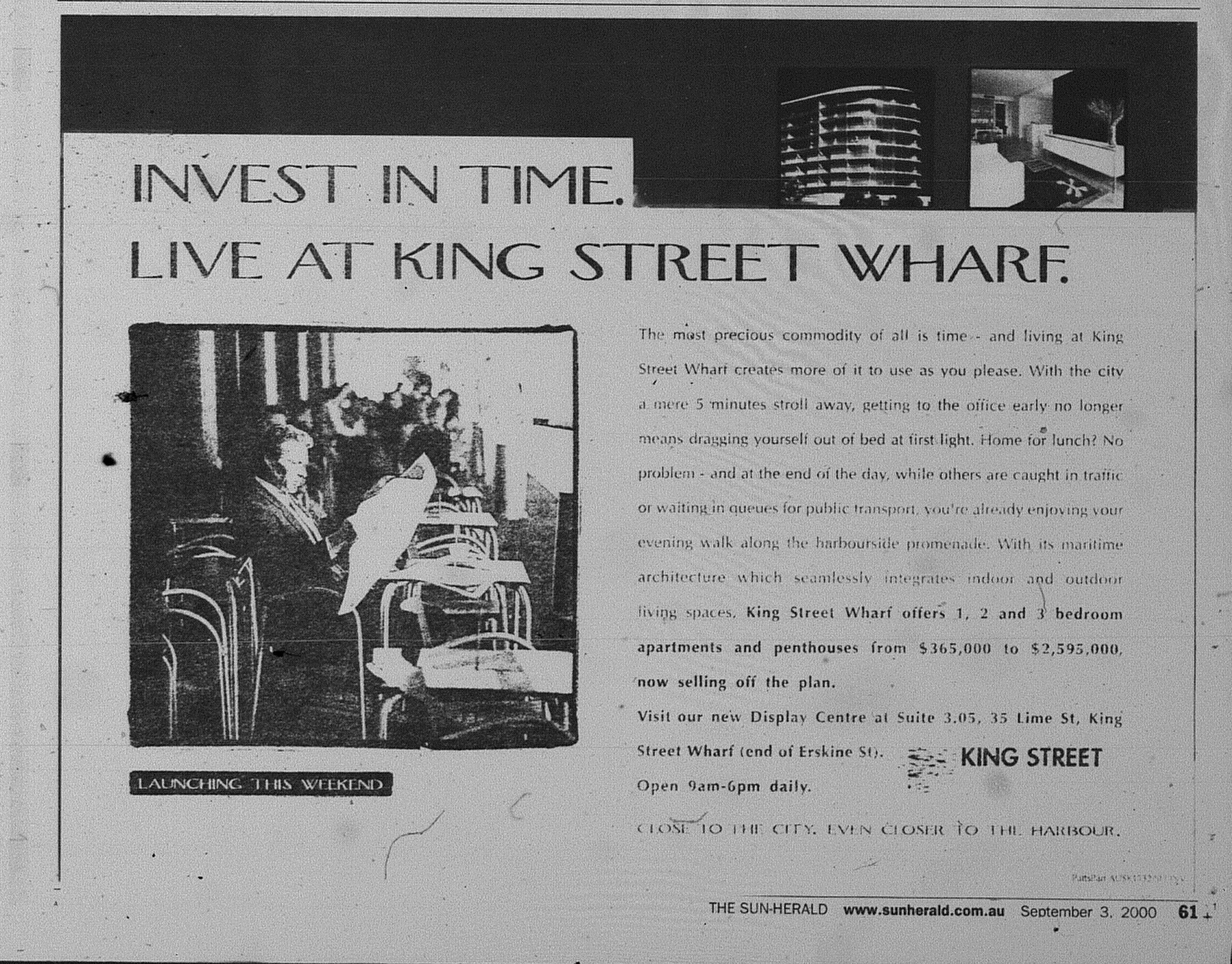
Below is a newspaper advertisement from 2000 promoting the sale of apartments in the King St Wharf precinct in Central Sydney.

  King Street Wharf Ad sun herald 61

Source: Multiplex. 2000. "Invest in Time. Live at King Street Wharf" (Advertisement). The Sun Herald, September 3: 61. 

Monday, 11 September 2023

1968: Highrise pools feature in "The Sun Herald"

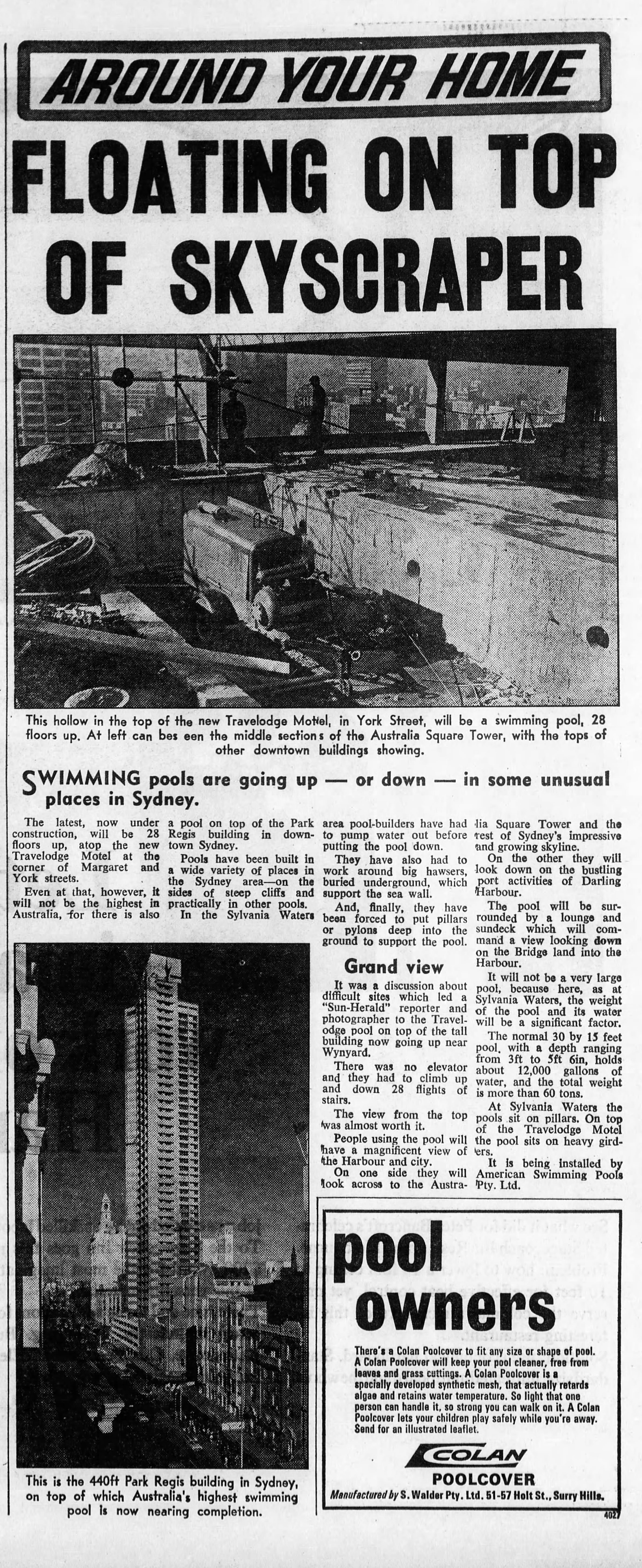
Below is a feature article from The Sun Herald (7 July 1968) focusing on the construction of pools in highrise buildings. Two pioneers to install highrise swimming pools in a Sydney skyscraper include the Travelodge Hotel (now known as Mercure Sydney Wynyard) and the Park Regis building on Park Street. The Park Regis pool is, located on the roof level.

  Highrise pools July 7 1968 Sun Herald 98 
Source: Anon. 1968. "Floating on top of skyscraper". The Sun Herald, July 7:98. 

Some other Sydney skyscrapers that have pools on its upper floors include World Tower, ANZ World HQ (Penthouse), Pullman Sydney Hyde Park and the Sebel Quay West in The Rocks. Feel free to list any other highrise skyscrapers with pools on its upper floors in the Comments section.

Saturday, 9 September 2023

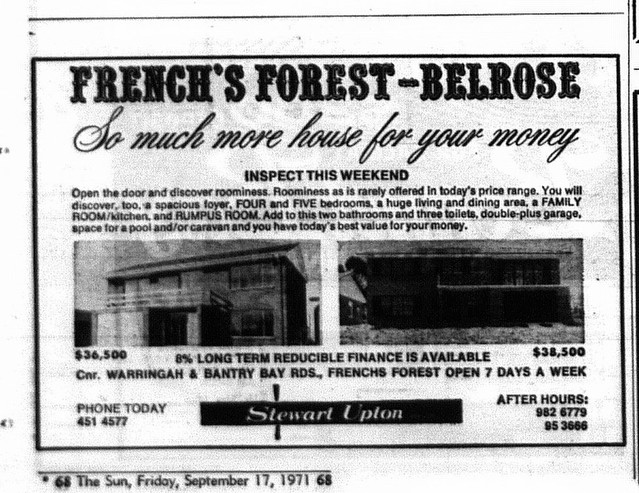
Property Advert of the Week: Stewart Upton Homes - French's Forest/Belrose (1971)

Below is a 1971 newspaper advertisement by Stewart Upton Homes promoting the sale of new four and five-bedroom homes in French's Forest and Belrose. One of the homes featured was on offer for $36 500, and the other for $38 500. 


Stewart Upton Ad September 17 1971 The Sun 68

Source: Stewart Upton. 1971. "French's Forest - Belrose: So much more house for your money" (Advertisement). The Sun, September 17: 68.