Showing posts with label urban renewal. Show all posts

Monday, 15 June 2026

VISIONS OF SYDNEY: Sydney Cove Redevelopment Scheme (1963)

Circular Quay Redevelopment June 17 1963 SMH 15

Source: Anonymous. 1963. "A look into the future".  The Sydney Morning Herald, June 17: 15.

Over the years, I have come across a few clippings relating to proposals to redevelop the blocks adjacent to Circular Quay Railway Station.

In 1963, the Sydney Cove Area Development Committee unveiled a proposal to redevelop the blocks immediately to the South of Circular Quay Railway Station. This included the construction of skyscrapers around the height of the AMP Building in the blocks adjacent to Circular Quay Railway Station, i.e., north of Bridge Street. Customs House would have been preserved as part of any redevelopment of the area. 

The model was displayed for two weeks in the vestibule at the Sydney Town Hall.

Circular Quay Redevelopment June 17 1963 SMH 15 enlarged 3

Sourced From: Anonymous. 1963. "A look into the future".  The Sydney Morning Herald, June 17: 15.

Monday, 8 June 2026

VISIONS OF SYDNEY: Bondi of the future exhibition - revisited (1968)

Bondi of the Future Ad November 13 1968 Wentworth Courier 19 enlarged

Sourced from: Grace Bros Bondi Junction. 1968. "See Bondi of the future" (Advertisement). The Wentworth Courier, November 13: 19.

Back in 2014, I posted an entry which would appear under Never Built Sydney, focusing on a 1968 Exhibition at Grace Bros, Bondi Junction, involving University of New South Wales Architecture students displaying their visions for Bondi in the year 2000.

I have posted this entry under Visions of Sydney as it aligns with "never builts" or future visions for redevelopment of suburbs that never proceeded or were early or alternate schemes or in this instance, university students predicting how Bondi may look over thirty years into the future.

Below is a newspaper advertisement from Grace Bros showing one of the proposed schemes. It is the same featured from the article I posted back in 2014, but with Ben Buckler in the foreground. Its familiar midrise unit blocks would not have survived. It would have been completely rebuilt from scratch, incorporating a mixture of residential and tourist development. Having a hotel located there would have utilised not just the views of the beach, but also those of the ocean. If the idea had evolved into a real proposal and then been built, it would likely have been amongst Sydney's most famous hotels, simply for its headland location.

Bondi of the Future Ad November 13 1968 Wentworth Courier 19

Source: Grace Bros Bondi Junction. 1968. "See Bondi of the future" (Advertisement). The Wentworth Courier, November 13: 19.

And there is one feature from The Wentworth Courier (20 November 1968) that either shows another scheme or could be part of the initial scheme. I think the featured model could be one of how Campbell Parade may have been envisioned as looking in the year 2000.If so, much taller, larger buildings were predicted line the strip than in 2000 and 2026, six decades later. 

Bondi of the Future November 20 1968 Wentworth Courier 4 enlarged Bondi of the Future November 20 1968 Wentworth Courier 4

Source. Anonymous. 1968. Untitled. The Wentworth Courier, November 20: 4. 

Related Entry

NEVER BUILT SYDNEY: Bondi of the Future Exhibition (1968)


Monday, 1 June 2026

VISIONS OF SYDNEY: Parramatta Road Light Rail as envisioned in 2002

Below is a 2002 newspaper article from The Daily Telegraph reporting on a proposal to build a light rail line along Parramatta Road. Twenty-five years later, it is still being explored as an option to revitalise the road corridor, which has struggled to attract business and development. 

The aim was to build the line to take advantage of the construction of the M4 East Expressway (which eventually became WestConnex), which would have removed cars from Parramatta Road.

It didn't mention of any specific stretch of road but forewarned that branch lines could have been included to connect with railway stations on the Inner West line.

Work on the expressway was estimated to have commenced in 2005, but the road itself (WestConnex) did not open until 2019. The M4 East was built as part of the broader project, which also included the construction of the M8 motorway to connect the M4 and the M5. Construction had commenced in 2015, meaning it took an extra decade for it to become a reality. 

Parramatta Road Light Rail Proposal October 30 2002 Daily Telegraph 6

Source: Skelsey, M. 2002. "Light is right for clogged Parramatta Rd". The Daily Telegraph, October 30: 6. 

Momentum for light rail has gained traction in recent times. Inner West mayors have expressed their support for a Light Rail Line, and that could lead to the construction of 50,000 homes along the road. Click here to read a 2025 article from The Daily Telegraph (Subscription Required).

Saturday, 16 September 2023

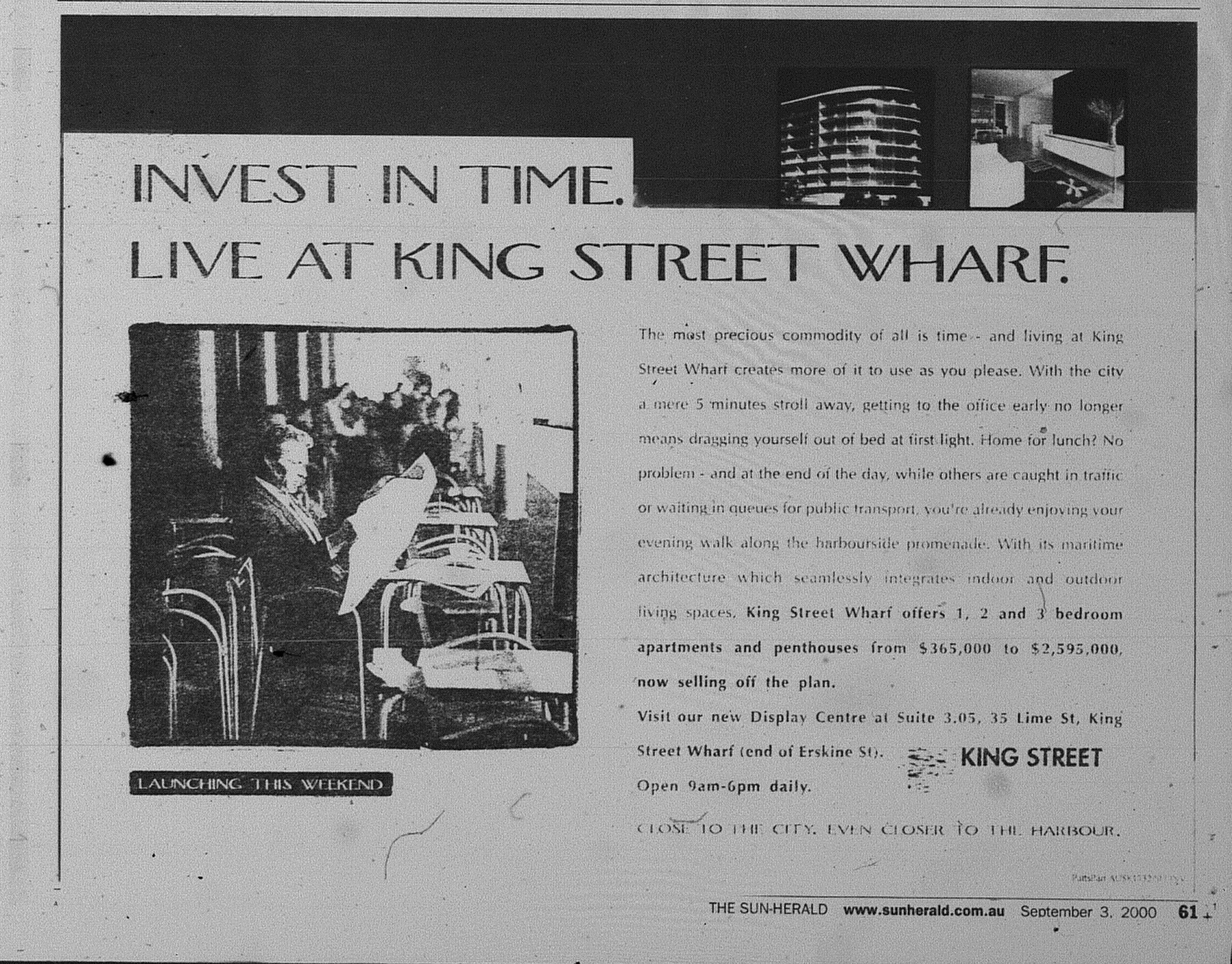
Property Advert of the Week: King Street Wharf (2000)

Below is a newspaper advertisement from 2000 promoting the sale of apartments in the King St Wharf precinct in Central Sydney.

  King Street Wharf Ad sun herald 61

Source: Multiplex. 2000. "Invest in Time. Live at King Street Wharf" (Advertisement). The Sun Herald, September 3: 61. 

Monday, 7 May 2018

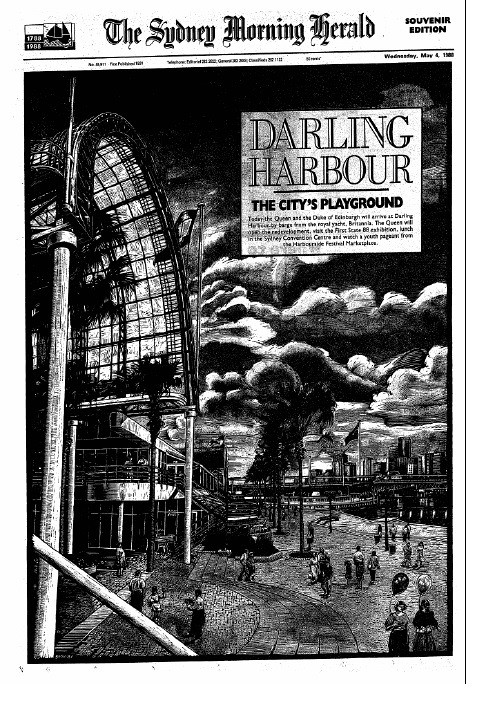
1988: Queen Elizabeth II opens Darling Harbour

Above: The Sydney Morning Herald produced a special supplement to mark the official opening of Darling Harbour on May 4, 1988. 
On May 4, it marked 30 years since the Queen officially opened Darling Harbour on the same day in 1988. Darling Harbour was opened to the public in January, but much of the precinct was still a construction site.


Source: Darling Harbour Authority. 1988. "The A-H of Seeing The Queen" (Advertisement). The Daily Telegraph, May 4: 14. 

Since January, Harbourside opened in two stages and Exhibition Centre (demolished in 2014 for the new complex) was now ready for public use.


Source: Bilkey, M. 1988. "Frantic rush to get Darling Harbor ready". The Daily Telegraph, May 4: 13. 

The Queen arrived on the Royal Yacht Britannia before being driven to Tumablong Park where she officially declared that Darling Harbour was open.

She also visited the First State 88 exhibition at the Exhibition Centre and did a public walkabout.

Below are newspaper clippings from The Daily Telegraph (May 5, 1988) and The Daily Mirror (May 4, 1988).


Monday, 9 October 2017

1990: Pyrmont Redevelopment Scheme


Source: Olsen, L. 1990. "$10bn city facelift: Master plan to develop Pyrmont". The Daily Telegraph, September 26: 9.  

In 1990, the State Government of Nick Greiner was intent on urban renewal on the Pyrmont Peninsula, following the decades-long decline in manufacturing and port operations to suburban centres. The residential population of the Pyrmont/Ultimo area had collapsed from 19 000 at the start of the 20th century to just 1500.

It was not to be undertaken overnight and believed it would take 20 years for the plan to be fulfilled.

Heritage wharves were retained e.g. Wharf Five. It is now Doltone House.


Harris Street was meant to be a "showpiece", but did they mean in terms of heritage protection or being a destination to shop and/or dine?


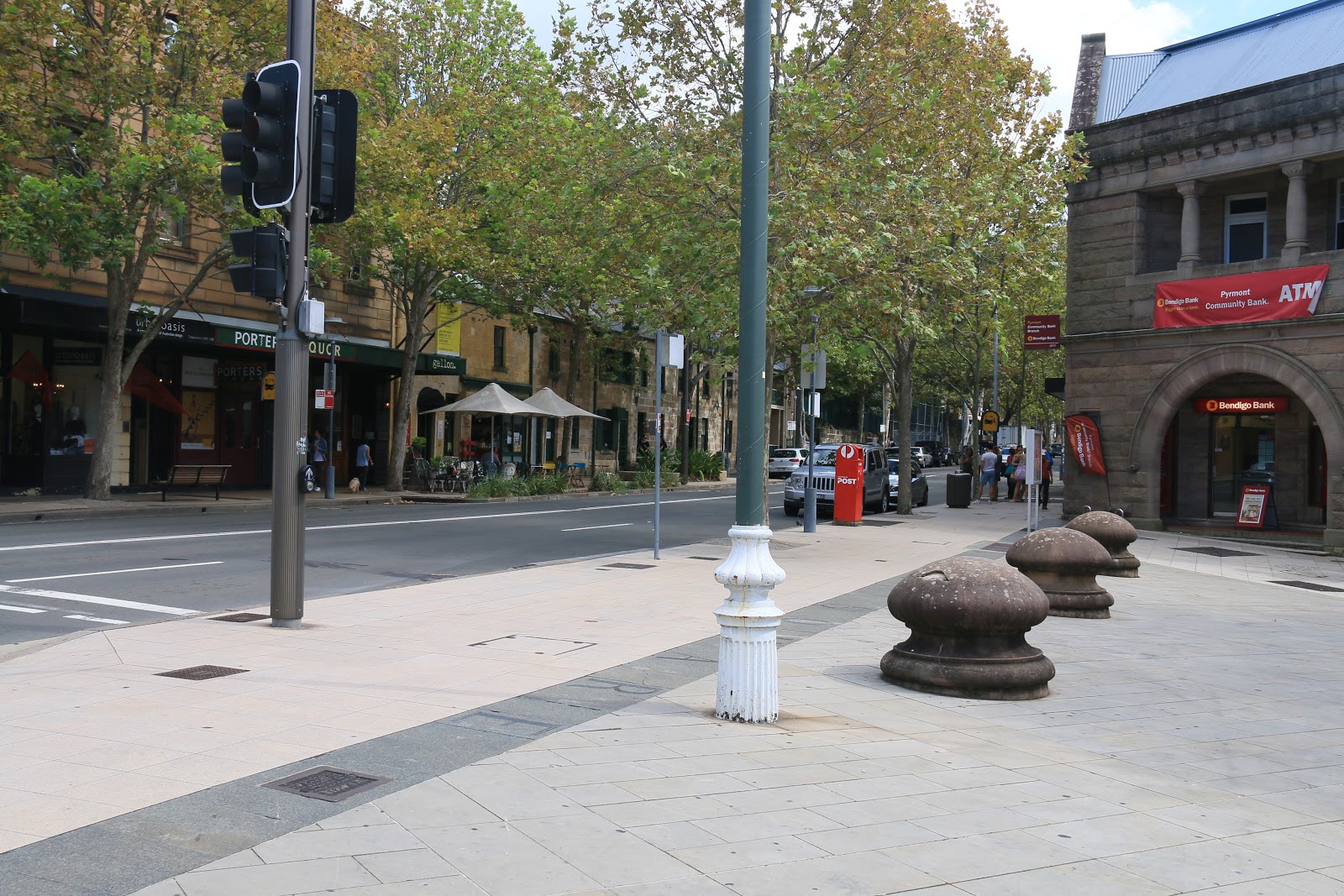
Jacksons Landing at Pyrmont is the biggest of the brownfields developments to occur on the Pyrmont Peninsula. It took more than a decade for the former CSR site to be turned into a high density residential estate. That included the waterfront housing.


The old power station was destined to be an office complex but ended up being the site of Sydney's first Casino.


In light of all the changes, heritage buildings have been lovingly restored:


In the 1990 scheme, it was envisioned that housing would line the entire waterfront. However as the decade progressed, this was largely zoned as public land, creating Pyrmont Park. When the Water Police left Pyrmont, Sydney City Council turned it into Pirrama Park.


Recently, I visited the City of Sydney planning model at Sydney City Council offices in Kent Street and managed to get a model shot based on the angle taken in 1990. Note that the model of The Star is not present as a Development Application for the proposed Ritz Carlton Hotel tower is being created.


Despite amendments to the plans, Pyrmont has become a highly sought inner city address. It has also thrived as a popular address on the city fringes for businesses to be located, particularly media firms.

All photos were taken by the author.

Saturday, 9 September 2017

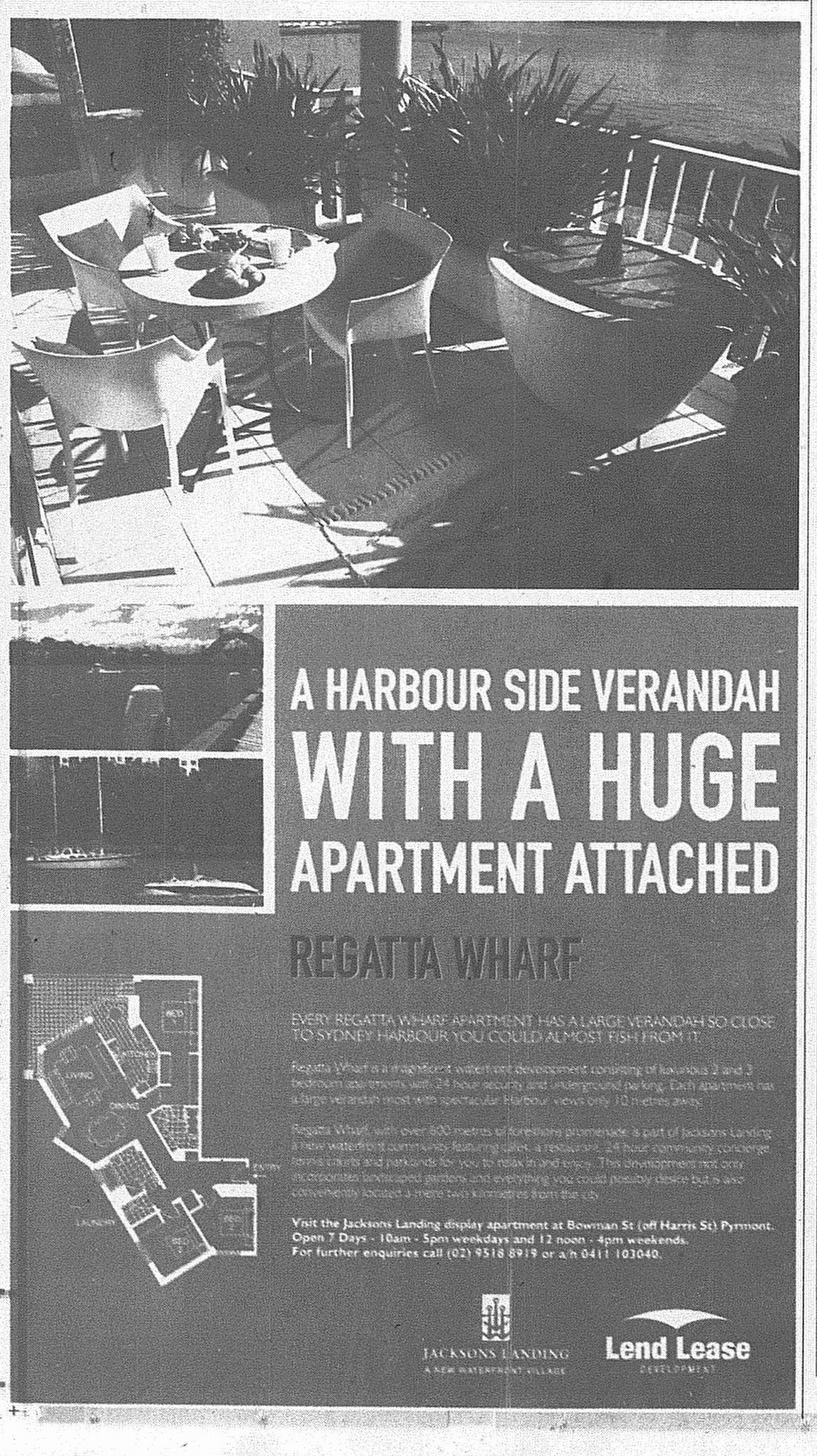
Property Advert of the Week: Regatta Wharf (1999)

In 1999, apartments in one of the first buildings in the Jacksons Landing development at Pyrmont (Regatta Wharf) was on sale. 

Regatta Wharf Ad June 5 1999 SMH 23RE

Source: Lend Lease Corporation (1999). "Regatta Wharf" (Advertisement). The Sydney Morning Herald, June 9: 23RE (Real Estate Liftout). 

Monday, 20 February 2017

1989: Teething Problems at Darling Harbour

Setting up anything (in general) or building something will always create teething problems. Darling Harbour was no different. One year after its official opening in 1988, The Sunday Telegraph looked back at the first year of the Darling Harbour redevelopment.

  
Source: Broekhulise, P. 1989. "A Year On, and Nothing's Changed!". The Sunday Telegraph, May 7: Page Unknown. 

The headline does not reflect the true nature of the article in saying that nothing has changed in a year, particularly in its opening year. Maybe the headline might have worked the following year if they wanted to compare 1989-1990 with 1988-1989.

Despite concerns about the structures, overbudgeting and failure to get key facilities and attractions open in time, authorities had believed that it had become a hit with Sydneysiders.

Its biggest success happened to be after hours when crowds flocked in, but people were not keen on visiting during regular work hours. Transport access was a key issue (in fact still is today), and there no bus or ferry services serving the area at that point in time, though this would be remedied during the 1990s.

Attracting tourists was another key challenge and a marketing unit had to be set up to address this. You can only assume by the numbers of tourists visiting the area today, that it has been overcome. Locals like myself also step in through word of mouth and actually take visitors from elsewhere to visit. On normal weekdays, it may still feel quiet, but not as quiet as in the past. You do see some people making the 10-minute trek from the Sydney CBD to have their lunch at a cafe or restaurant.

Monorail patronage was identified as not meeting targets and not helped by the fact that some stations in the CBD were holes in the ground awaiting major construction.

One aspect that is not looked is the urban renewal of the Pyrmont Peninsula because Darling Harbour would act as a catalyst for the redevelopment of that part of the city. Darling Harbour would provide the open spaces, shopping, and dining that the residents would need.

And just over at Cockle Bay and the streets surrounding Darling Harbour to the east- they were undergoing significant changes as hotels, offices, and (later) apartments would be built, providing another source of people for the area. The western parts of central Sydney were only being discovered. Now its become the new downtown.

Monday, 13 February 2017

2000: The Pioneers of Pyrmont (Daily Telegraph Feature)

The Daily Telegraph visited Pyrmont in mid 2000 to report on how urban renewal was shaping the area.

While the focus on the growth in the residential population (increased from 3000 to 5000)  it did refer to the area ascending to be come the city's Silcon Valley as information technology firms descended into the area. This was occuring just after the Tech Bubble had burst.

Fast forward to now, the Sydney CBD itself seems to attracting the firms themselves as this report from The Sydney Morning Herald  last year shows. They want to be located near services and transport plus some of their talent prefer to work downtown.

It was already a hub for media, but since 2000, has established itself further. Many of Sydney's radio stations broadcast from Pyrmont including NOVA, 2GB, 2UE, 2CH and 2SM. The Seven Network also moved its corporate headquarters into Pyrmont in the years following 2000.

Compare the transport and services provided downtown as opposed to Pyrmont. Dozens of routes serve the Sydney CBD, but only the 389 and 501 serve Pyrmont. Pyrmont is served by light rail which connects with heavy rail services at Central and Dulwich Hill, but does not served by heavy rail.

There is no more monorail either which stopped at Darling Harbour, pulled down in 2013.

The other big change was the rise of dining with cafes and restaurants making an appearance. You walk around Harris Street today, and you'll be greeted to a wide variety of cafes and restaurants to cater to a wide variety of tastes. That has grown immensely even more since 2000.

Readers were reminded that many changes were ahead including the massive Jacksons Landing Development which would take until early the next decade to complete.

Read more from the original article below.


Source: Casey, M. 2000. "Pioneers of Pyrmont". The Daily Telegraph, August 5: 38-39. 

Monday, 3 October 2016

1987: Sydney Airport Centre development

In late 1987, plans were unveiled by CRI for a major development at Mascot, near the Domestic Terminal complex. The development would include an 11 storey hotel with a retail complex, plus new catering facilities for Qantas and major airlines. Bourke Street. would be extended through the area.


Source: Holland, L. 1987. "$150m hotel complex on airport site". The Daily Telegraph, November 25:9. 

The hotel was built and is currently the Holiday Inn Sydney Airport. In recent years, the Adina Apartment Hotel has opened alongside it. Qantas ended up basing their headquarters there. The key decisions that Qantas have made in recent decades have been made right at Mascot, not a boardroom in central Sydney.

This combined with the decision to construct Mascot Railway Station as part of the Airport Line (opened 2000) has helped establish it as a centre of business. It's proximity to rail and to the city also has aided in the establishment as a residential hub. Mascot is also regarded as part of Sydney's global arc of business stretching from Sydney Airport north to the Sydney CBD and northwest to Chatswood and North Ryde.

Below are two photos of the Qantas Headquarters (Photos taken by the Author).


Holiday Inn Sydney Airport (Photo taken by the Author). 


And finally, two photos of the area around Mascot Station in 2011 (Photos taken by the Author).


Monday, 29 August 2016

1989: Vision for the Pyrmont Peninsula

As you can see, I enjoy sharing visions for Sydney and this one focuses on a 1989 clipping from The Sunday Telegraph where a vision for the Pyrmont Peninsula and the Bays Precinct is featured.


Source: Flamstead, K. 1989. "An emerald vision for an eyesore". The Sunday Telegraph, March 19: 155.

Some points of interest:
  • The "Golden Gate" style bridge became a reality - ANZAC Bridge which was opened in 1995.
  • The City West Link made it as far as Lilyfield but Westconnex will now link the road with the M4 Motorway at Concord.
  • The White Bay intersection became a reality.
  • Residential Development has ended up being predominantly midrise with some highrises permitted. Some of the area has since become public land.  
  • Proposed tourist developments never eventuated at Darling Island with office and apartment buildings built.
  • The old goods line became a light rail line in 1997. It initially went to Glebe, was extended to Lilyfield (2000) and then in 2014 to Dulwich Hill. 
  • There is no direct identification of which Grain Terminal (Pyrmont or Glebe Island) was going to be replaced with terrace typed housing. At Pyrmont, Apartment blocks were built and incorporated a public park. At Glebe Island, the silos are heritage listed.
  • Blackwattle Bay did get a marina which is home to Sydney's Super Yachts.
Planning is underway on the Bays Precinct which will focus on the redevelopment of the former Port at Glebe Island and the Sydney Fish Markets. 

Monday, 18 April 2016

1992: Leichhardt Council Vs The State Government on local development.

Those on the Balmain Peninsula have been critical in plans to redevelop the former wharves at Glebe Island and surrounds along with plans to redevelop the site of the Balmain Leagues Club at Rozelle. In 1992, locals had lost the battle for medium and high-density housing to be built at five sites in the area, which were former industrial sites.


Source: Scott, S. 1992. "Council loses fight over housing plan". The Daily Telegraph Mirror, February 22:2. 

By the end of the decade, the sites were redeveloped into highrise residential estates like the former Balmain Power Station, which become Balmain Shores.


Above: Balmain Shores. Photos were taken by the Author.
The Colgate Palmolive Factory buildings were spared the bulldozer, along with three of the original buildings at the Lever Brothers Site.

However, the scale of the development has to be put into question. It is the density and scale of the buildings. I find the buildings to be too close to each other. You might be better off making them taller and slimmer, but locals would object to that. With highrise buildings, sometimes it is better to increase the height of the building and cut on the bulk. That might have worked. Otherwise, I would have suggested a scaling back. However, it seems that everyone in Sydney wants their piece of harbourside land and yet have become desirable places to live.

Locals did have a victory of some sort. The Caltex Site at Ballast Point was bought by the State Government in 2002 for $16 million and was converted into a public park.

Monday, 7 March 2016

1973: Sydney Harbour development

In 1973, The Daily Telegraph decided to explore some possible visions for Sydney's future based on news events of that time. For decades now, State and Commonwealth land have gradually been handed back to the public and with each handover, there is the debate of what to do.

North Head, for instance, was envisioned as being a park with tree-lined roads but there would be a lookout tower and restaurant.

The vision that could have probably been the most controversial would have been the plan to build a massive marina at Balmoral. This would also include demolition of the famous baths. Balmoral is noted for its long beach, quiet waters and picturesque setting which attracts people from far and wide, so a marina may have not been the right move for the suburb. The idea for a large marina stemmed from the concerns about access to the harbour and mooring space.

It was proposed that other sites around the harbour would also house marinas, though many of those sites have not experienced marina development in any capacity.


Monday, 22 February 2016

1994: Phillip Cox slams Sydney Architecture

This week, I share an article from The Daily Telegraph in 1994 where Phillip Cox raises concerns that Sydney's reputation was being destroyed by poor architecture and urban planning. With the city recently handed the rights to the Olympics for the year 2000, the change needed to be done then.


McDougall, B. 1994. "Architect lashes city's ugly legacy". The Daily Telegraph, March 15: 4. 

Cox outed East Circular Quay (yet to be redeveloped), Cahill Expressway, Walsh and Lavender Bays for major surgery. East Circular Quay was redeveloped along with Walsh Bay, but has thrived. Walsh Bay has established itself as a cultural centre and the Barangaroo Development will propel it further.  The Cahill Expressway and Lavender Bay were (and still are) untouched.

A vision for Sydney was needed. I feel that this message is still ignored to this day. We need to ask ourselves where we want to head as a city? Do we want to be a centre for business? Do we want to be a centre for culture or focus on lifestyle? These are questions that must be answered.

He did raise some valid ideas like utilising the space in and around the Cahill Expressway to reduce its scale. The State Government recently indicated plans to redevelop the area with the areas at street level to be the focus.

And the Civic Improvement Squads could be a possible alternative to the dole, provided it gives people real skills needed for the workplace.

Monday, 30 November 2015

1985: Plans Unveiled for Darling Harbour

I have been following with great interest, the redevelopment of Darling Harbour. Sydney's Exhibition and Convention Centre are being rebuilt from scratch in a multi-billion dollar project. This also includes incorporating the Sydney Entertainment Centre into the complex along with a smaller concert hall that can be used for conferences and exhibitions.

It was thirty years ago, in 1985 that Sydneysiders were introduced to what is now the original Darling Harbour development. It was a very bold vision of the NSW Government led by Neville Wran, to redevelop what was then a goods yard and port. The initial plans were announced the year before, but it did take time to come with the final plan. There is no mention of the monorail that was to link the city with the precinct.


Source: 1985. "Vision of our future city". The Daily Telegraph, August 19: 10-11.

The goal was to have it ready by January 26 1988. That didn't happen. Only Tumbalong Park was ready on time with other projects opening several months later. The Sydney Exhibition and Convention centre opened in May 1988 while the first stage of the Harbourside Shopping Complex opened in March 1988. The National Maritime Museum did not open until 1991. I do encourage you to read the editorial because it is spot on in its predictions for Sydney. One comment, in particular, draws attention:

  "Darling Harbour will be a showpiece for the people of today and for generations to come."

And it did from day one. The crowds flocked from everywhere and has been a constant hive of activity especially at weekends. The Sydney Exhibition and Convention Centre was a highly sought location for exhibitions and turned Sydney into one of the worlds most popular cities for exhibitions and conventions. Tumablong Park is a favourite with families and regularly hosts major events and festivals.

Additions in the 1990s like the IMAX Theatre and Cockle Bay Wharf further enhanced the area as a major destination for Sydneysiders and visitors to the emerald city.

Recent years have also seen an introduction of office and hotel space on the site itself, adding to the mix of uses that the area has.

Even with the redevelopment of the Exhibition and Convention Centre, I believe that the area will still be a showpiece for the people for Sydney. Some might ask why such good facilities were pulled down? They were victims of their own success, and really some flexibility is needed as well.

There has been the discussion of a redevelopment of Harbourside, which has probably been the big disappointment with the Darling Harbour project. It may have leading restaurants, cafes and bars, but the general retail offering is poor, like that of a suburban shopping centre along with tacky souvenir shops. One idea is to demolish and rebuild a new centre, but build an office tower above it.

Monday, 10 August 2015

1965: Flats could save Sydney's dying uptown (Article)

Sydney's southern CBD has proven to be popular in the past two decades for those who want to live in the heart of Australia's largest city and there are hundreds if not thousands of more apartments on the way.

One article that may be of interest is from 1965 when The Daily Telegraph tried to ask the question of whether or not unit development might revive the southern part of the city but also help bring activity to the financial heart of the city.

At that time, it was deemed unsafe for women to walk those streets at night and the buildings were "bad". It also mentioned the large landholdings that the State and Federal Governments had, which might be used to revitalise the area.

During the mid-1960s there were a number of unit projects that sought to begin the process like the Park Regis Towers, but it was not until the 1980s and 1990's that a major attempt took place to encourage apartment living in the city.

And we move forward to the present, and it seems like everyone wants to live downtown. Many want to escape the long commutes from the suburbs, be in easy reach of the city's attractions, services and be close to work.


Source: Anonymous. 1965. "Flats could save Sydney's dying uptown". The Daily Telegraph, April 2: 26-27. 

As for the future, the only way is up and possible developments like this one I found on the Skyscrapercity forums this week could be the benchmark in bringing the area to life.