At the former ATO Office Building site in Hurstville, two residential towers are currently under construction - one is 18 levels tall and the other 14 levels.
The ATO Office Building was seven levels tall and completed in 1994. Demolition occurred in 2017.
Below is an article as published in the January 13, 1987 edition of The St George and Sutherland Shire Leader. This involved a twin tower scheme for a 10 level tower and an 11 level tower. Like the current residential development, there were objections e.g. traffic and overshadowing.
Had this scheme go ahead, I think attracting tenants may have been a challenge. The ATO building while shorter had larger floorplates that would appeal to larger firms. As for redevelopment, the towers would have been gutted and converted into residential, though I would not be surprised if they were demolished and replaced, like what has been done in regional centres like Epping.
Showing posts with label highrise development. Show all posts
Monday, 11 February 2019
Monday, 16 April 2018
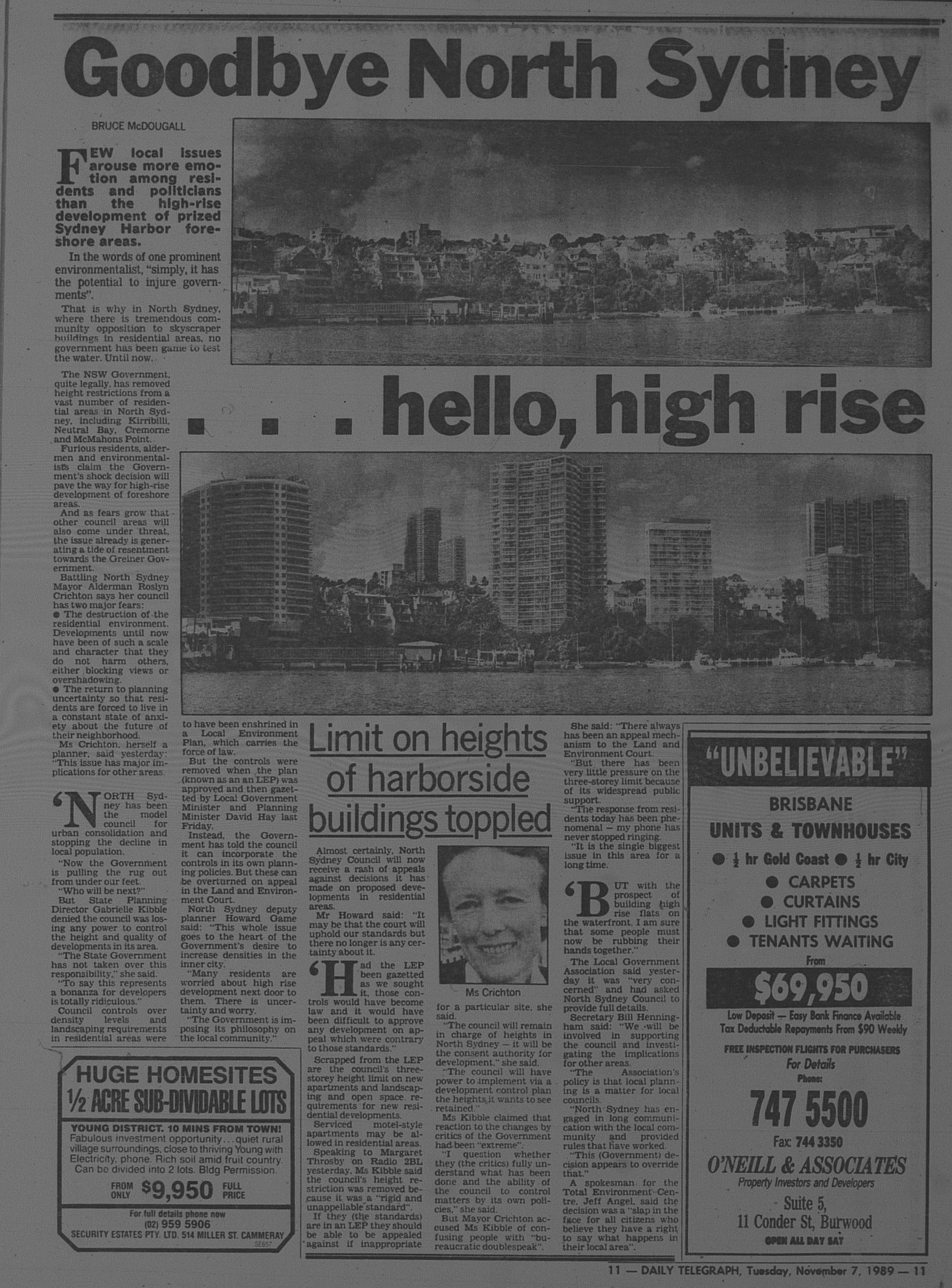
1966: Overdevelopment of Sydney Harbour foreshores
"Overdevelopment" is a very common term used in Sydney today to describe the rezoning of neighbourhoods for higher density development.
Even in the 1960's, it was being talked about. As this 1966 newsreel shows, it was becoming an issue along the shores of Sydney Harbour. Many of the older homes were being demolished for new unit blocks, especially on the Lower North Shore.
By the end of the 1960's, Mosman council had placed restrictions on the construction of highrise unit complexes before a complete ban in 1973. North Sydney Council would also place their own restrictions on highrise development along the harbour foreshores.
Fast forward to the late 1980's and the issue poked its head up again when the Greiner Government tried to override planning guidelines to allow for higher density development along the harbour foreshores. This did not go down well with North Sydney residents and the local council, who had worked hard to maintain the scale of development and character.
Source: McDougall, B. 1989. "Goodbye North Sydney...hello, high rise". The Daily Telegraph, November 7: 11.
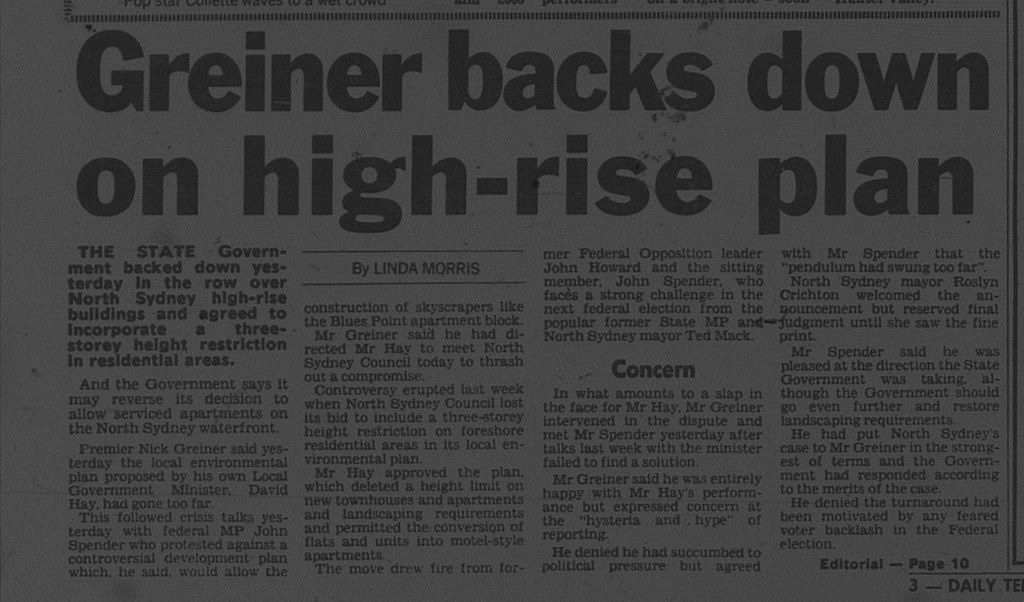
But there was a quick back down.
Source: Morris, L. 1989. "Greiner backs down on high-rise plan". The Daily Telegraph, November 13: 3.
Today, councils on the North Shore are subject to criticism for not taking their share of new housing from residents other parts of the metropolitan area. That will continue for the foreseeable future, but the question is how to balance it?
Saturday, 10 June 2017
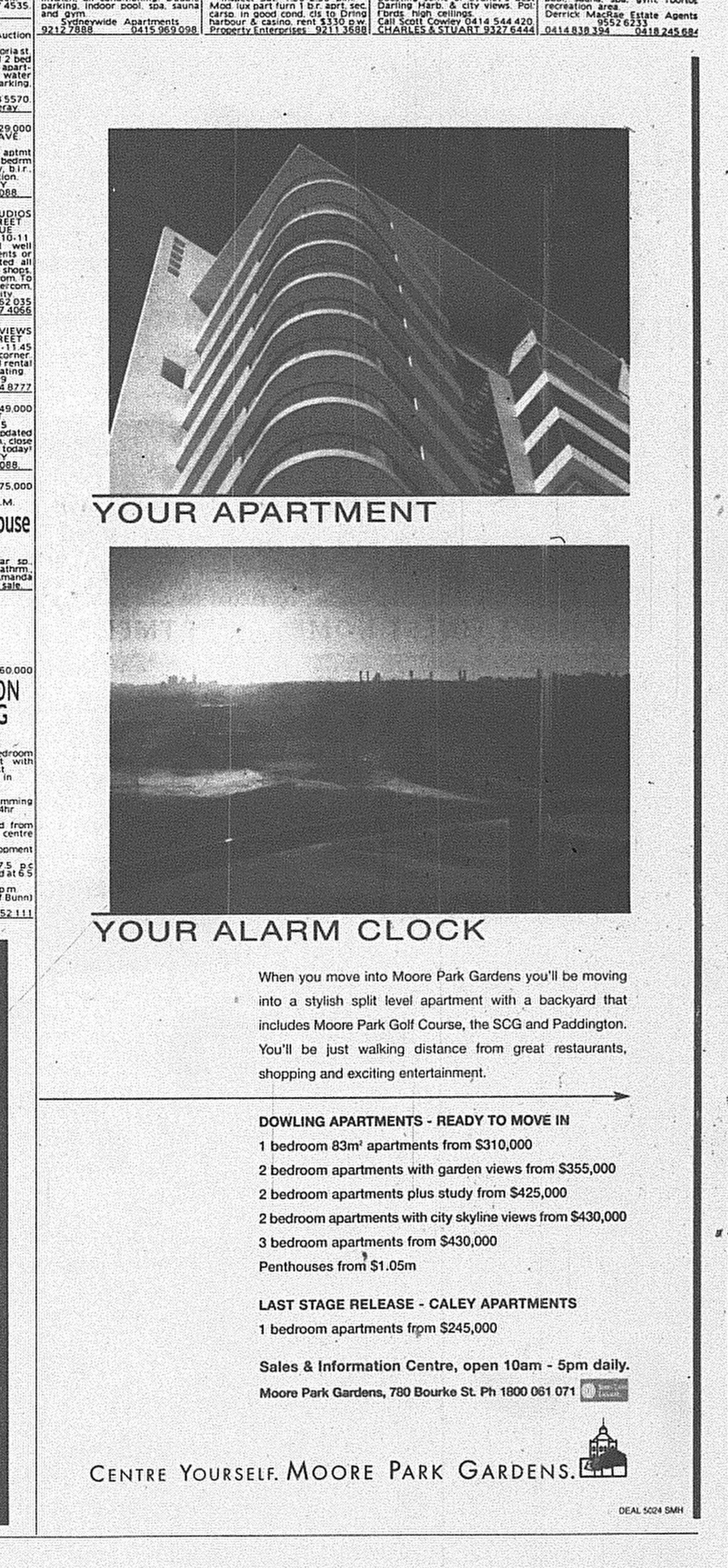
Property Advert of the Week: Moore Park Gardens (1999)
Source: Jones Lang La Salle. 1999. "Your Apartment...Your Apartment Clock". The Sydney Morning Herald, June 5:19RE (Real Estate Liftout).
Monday, 13 March 2017
1966: Goldfields House is open for business
| The photo was taken by the Author. |
In 1966, Goldfields House in Alfred Street accepted its first tenants when it was completed. For its 50th birthday last year, it was given the worst present one could receive - death.
Currently, it is in the process of being demolished, but I did find an article from The Sydney Morning Herald in 1966 which provides an insight into the building. The report mentions the tower is 27 stories tall, but the skyscraper centre lists the tower as being 25 stories tall but the height of 110 metres is correct.
Source: Anon. 1966. "Tenants moving into balancing block on Quay". The Sydney Morning Herald, December 6: 25.
People have mentioned the similarities between Goldfields House and the AMP Building located down the street. They were designed by the same firm - Peddle Thorp Walker. The AMP has a curved facade whereas Goldfields House does not.
Here is another feature on Goldfields House that was published in The Daily Telegraph on November 7, 1966.
Source: Anon. 1966. "Final touches to Gold Fields House. The Daily Telegraph, November 6: 20.
The building's fate was sealed in late 2014 when Chinese Property Tycoon Dalian Wanda bought the building for $425 million. Wanda also owns adjoining properties including the Rugby Club and Fairfax House in Pitt Street. The three sites have been combined, all buildings demolished and two towers will rise. A 30 story (110 metre) hotel tower will rise on the Pitt Street side, while the remainder of the site will have a 59 story (197 metre) apartment tower containing ultra luxury apartments.
Source: Anon. 2016. Untitled. Image. http://www.theaustralian.com.au/business/property/wanda-one-redevelopment-stokes-sydneys-circular-quay-critics/news-story/6228da1274662b4b1d0d3003a491f9da.
What has made the redevelopment of the Goldfields site possible has been the huge demand for apartments in central Sydney along with a relaxation of planning guidelines. The location is also a major factor with the building located right opposite Circular Quay with never to be built out views of Sydney Harbour.
While the office space in Goldfields House was rated as A-grade, businesses prefer newer buildings that can accommodate and reflect current workplace environments, which is difficult in older buildings like Goldfields. While its possible to gut the tower and modify it, returns from converting a building into a residential building can result in higher returns for investors and developers.
Monday, 30 January 2017
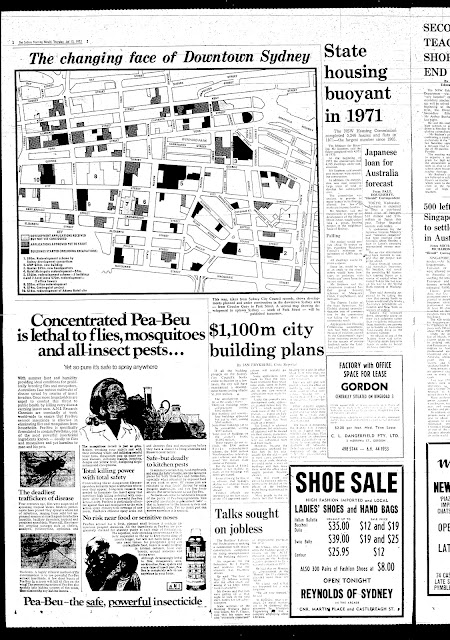
Remember this: The changing face of downtown Sydney (1972)
This is the last entry of our "Remember this" series. We are in the midst of a huge building boom in downtown Sydney. In the early 1970s, we saw a similar transformation take place though it would have been even more dramatic than the boom we are experiencing today.
Monday, 18 April 2016
1992: Leichhardt Council Vs The State Government on local development.
Those on the Balmain Peninsula have been critical in plans to redevelop the former wharves at Glebe Island and surrounds along with plans to redevelop the site of the Balmain Leagues Club at Rozelle. In 1992, locals had lost the battle for medium and high-density housing to be built at five sites in the area, which were former industrial sites.
By the end of the decade, the sites were redeveloped into highrise residential estates like the former Balmain Power Station, which become Balmain Shores.
The Colgate Palmolive Factory buildings were spared the bulldozer, along with three of the original buildings at the Lever Brothers Site.
However, the scale of the development has to be put into question. It is the density and scale of the buildings. I find the buildings to be too close to each other. You might be better off making them taller and slimmer, but locals would object to that. With highrise buildings, sometimes it is better to increase the height of the building and cut on the bulk. That might have worked. Otherwise, I would have suggested a scaling back. However, it seems that everyone in Sydney wants their piece of harbourside land and yet have become desirable places to live.
Locals did have a victory of some sort. The Caltex Site at Ballast Point was bought by the State Government in 2002 for $16 million and was converted into a public park.
Source: Scott, S. 1992. "Council loses fight over housing plan". The Daily Telegraph Mirror, February 22:2.
By the end of the decade, the sites were redeveloped into highrise residential estates like the former Balmain Power Station, which become Balmain Shores.
Above: Balmain Shores. Photos were taken by the Author.
The Colgate Palmolive Factory buildings were spared the bulldozer, along with three of the original buildings at the Lever Brothers Site.
However, the scale of the development has to be put into question. It is the density and scale of the buildings. I find the buildings to be too close to each other. You might be better off making them taller and slimmer, but locals would object to that. With highrise buildings, sometimes it is better to increase the height of the building and cut on the bulk. That might have worked. Otherwise, I would have suggested a scaling back. However, it seems that everyone in Sydney wants their piece of harbourside land and yet have become desirable places to live.
Locals did have a victory of some sort. The Caltex Site at Ballast Point was bought by the State Government in 2002 for $16 million and was converted into a public park.
Saturday, 9 April 2016
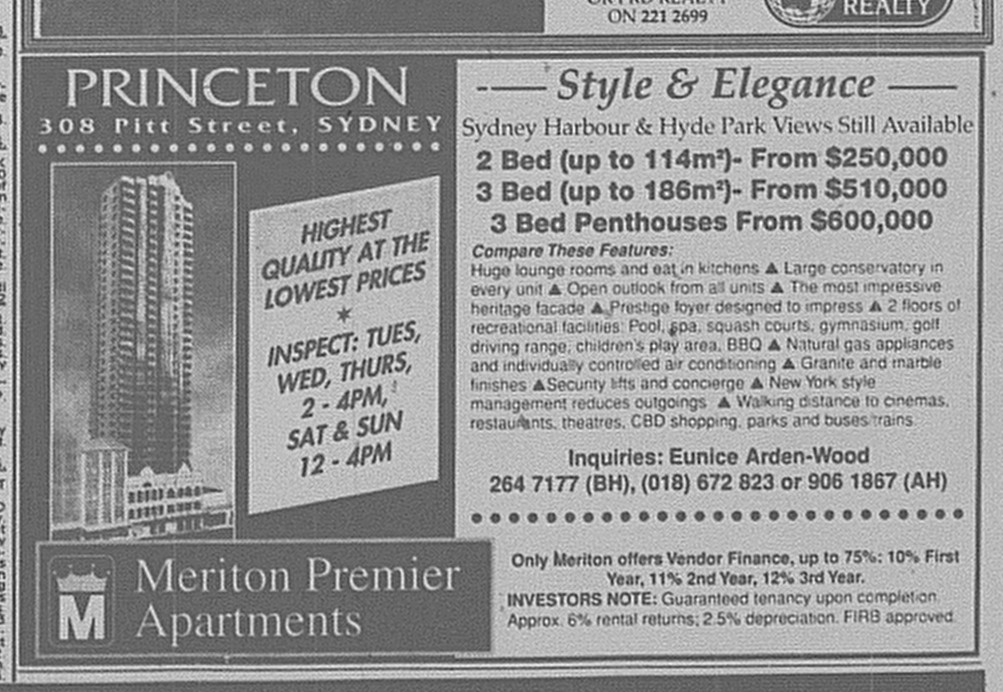
Property Advert of the Week: Princeton, Sydney (1995)
Subscribe to:
Posts (Atom)