Showing posts with label State Rail Authority. Show all posts

Monday, 17 May 2021

NEVER BUILT SYDNEY: Chatswood's "Twin Towers" (1985)


Source: Anon. 1985. "Twin towers planned for Chatswood". The Sydney Morning Herald, October 10: 13. 

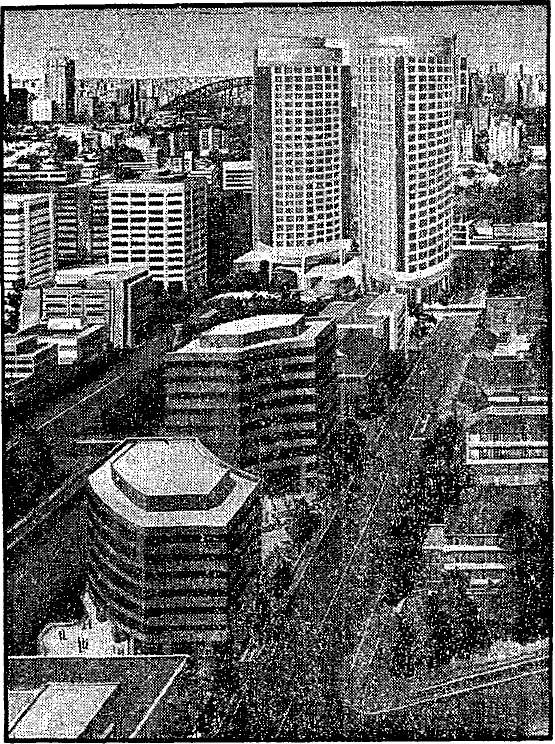
Welcome to Part Five in our current series of "never builts". In 1985, plans were released by Girvan to build a commercial development in airspace above the North Shore Rail Line at Chatswood. This encompasses land on either side of the rail line north of Help Street up to O'Brien Street and bounded by Railway Street (Western side) and Cambridge Lane (Eastern side).

It was planned that the towers would rise above the railway line and enable both sides of the Chatswood Central Business District to be connected.


Source: North, N. 1985.  "Chatswood Connections will be a place for people". The Northern Herald, December 12: 14.

Two office towers containing a combined 105 000 sq/m of space was proposed along with a hotel, retail space, landscaped plaza, convention centre and cinemas. The tall building heights would enable for maximum utilisation of the site for public use.

Revised plans were released in 1989. 


Source: Anon. 1989. "Five star hotel for North Shore". The Daily Telegraph, December 5: page unknown.

The following year, Girvan Corp Limited (Developer) went into receivership and the site was placed for sale. The towers would not be built. 

Between 2002 and 2013, Mirvac developed the vacant sites, including four towers and one medium density building. 

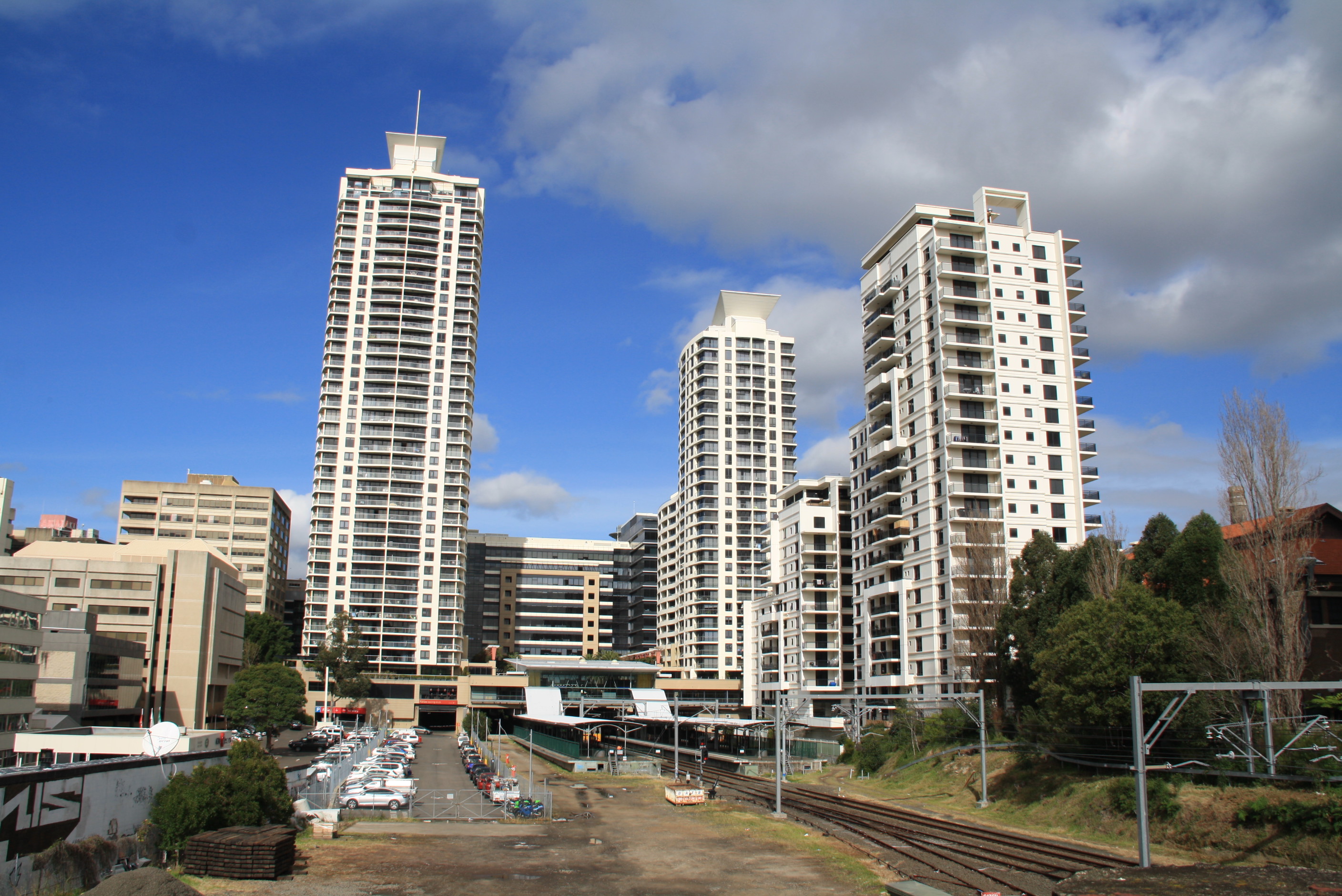
On the Railway Street side, three major apartment towers were built. A common area was built over the railway line for the residents of the buildings on either side. 

Altura (2003) - 25 stories/75 metres

Epica (2005) - 33 Stories/96 metres

Era (2013) - 43 stories/135 metres


On the Eastern side of the Railway line, Cambridge 24 stories/85 metres (2007) was built along with B2M in Cambridge Lane.

Above: Cambridge Tower.

Above: B2M

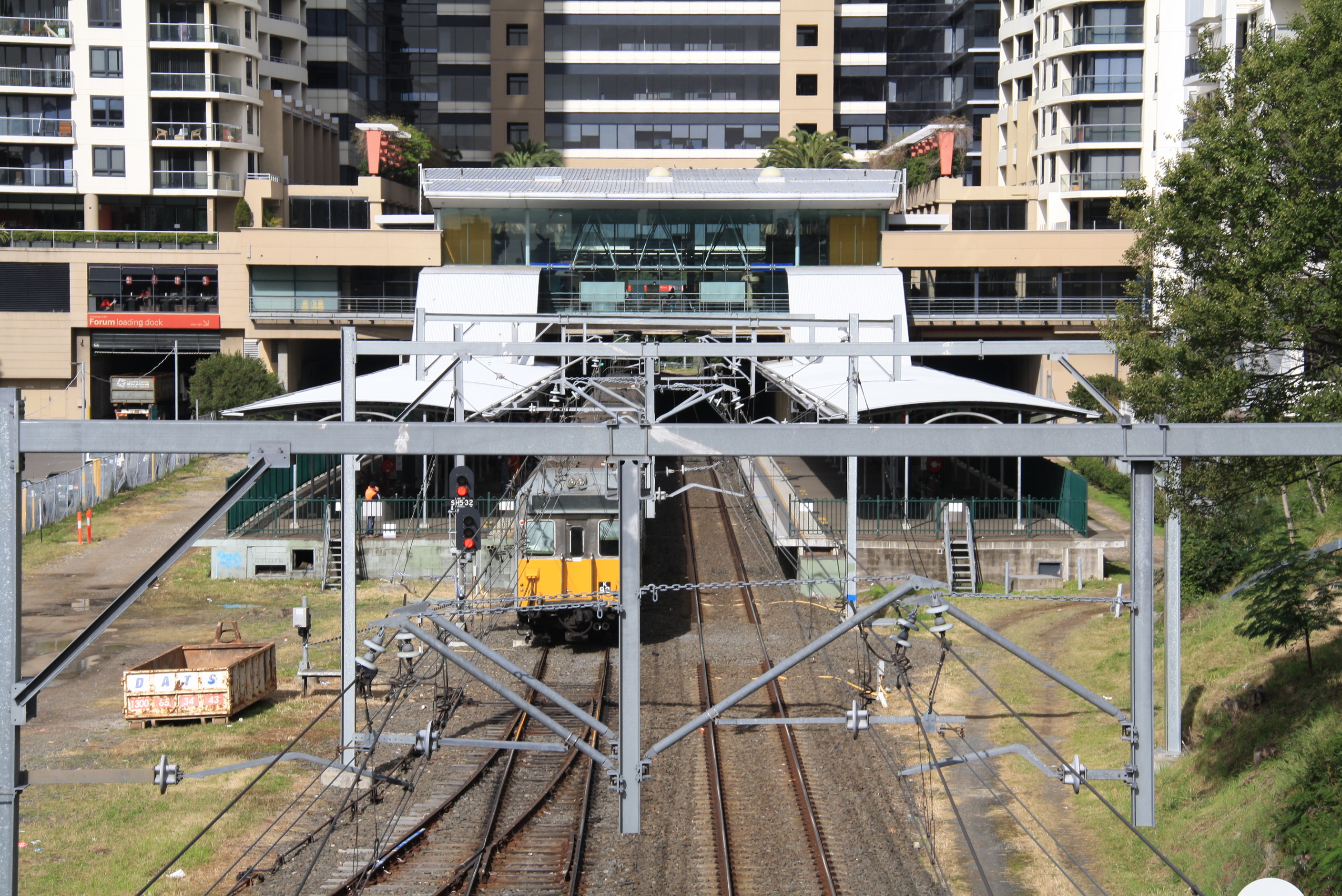
A pedestrian walkway was built to link both sides of the railway line which goes under the North Shore railway line. Public spaces were also provided. A small landscaped park is located between Era & Epica in Railway Street and a small plaza is located at the Corner of Cambridge Lane & Help Street.

Above: Railway Street Park.

Above: Public Plaza at the Corner of Cambridge Lane & Help Street.

This was a lost opportunity for Chatswood as the proposal would have been a destination in itself but also could have possibly attracted a major firm (especially today) in terms of leasing office space within the towers. It was a project that would have truely connected both sides of the suburb. The redevelopment of Chatswood Interchange in the 2010's has helped with linking both sides of the suburb but would not make the impact that could have possibly had occurred. 

Skyscraper Data featured in this entry was sourced from Emporis. Photos were taken by the Author in 2021. 


Monday, 21 September 2020

1988: The arrival of Tangara Trains - More advertisements

In 2018, I wrote an entry on the arrival of Tangara Trains on Sydney's rail network as it had been thirty years since they commenced service. It is the most read entry to date.

I published a few of the newspaper advertisements in that entry, but have since found a few other newspaper advertisements worth sharing.

The first two are different versions of How far can a train go in 3 years?


Source: State Rail. 1988. "How far can a train go in 3 years?" (Advertisement). The Sydney Morning Herald, January 13: 10. 


Source: State Rail. 1988. "How far can a train go in 3 years?" (Advertisement). The Sun Herald, January 24: 135. 


Source: State Rail. 1988. "Take a free ride into the 21st century" (Advertisement). The Sydney Morning Herald, January 18: 10.

Source: State Rail. 1988. "Commuting: the shape of things to come" (Advertisement). The Sun Herald, January 17: 88. 

Related Entry

MILESTONE: Tangara Trains turn 30 (1988)

Monday, 22 April 2019

Remember This? The Sydney System Rail Advertisement (1987)

Remember This? is back for the next few weeks but I am going to focus primarily on old advertisements that have screened on Sydney Television.

There have been a number of individuals who have gone through their old VCR's and Betamax videos and have uploaded advertisements from TV shows that they would have recorded. The collections available get bigger.

I have downloaded the videos from Youtube and viewed them for curiosity and have been bought memories back.

This week, I am going to share an advertisement that State Rail screened in 1987 focusing on the Sydney Rail Network. It was known as The Sydney System. Going by the information that I had, this was screened on Channel 7 on March 3, 1987.

You'll notice that the commercial was filmed on the Illawarra and Eastern Suburbs Rail lines e.g. scenes of a train crossing the Como Bridge feature just after the start of the advertisement. I also saw footage from the drivers cab approaching Rockdale Station.


Monday, 26 February 2018

1999: The Forum Development at St Leonards

Above: The Forum at St Leonards. The photo was taken by the Author (2013).

More often than not, what we end up seeing built on any site can be better than what might have been if an original plan or scheme had gone ahead.

The Forum at St Leonards is an excellent example.

What makes this complex so great? It is a model of how transport-orientated development should be in Sydney. In fact, it's a community where you can live, shop, work and have handy access to transport with St Leonards Station below the complex.

Above: St Leonards Railway Station. The photo was taken by the Author (2013).
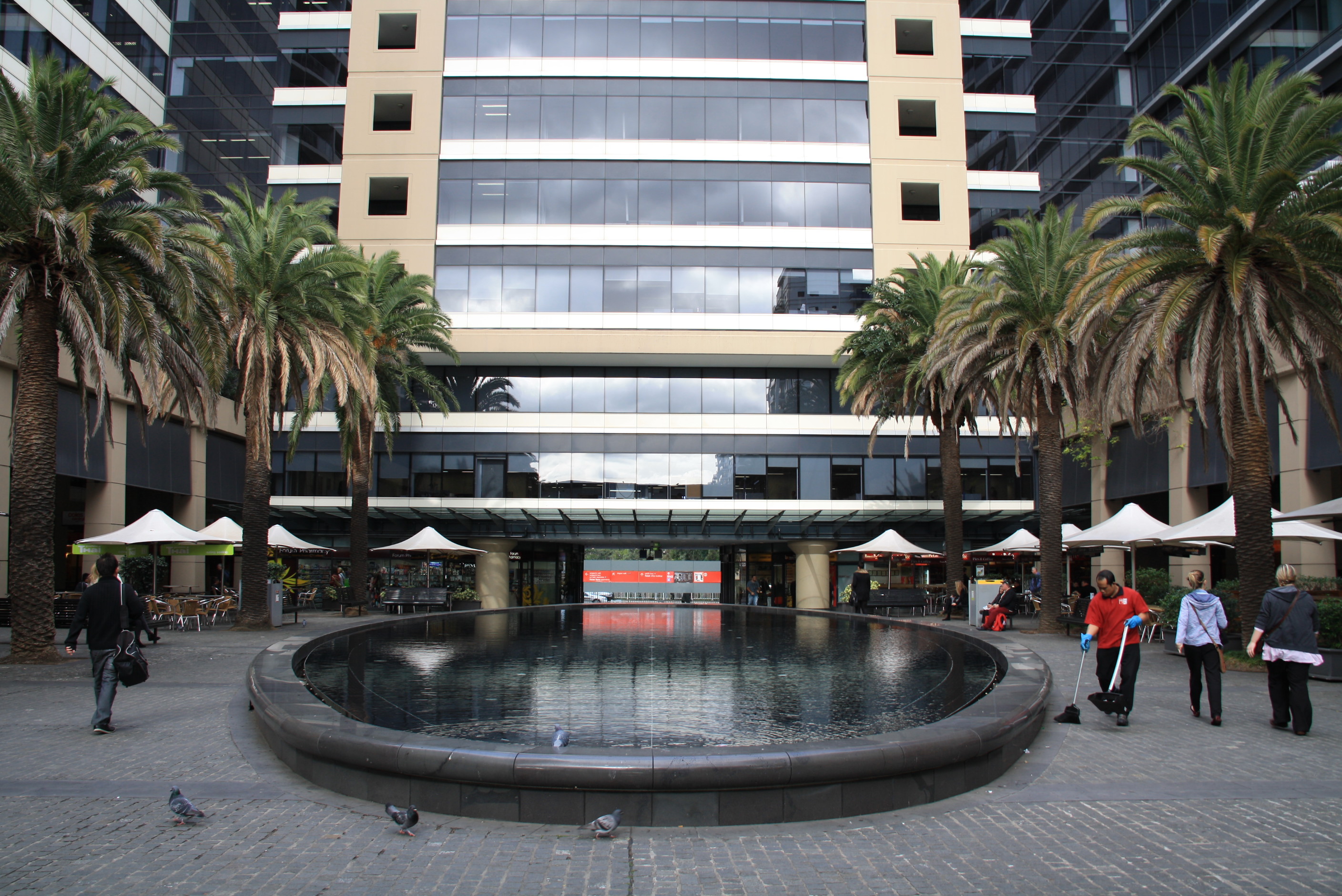
It comprises two apartment towers and three ten 10-level office buildings rising above a retail podium and town square.

Above: The Forum Town Square. The photo was taken by the Author (2013).

The high elevation allows the towers to be visible from right across the city.

But how did the development evolve into what it is today?

Planning began in the late 1980s. In 1987, the State Rail Authority put to tender 7.5 hectares of land for commercial, residential and retail development. The following year, Zenith Development Corporation paid $67.3 million to lease the airspace above St Leonards Railway Station.


Source: Morris, L. 1988. "St Leonards deal an $82m boost for SRA". The Daily Telegraph, December 19: 9.

In 1990, Colliers International put the development out to tender. Two office towers of 120 metres in height, along with a retail complex, were proposed for the airspace above the station. At the time, it was anticipated that completion would occur in 1992. St Leonards Railway Station had been relocated to the south of the Pacific Highway to enable construction of the development.

Excavation of the site had also commenced, though it was suspended by the end of 1990.

Source: Anon. 1990. "Untitled" (Artists Impression). The Sydney Morning Herald, August 28: 30.

Source: Anon. 1991. "Untitled" (Artists Impression). The Sydney Morning Herald, April 9: 30.


The recession and associated property crash of the early 1990s would delay construction for much of the decade.

By the late 1990s, a new scheme had been proposed. The office scheme was scaled back to 32 000sq/m of space (split over three buildings attached to each other on the Pacific Highway side), but two major apartment towers were to be added known as The Forum (38 stories/1999) and The Forum West (27 stories/2003). The Forum is currently the tallest tower in the suburb at 118 metres tall.

All buildings surrounded a new town square housing retail and connected directly to St Leonards Railway Station.

The development was completed in two stages with Stage 1 (eastern half) completed in 2000 with the Forum West development completed in 2003.

The development has won several awards, including:
  • UDIA Award for Excellence in Masterplanned Commercial Development 2002
  • NSW Urban Taskforce – Development Excellence Award 2002 – Urban design
  • Landscape Contractors Association (NSW) – 2000 Landscape construction by a new member – recipient Universal Landscapes
  • Master Builders Association – 2000 Award for Construction Excellence


Monday, 5 February 2018

MILESTONE: Tangara Trains turn 30 (1988)


Source: State Rail. 1987. "It's Coming...Sydney's 21st Century train will be here for Christmas!" (Advertisement). The Daily Telegraph, December 16: 39. 

This year, Sydney's Tangara Trains turn 30.

Introduced into service on Sydney's rail network in 1988, they are the third generation of electric trains to enter into service.

At present, there are 447 carriages in service, more than any other model on the network. The fleet servicing the Illawarra and Eastern Suburbs Rail Line (T4) are virtually Tangara's.

The Wran Government announced in 1984 that they would purchase 450 new carriages to operate on the rail network. At the time, Barrie Unsworth was Transport Minister. Designs for the train were finalised the following year. Capacity would be approximately 2 200, compared with 2 050 on existing double decker trains.


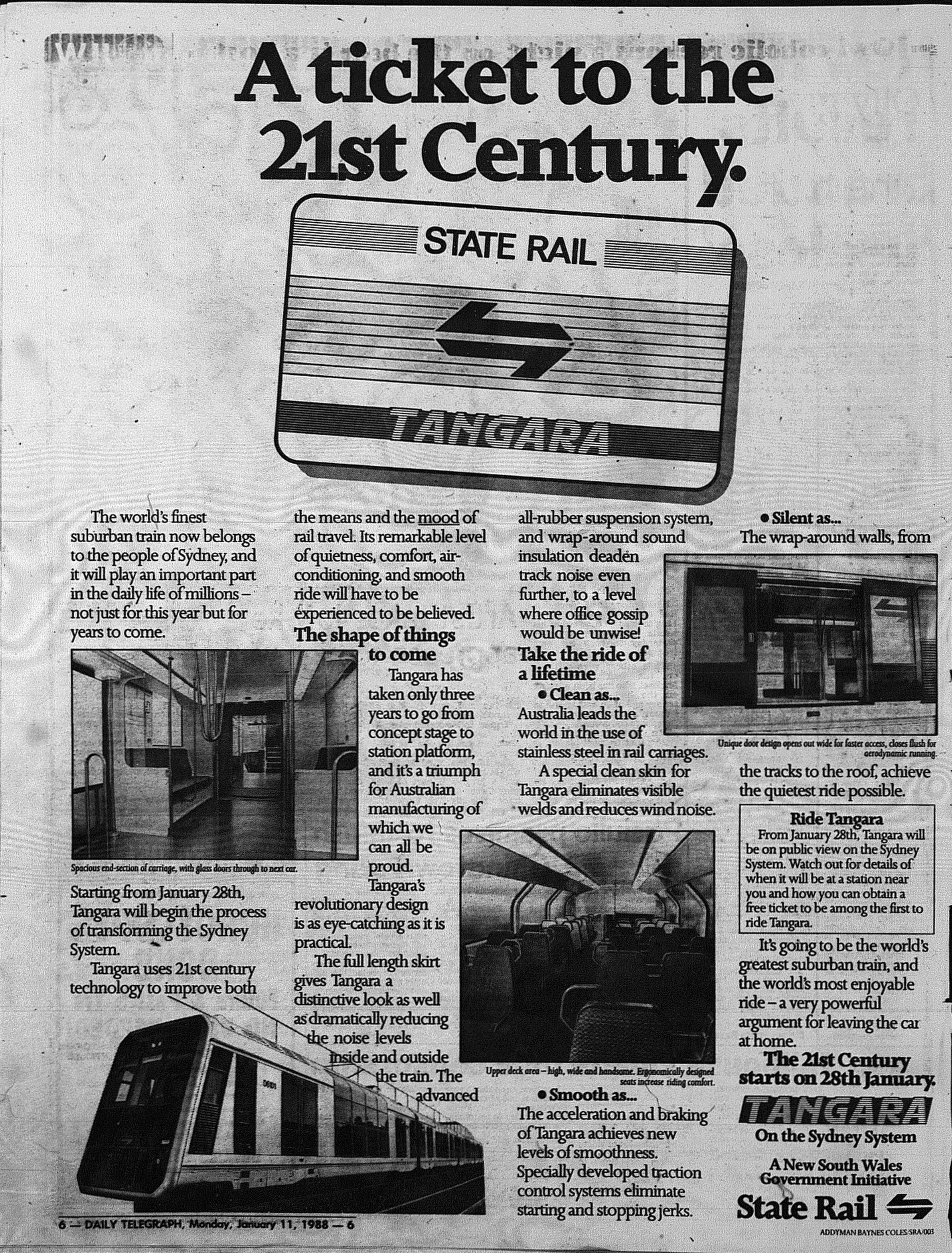
Source: State Rail. 1988. "A ticket to the 21st Century" (Advertisement). The Daily Telegraph, January 11: 6. 

Tangara (Aboriginal word for "to go") promised 21st-century features and a number of firsts for Sydney Trains including:

  • Electronic Final Destination Indicators (eventually installed on S set trains).
  • Security Cameras
  • Air conditioning
  • Vandal Resistant features e.g. fixed seating which was not popular with commuters. 
  • Better Seating and legroom
  • Bigger Windows
  • Reduced Noise inside and outside.
  • Smoother Acceleration and Breaking.


Above: Advertisement promoting the Tangara. Date unknown.

Some Tangara's were configured for intercity services providing toilets, reversible seating and luggage racks. However, when Tangara's were confined to suburban services in recent years, toilets were removed. 

The Tangara made its first appearance on December 20, 1987, at Central Station. By now, Unsworth was Premier.  


Source: Russell, M. 1987. "Transport on track for next century". The Daily Telegraph, December 21: 5. 

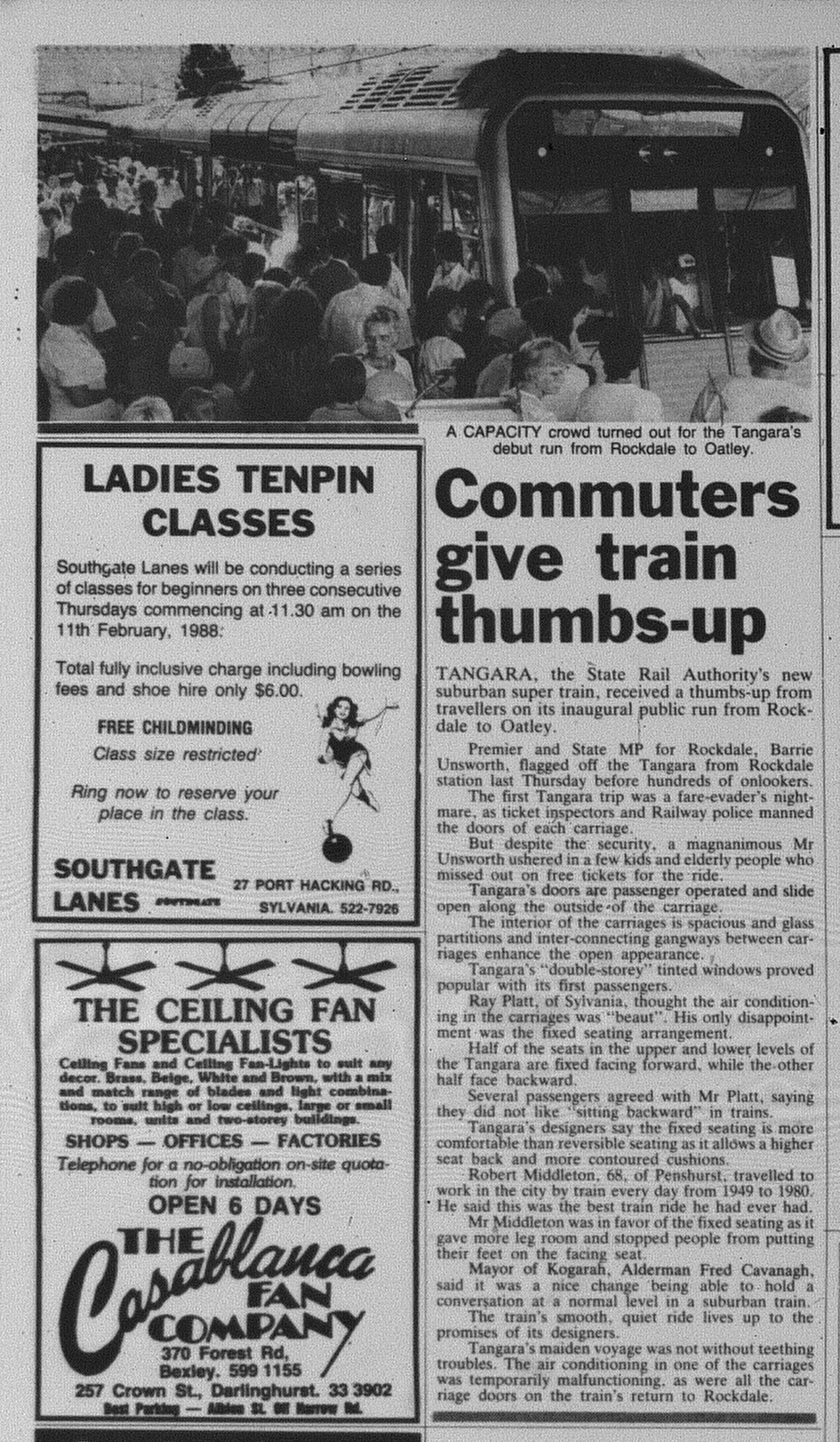
On January 28, 1988 it made its first trip from Rockdale to Oatley. 


Source: Nicholson, N. 1988. "Voters' express: tickets, please". The Daily Telegraph, January 29: 5.

It must be noted that Rockdale was in Unsworth's electorate of the same name and the most marginal seat for Labor in NSW. Oatley was in the margnial seat of Georges River held by Housing Minister Frank Walker. It was a good political ploy with a State Election weeks away. 


Source: Anon. 1988. "Commuters give train thumbs-up". The St George and Sutherland Shire Leader, February 2: 5. 

Sadly for Unsworth, Tangara's would not operate on timetabled services until just after the 1988 State Election which saw the end of 12 years of Labor Government in NSW. According to The Daily Telegraph, they commenced operating on timetabled services on April 12, 1988. 


Source: Clark, S. 1988. "Tangara proves it's on the right track". The Daily Telegraph, July 20: page unknown. 

The rollout of Tangara carriages continued until 1995. 

Additional Entry on Tangara Trains
Added October 2022

Monday, 6 November 2017

MILESTONE: East Hills line connected to the South Line (1987)


Source: State Rail Authority of NSW. 1987. "East Hills - Glenfield Line" (Advertisement). The Daily Telegraph, December 21: 17.

In a few weeks, it will be thirty years since the opening of the extension to the East Hills Rail line that connected the line with the main South Line, providing another route for services to operate from the city to Campbelltown.

An extension to the southern line had been envisioned for over a decade. It was formally announced by NSW Premier Neville Wran in 1983 with the aim of having it completed in three years (1986). The challenge was that the rail corridor would trek through the Holsworthy Army base and required negotiations with the Commonwealth. This was successful with the line running towards the northern boundary.

Two stations were initially proposed, but only one station (Holsworthy) was built.

As part of the extension, the line between Riverwood and East Hills was duplicated to accommodate the additional trains that would operate to and from Campbelltown

On December 21, 1987, the extension was opened. A report from the ABC is featured below.


The biggest winners out the extension were those residing in the Campbelltown region, with reduced travel times to and from the city by rail.  It also opened up development in suburbs including Holsworthy and Wattle Grove.

Building this extension has provided planners with further options to expand the network further. The South West Rail Link (2015) can operate services to the city via the East Hills line, though they operate via the South Line at present.

With the second airport at Badgerys Creek a decade away, it is proposed that the South West Rail Line be extended through to Badgerys Creek and then possibly connect with the Western and North West Rail lines.  I can see foresee the ability for an orbital rail line to be connected. The East Hills Line would be one piece in the jigsaw. It is also connected to the Airport Line (2000) and an extension to Badgerys Creek would allow travelers to travel directly between the two airports.


Monday, 21 November 2016

1989: Origins of advertising on Sydney Trains.

Advertising on a Sydney Train Carriage. Photo was taken by the Author (2016).
I remember back in 2013 when Sydney Trains decided to allow advertising on trains (inside and out) after a trial of advertising on the exteriors of two trains.

What I have noticed with the Liberal Government in NSW is that a number of their ideas while they may appear to be new, were actually on the drawing board when Nick Greiner was premier. Think of his idea to remove (or reroute) the monorail. It took until 2013 for that to happen. 

So it seems that the O'Farrell/Baird Government has taken credit for ideas that were really Nick Grieners idea after all. 

Advertising on trains was considered back in 1989 and here is some proof. At the time it was being considered to aid in reducing the deficit that was incurred with running trains in NSW. In 1989, the government had undertaken a major reform of rail services across the state including cuts to rural rail services and job cuts as part of reducing operating costs.


Source, Grimshaw, P. 1989. "Sponsored Trains to Cut Costs". The Daily Telegraph, March 16: 1. 

Fast forward to now, Sydney Trains is still in deficit. Advertising revenue has been embraced as an opportunity and not as a negative, with the money to be invested across the rail network. I've included a report screened from Ten Eyewitness News (December 3, 2013) to give an overview of the current approach.


It's an issue that will cause debate, but we have been used to advertising on buses for decades.