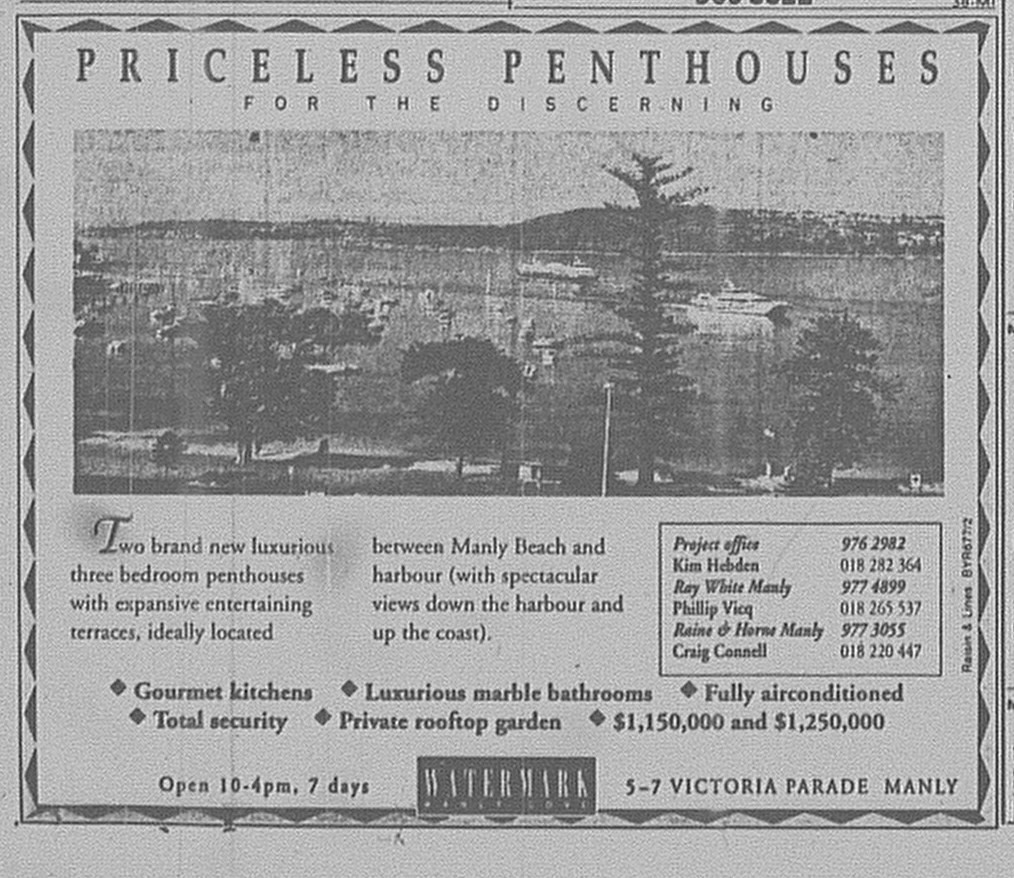
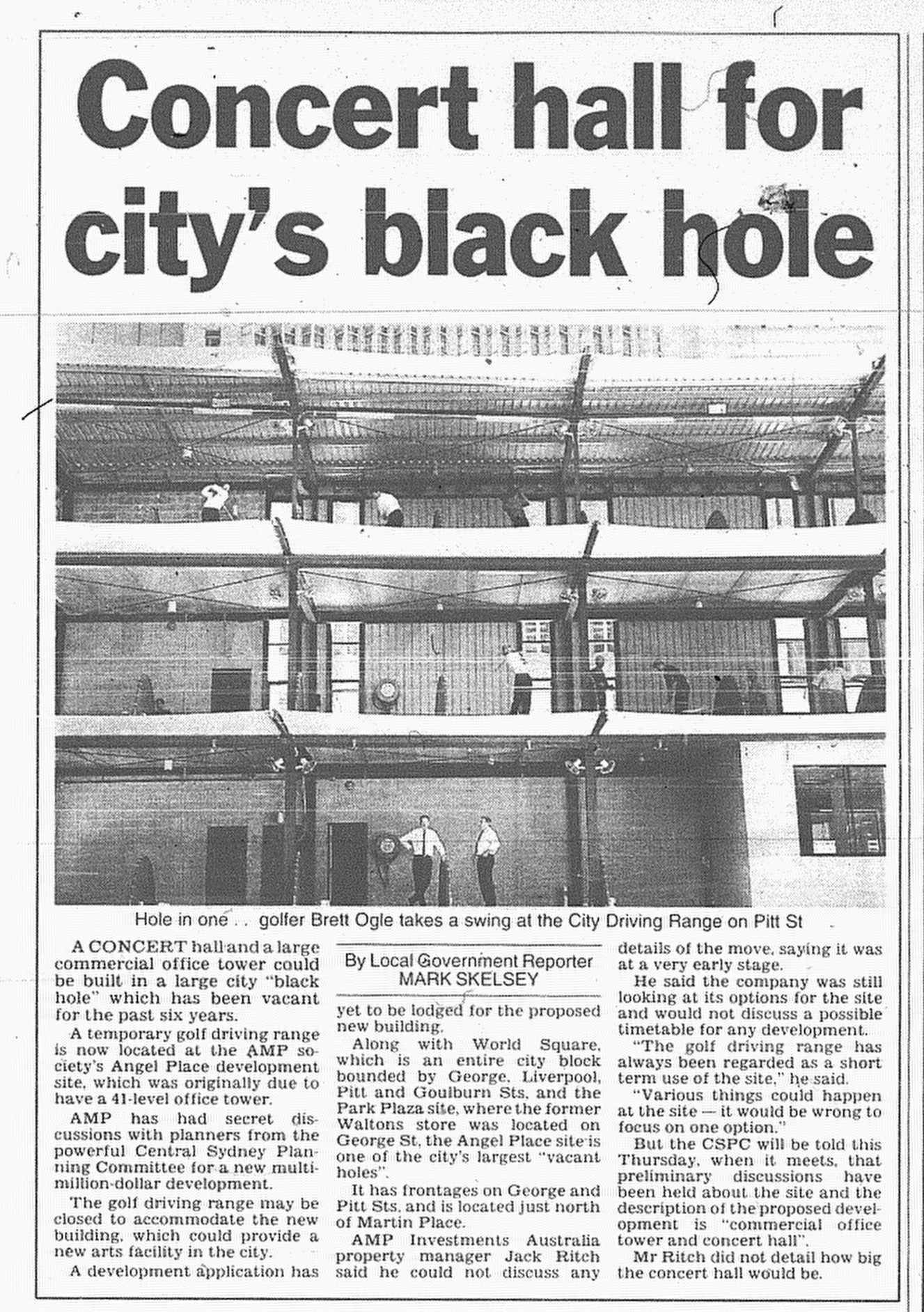
I shared the advertisements, but I did have a newspaper clipping from the last day of trading at Waltons Store at Town Hall on 9 February 1987 before it would be demolished for the Park Plaza/Skytower complex.
It was anticipated that Waltons would return by October 1988, but that did not eventuate as the Bond Corporation struggled to obtain approval for their tower, and eventually sold the site to Kumagai Gumi and Sogo (Japanese Department Store chain) for approximately $278 million in 1989.
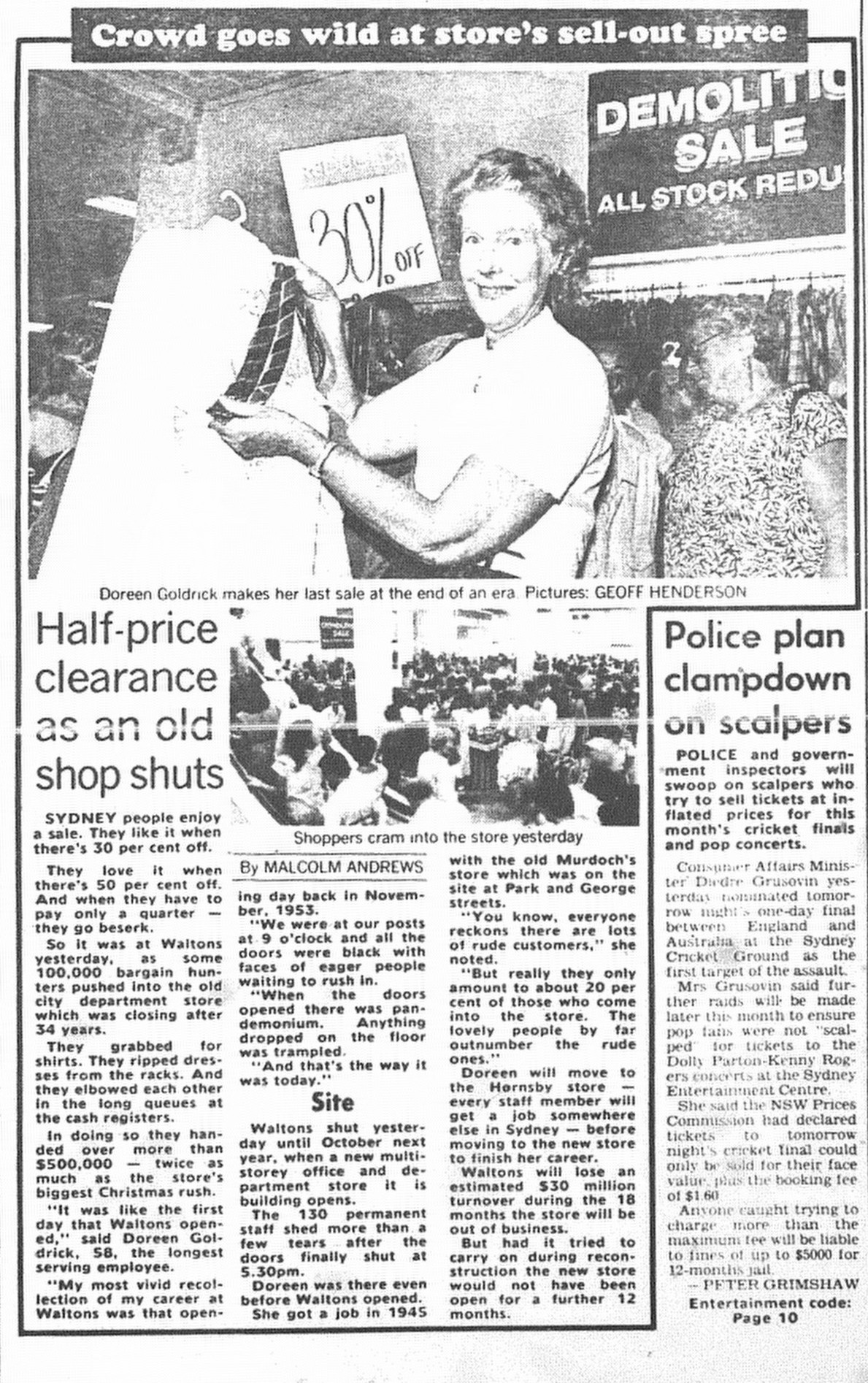
Source: Andrews, M. 1987. "Half-price clearance as an old shop shuts". The Daily Telegraph, February 10: 7.
With items marked down to half price, an estimated 100 000 shoppers ventured through the doors creating an atmosphere like that of the Boxing Day sales.
The Sydney Morning Herald (10 February 1987) reported that it took over an hour to clear the store as staff funnelled customers down towards the ground floor when the doors closed. For those still there, bargains of up to 80% were on offer
Later that month, Waltons was sold by Bond Corporation to the Venture chain, marking the end of the Waltons Department Store chain. Waltons Town Hall was no more.
Related Entries
You may also find my series on the Evolution of the Citigroup Centre worth viewing as it was the redevelopment of the site that was behind the closure and demolition of Waltons Town Hall.