Showing posts with label 1989. Show all posts

Monday, 8 December 2025

1989: Sydney Fish Markets Redevelopment

Sydney Fish Markets November 24 1989 daily mirror 11

Source: Connolly, A. 1989. "It's swish fish". The Daily Mirror, November 24: 11.

Next month, the Sydney Fish Markets will move to a new purpose-built complex built right next to its current site on Bridge Road in Pyrmont. 

The new complex will replace the complex that has traded for 36 years. It opened on November 27 1989 and cost $27 million to build. 

In addition to new trading facilities for the markets and seafood retailers, there were food retailers, restaurants and a seafood school. You could learn how to cook seafood onsite with the establishment of a seafood school.

A boardwalk ran along the waterfront, and one could moor their boat in front of the building.

Prior to the opening, The Daily Mirror secured a preview of the redeveloped markets (see above).

They also published a special supplement on November 29 1989. 

Sydney Fish Markets Feature November 29 1989 daily mirror 49


Sydney Fish Markets Feature November 29 1989 daily mirror 50

Sydney Fish Markets Feature November 29 1989 daily mirror 51

Monday, 26 May 2025

NEVER BUILT SYDNEY: AML & F Redevelopment Proposal (1989)

AML Woolstore Redevelopment March 29 1989 SMH 2 enlarged
Full Citation Below

In 2023, I posted an entry on the fire that destroyed the Australian Mercantile Land & Finance Co. Building at Ultimo in 1992. 

At the time of the fire, the site was facing redevelopment. In 1989, Essington Developments Lrd. (owned by Kerry Packer) proposed a plan to convert the building into a hotel and apartment building. There would be 150 apartments along with a four star hotel. A small office building along with retail would also be provided. The redevelopment was projected to cost $200 million.

AML Woolstore Redevelopment March 29 1989 SMH 2

Source: Dixon, A. 1989. "New life for a grand old building" . The Sydney Morning Herald, March 29: 2. 

The restoration of the former woolstore would have been similar to the Goldsborough Mort Woolstore located further up Harris Street. However had this had gone ahead and there was no fire to the woolstore itself, it have meant that those in Ultimo would not have the Ian Thorpe Aquatic Centre which occupies part of the present site. The Harry Seidler-designed building is a local landmark in itself.

Related Entry

1992: Ultimo's Australian Mercantile Land and Finance Co. Building destroyed by fire


Monday, 21 April 2025

1989: Food and Drink banned on Sydney Buses

Sydney Buses Ban eating May 1 1989 SMH 14
Source: State Transit. 1989. "Cleaner, more comfortable bus travel, will require curbing a few appetites" (Advertisement). The Sydney Morning Herald, May 1: 14. 

On public transport in Sydney, it is acceptable for commuters to eat or drink on Trains, Light Rail and ferries, but not on buses. 

How did it come to be? 

In 1989, the State Transit Authority (STA) decided to ban the consumption of food and drink on Government Buses in Sydney and Newcastle. Eating or drinking on a bus carried a fine of $200. The primary reason for the ban was cleanliness, but it was also in response to complaints from commuters.

Food ban on buses May 1 1989 daily mirror 2\
Source: Timmins, M. 1989. "Eating Ban on Buses". The Daily Mirror, May 1: 2. 

The Daily Mirror asked commuters for their thoughts on the ban, and had mixed reactions.

Food ban on buses May 1 1989 daily mirror 12
Source: Cramsie, D. 1989. "Passengers divided on food bus ban". The Daily Mirror, May 1: 12. 

The following year, the NSW Government passed the Passenger Transport Act (1990), which gave the State Government authority to determine whether commuters were permitted to consume food or drink on any mode of transport and regulate behaviour on public transport. 

It also allowed the Government to set fines for non-compliance. Under current legislation, a person who eats or drinks on a bus can be fined $550, up from $200 in 1989. The directive not to eat or drink must be displayed on a sign inside the buses. However, commuters can consume water, and those who need to eat or drink for medical reasons can. 

As a bus commuter, I have found that it is generally not enforced, particularly where alcohol is consumed, but 99% of commuters exercise common sense and refrain altogether.

Monday, 24 July 2023

VISIONS OF SYDNEY: Sydney, 2001 as envisioned by Jeremy Bingham (1989)

For the next five weeks, I will run another Visions of Sydney series,  posting entries our planners or leaders had in mind for our city, whether it involved widespread redevelopment within the Sydney CBD and surrounds or new developments in our suburbs.

The first entry focuses on a vision by Lord Mayor Jeremy Bingham (1988-1991). In 1989 he revealed to The Daily Mirror what he wanted to see in Sydney by 2001.

  Sydney 2001 Vision March 23 1989 daily mirror 11

Firstly, he envisioned what has become the Cross City Tunnel. His plan was featured in a blog entry last year. It was not until 2005 that the tunnel became reality. It has not necessarily seen the removal of traffic from Bathurst Street and Park Street or William Street.

The Capitol Theatre was restored during the 1990's and his vision for wider footpaths has been fulfilled.in recent decades along with more garden settings i.e. plant boxes, though not all of it was undertaken by 2001.

Another vision was the tram revival. Unfortuantely, there was no tram service between Central and Circular Quay until 2019, but it was possible to travel from Darling Harbour to Central from 1997 which used most of the former goods line running along the rear of Darling Harbour and Pyrmont. 

However the electric bus loop and fast inner-city loop services were not fulfilled. 

Monday, 19 June 2023

NEVER BUILT SYDNEY: Office Tower proposal for 171 Gloucester Street (1989)

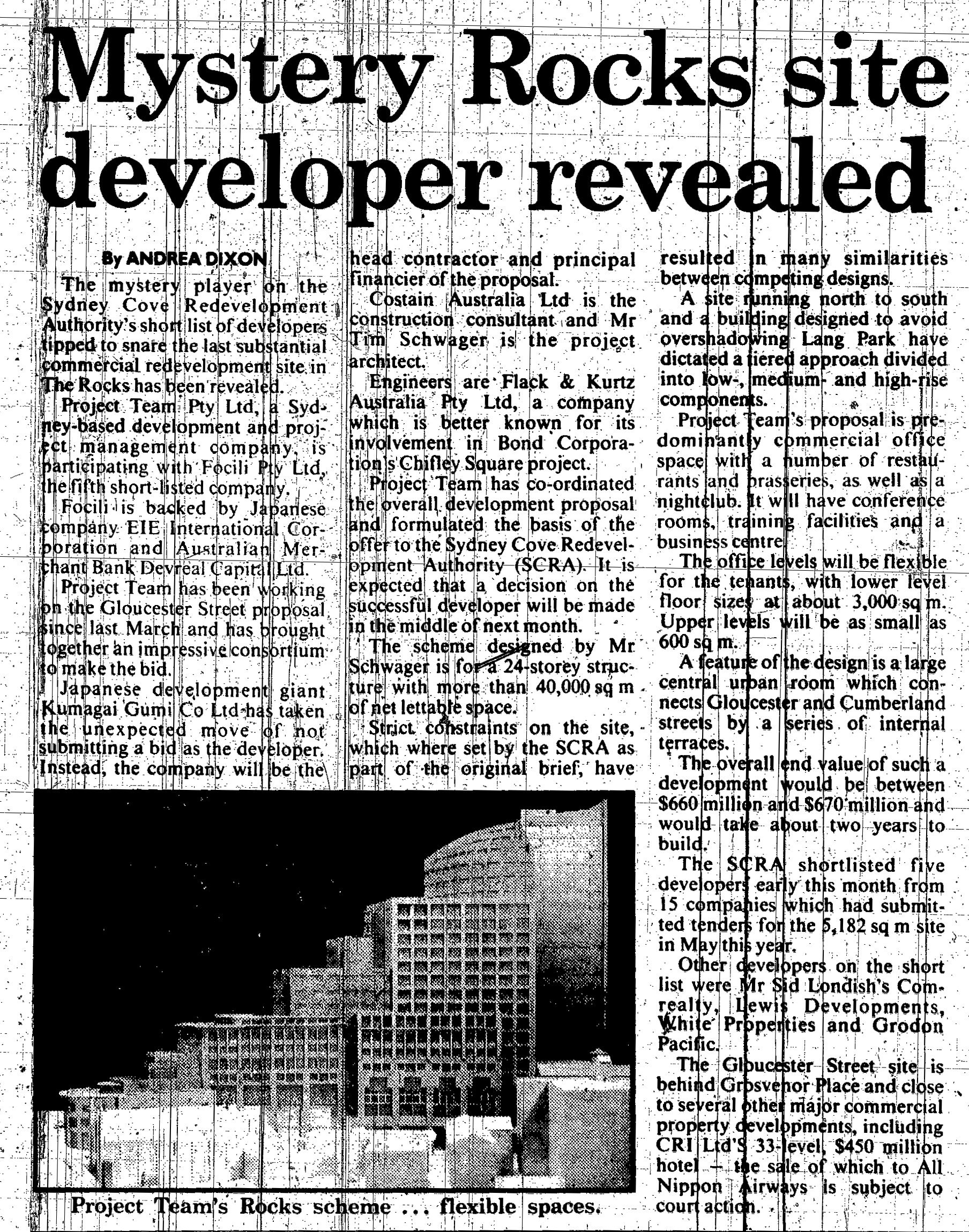
In 1989, EIE International Corporation was shortlisted as one of five developers by the Sydney Cove Redevelopment Authority to develop a site at The Rocks bounded by Essex Treet, Gloucester Street, Grosvenor Street and Cumberland Place.

Their plans envisaged a 24-storey office tower with 40 000sq/m of office space. stepping down from the Essex Street end to Grosvenor Street, presumably to protect sun access into Lang Park. 

Gloucester Street Tower October 24 1989 SMH page unknown 

Source: Dixon, A. 1989. "Mystery Rocks site developer revealed". The Sydney Morning Herald, October 24: 29. 

At one point, there were plans to build a hotel, but the success of the Cove Apartments opposite the site highlighted its potential for residential development on the site.

It was reported in The Australian Financial Review on June 17 2004, that the Sydney Harbour Foreshore Authority had sold the site to Stamford Land Corporation of Singapore for as much as $25 million

The site eventually became the Stamford Residences, a 30-storey (88 metre) apartment tower containing 122 apartments. Plans were submitted in 2005 and were approved in May 2006. Construction commenced in 2009 and was completed in 2011. 

Gloucester Street Tower October 24 1989 AFR page unknown

Source: Harley, R. 1989. "EIE in running for project at The Rocks". The Australian Financial Review, October 24: page unknown. 

Saturday, 11 February 2023

Property Advert of the Week: AVJennings 'Don't Miss The Boat Sale' (1989)

Below is a 1989 newspaper advertisement by AVJennings to promote their 'Don't Miss The Boat Sale'. House and land packages were offered at Bligh Park, Minto, Abbotsbury, Castle Hill, Kariong (Central Coast), Ambarvale and Minchin Hills from $99 000. 

  AVJennings Ad August 12 1989 daily telegraph 111 

Source: AVJennings. 1989. "AVJennings 'Don't Miss The Boat Sale.'" (Advertisement). The Daily Telegraph, August 12: 111.

Monday, 28 November 2022

SYDNEY RETAILING: More Midnight Shopping Clippings (1987 & 1989)

After my entry on the Pitt Street Mall hosting the first Midnight trade evening in September 1987, I found another two clippings relating to another two instances where retailers could trade until midnight. In one instance, one retailer decided to begin the day's trade at midnight.

Christmas 1987 - Kmart

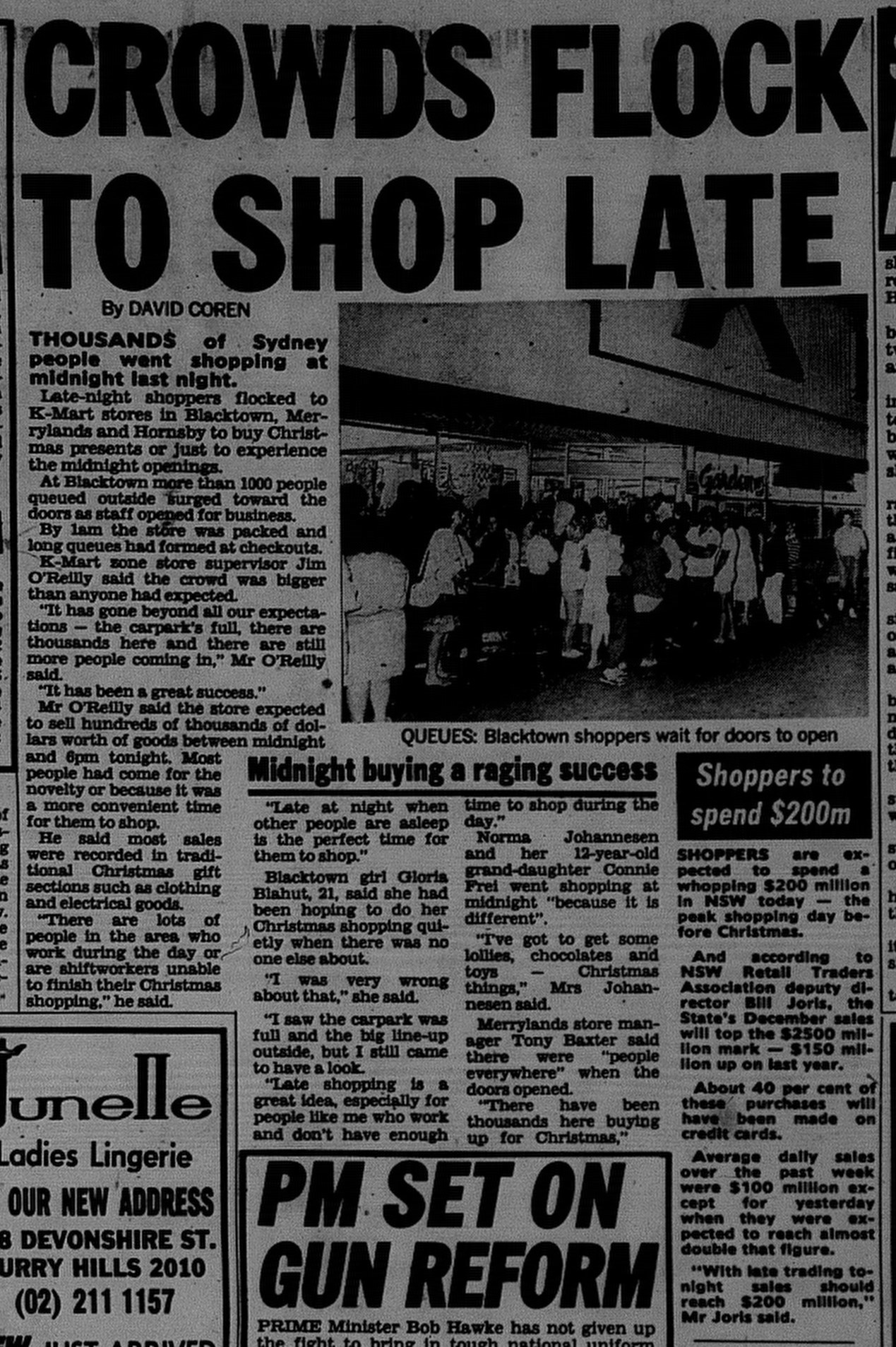
Midnight Shopping December 23 1987 daily mirror 2

Source: Coren, D. 1987. "Crowds Flock to Shop Late". The Daily Mirror, December 23: 2. 

On 23 December 1987, Kmart opened stores at Blacktown, Hornsby and Merrylands at midnight as part of extended Christmas trading and was a "great success" according to Blacktown store supervisor Jim O'Reilly. 

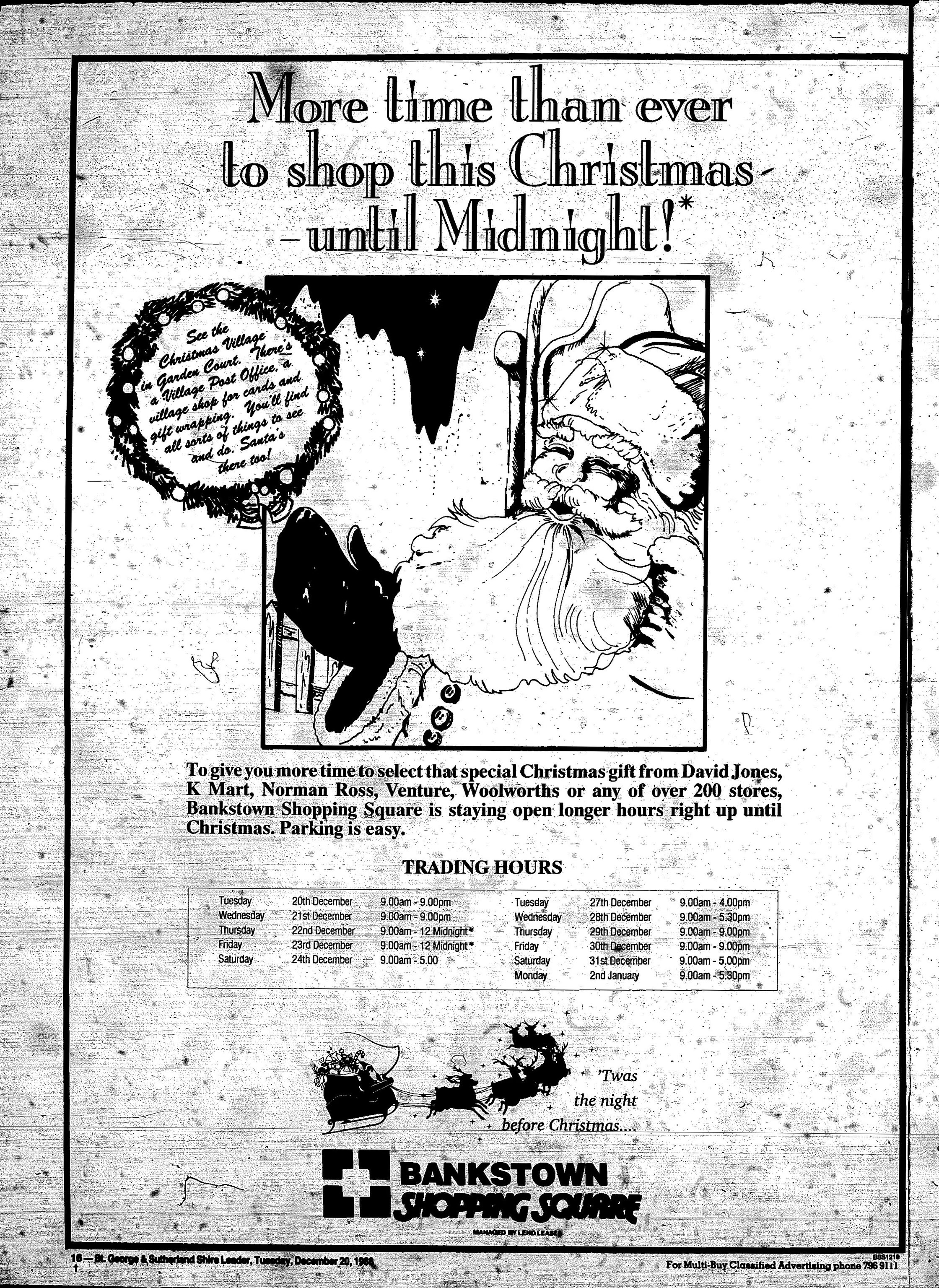
Midnight trading was allowed on the thursday before Christmas in 1988 (22 December 1988). Below is a newspaper advertisement for Bankstown Square as published in The St George and Sutherland Shire Leader on 20 December 1988.

Bankstown Square Christmas Ad December 20 1988 The Leader 16

Mothers Day 1989

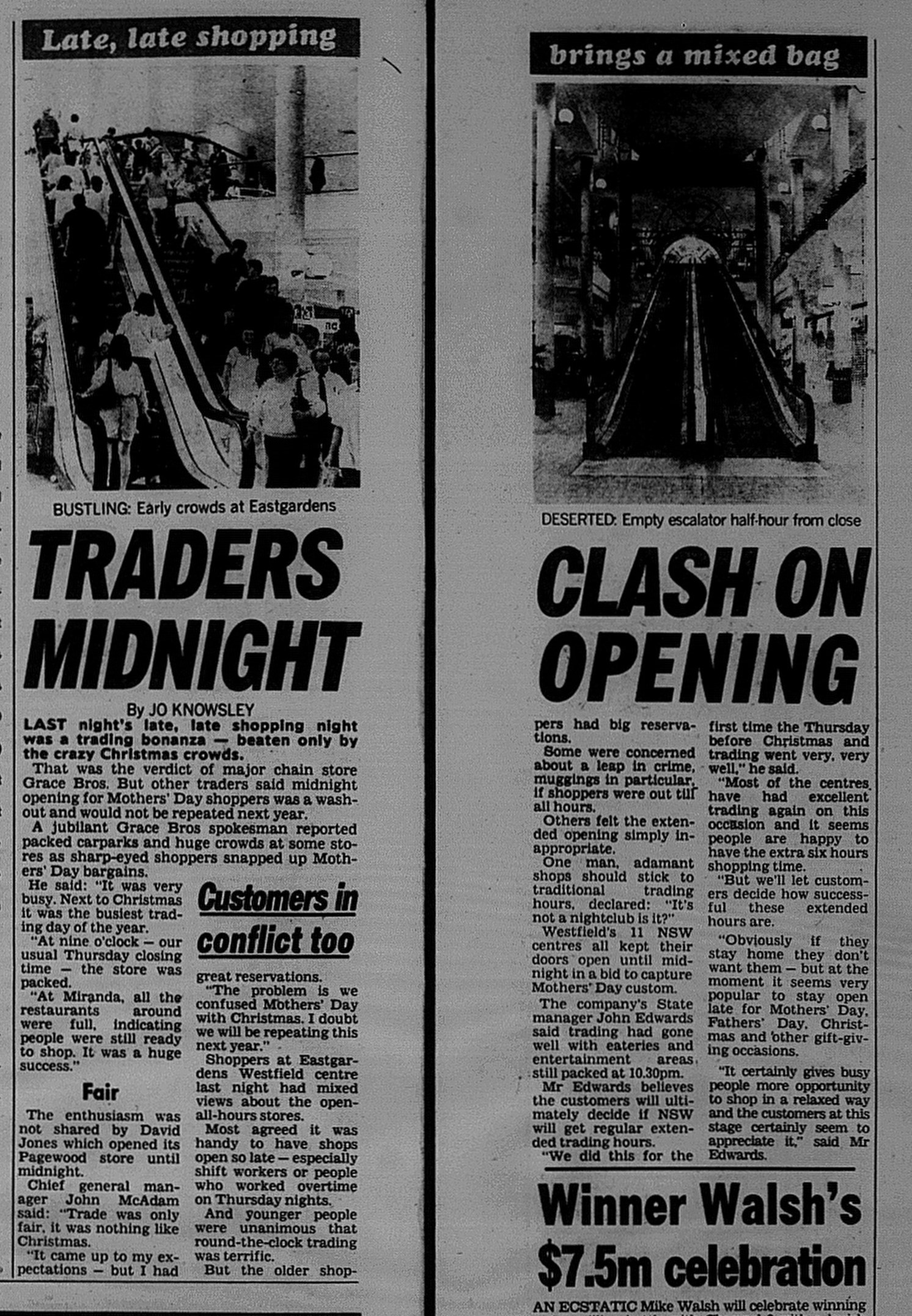
Midnight Shopping May 12 1989 daily mirror 16-17 

Source: Knowsley, J. 1989. "Traders Clash On Midnight Opening". The Daily Mirror, May 12: 16-17.

Retailers were allowed to trade until midnight on Thursday 11 May 1989. Westfield decided to keep its centres open until midnight. Westfield claimed it was successful, but there were some that felt it did not work out and the anticipated extra trade did not eventuate. 

Christmas 1989

Westfield repeated the extra late trading on the last Thursday before Christmas in 1989 with a midnight close on 21 December. 

Source: Westfield. 1989. "Open Today and Every Day until Christmas (Advertisement)." The Sunday Telegraph, December 17: 149. 

Peter Fitzsimons also wrote a feature on the extended late trade at the Grace Bros City Store for The Sydney Morning Herald. This was featured in a previous entry focusing on Christmas in 1989.

Source: Fitzsimons, P. "To some, night is the time for shopping. " The Sydney Morning Herald, December 23: 2. 

Related Entries

Monday, 18 July 2022

VISIONS OF SYDNEY: Hyde Park United (1989)

I am introducing a new series of posts that will be themed Visions of Sydney which I will post from time to time.

The Never Built series has focused on major building developments that were either proposed to be built or were approved by planning authorities but still was not built.

Visions of Sydney posts will focus on what our planners had in mind for our city, whether it involved widespread redevelopment within the Sydney CBD and surrounds or new developments in our suburbs. 

This will include transport or civic projects that were planned for Sydney, but either remained a drawing on a sketchboard or a line on a map.

And this will include with individual architects or planners had in mind as their "answer" to improving our city e.g. My 2020 posting on Harry Seidler's 1957 proposed residential scheme for McMahons Point would satisfy this as Seidler had a vision for the future of McMahons Point.

The first entry in this series of entries was a proposal to rejoin Hyde Park which has been split in two by Park Street in 1989.

The rejoining of the park was to be made possible through the construction of the Cross City Tunnel (not completed until 2005) along with a supplementary tunnel for local CBD traffic.

It was envisioned that Hyde Park would according to Lord Mayor Jeremy Bingham would be "one of the most beautiful urban parklands in the world" but would also provide "a sweeping vista of lawns and gardens".

This was a lost opportunity for Sydney when the Cross City Tunnel eventuated to keep traffic out of central Sydney.

Finally it does mention of the proposed Civic Square for the site of Woolworths and adjoining buildings opposite the Sydney Town Hall which is still on the council's "to-do" list. 

Reuniting Hyde Park December 1 1989 daily mirror 27

Source: Turner, 1989. "Sweeping Park Vista in Skyline. The Daily Mirror, December 1: 27.

Monday, 20 June 2022

NEVER BUILT SYDNEY: Southpoint Tower (1989)

southpoint december 1 1989 AFR render closeup
Southpoint Tower. Full Citation below. 

This is our ninth posting in our current series of "Never Builts" in Sydney. I hope you have been enjoying the entries so far.

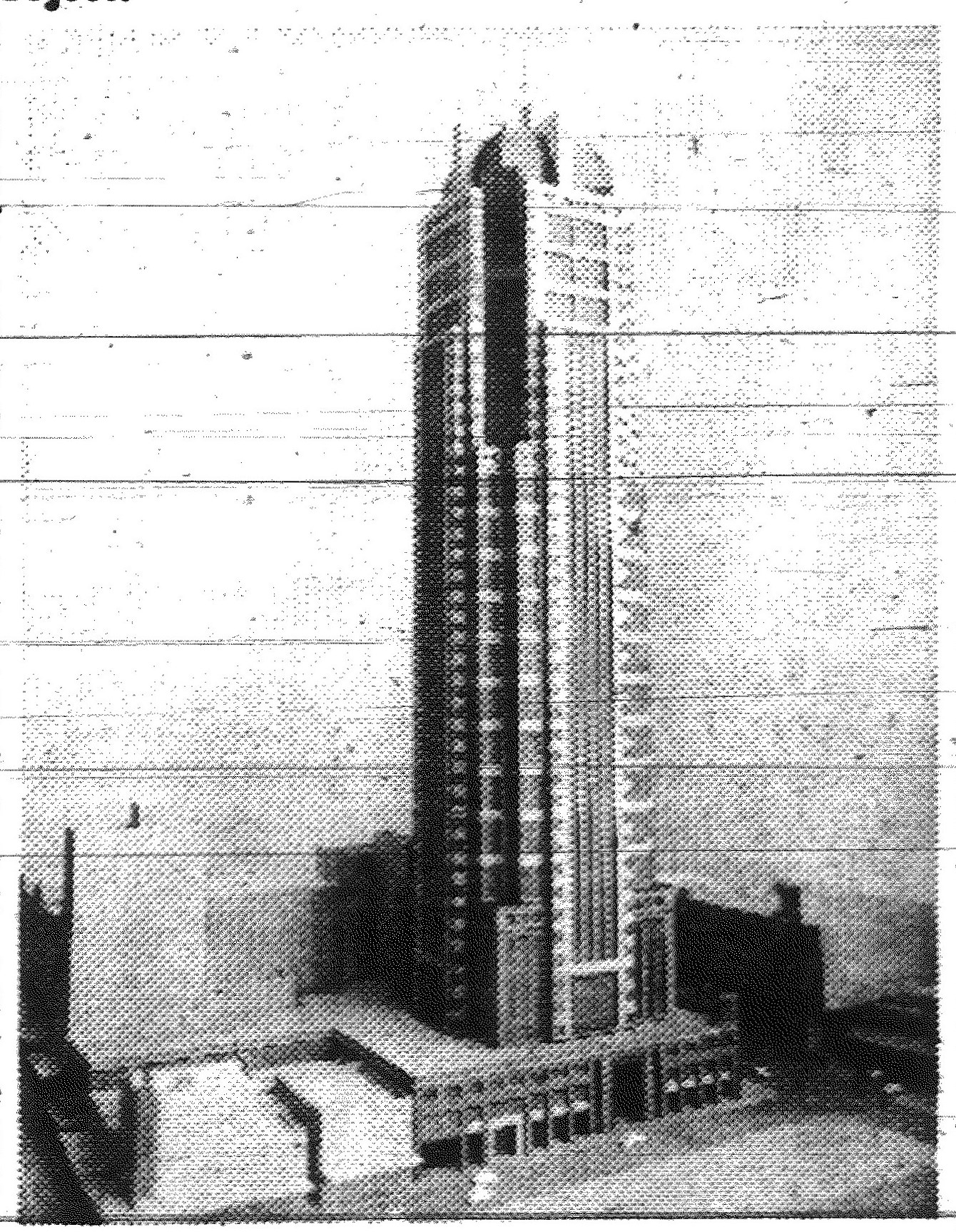
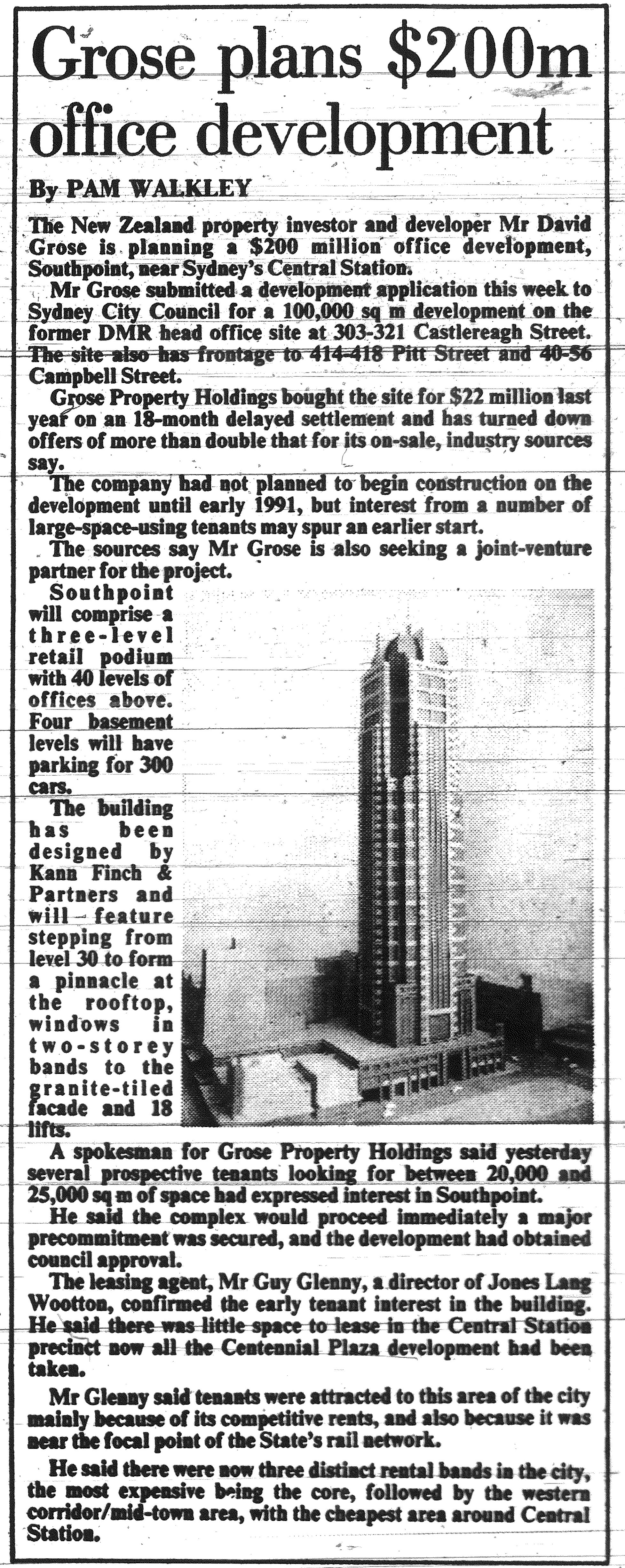
Last month, I posted some alternative schemes associated with the Capitol Theatre in Haymarket from 1989. At the same time in Campbell Street (site of the Regis Towers by Meriton), New Zealand developer Grose Property Holdings sought to build a 43 level office tower with 100 000 sq/m of space, This included a three level retail podium. 

southpoint december 1 1989 AFR page unknown

Source: Walkley, P. 1989. "Grose plans $200 million office development". The Australian Financial Review, December 1: page unknown. 

It was reported by The Australian Financial Review (above) in 1989 that there was demand for office space as shown by low vacancy rates around Central Railway Station along with its proximity to Sydney's main railway station. In addition rents in the "uptown" section of the Sydney CBD (southern CBD) was much more competitive for tenants. 

Approval was given by Sydney City Council, in June 1990. The site was placed for sale in 1991. In 1996, the buildings on the site were demolished by Meriton for the Regis Towers development which comprised of three towers fronting Campbell, Castlereagh and Pitt Streets, completed in 1998-1999.

Unfortuantely, this proposal was another victim of the early 1990's recession and property crash in Sydney. 

If this had been built, I think the southern end of the Sydney CBD would have been more appealing for major companies seeking office space and given an alternative to the northern end of the city. The southern end of the Sydney CBD has lacked landmark office towers. Combined with the original World Square development, "Uptown" Sydney would be more vibrant and more active as a commercial centre.

It is encouraging that the Liberal Government in NSW (2011-Present) has supported a relaxation of planning guidelines in the area surrounding Central Station and encouraging major technology firms to set up corporate headquarters. Southpoint could have set a precedent, but Atlassian's World Headquarters slated for the western side of Central Railway Station will get the honours instead. 


Monday, 16 May 2022

NEVER BUILT SYDNEY: Commonwealth Bank Tower, Martin Place (1989)

CBA Martin Place Tower May 17 1989 AFR page unknown enlarged
Above: A rendering of the proposed Commonwealth Bank Tower from 1989. Full citation below

In 1989, the Commonwealth Bank unveiled plans to build a major tower above it's former Pitt Street head office.

The proposed tower rose 39 levels but was set back from Martin Place. The tower would have risen where the current 5 Martin Place tower rises. It was anticipated that the tower with around 43 000sq/m of office space would be completed by 1993. The recession of the early 1990's put an end to plans. The non-heritage section of the building at its eastern end would have been demolished.

CBA Martin Place Tower May 17 1989 AFR page unknown


Source. Harley, R. 1989. "Commonwealth Bank plans major upgrading in Sydney". The Australian Financial Review, May 17: page unknown. 

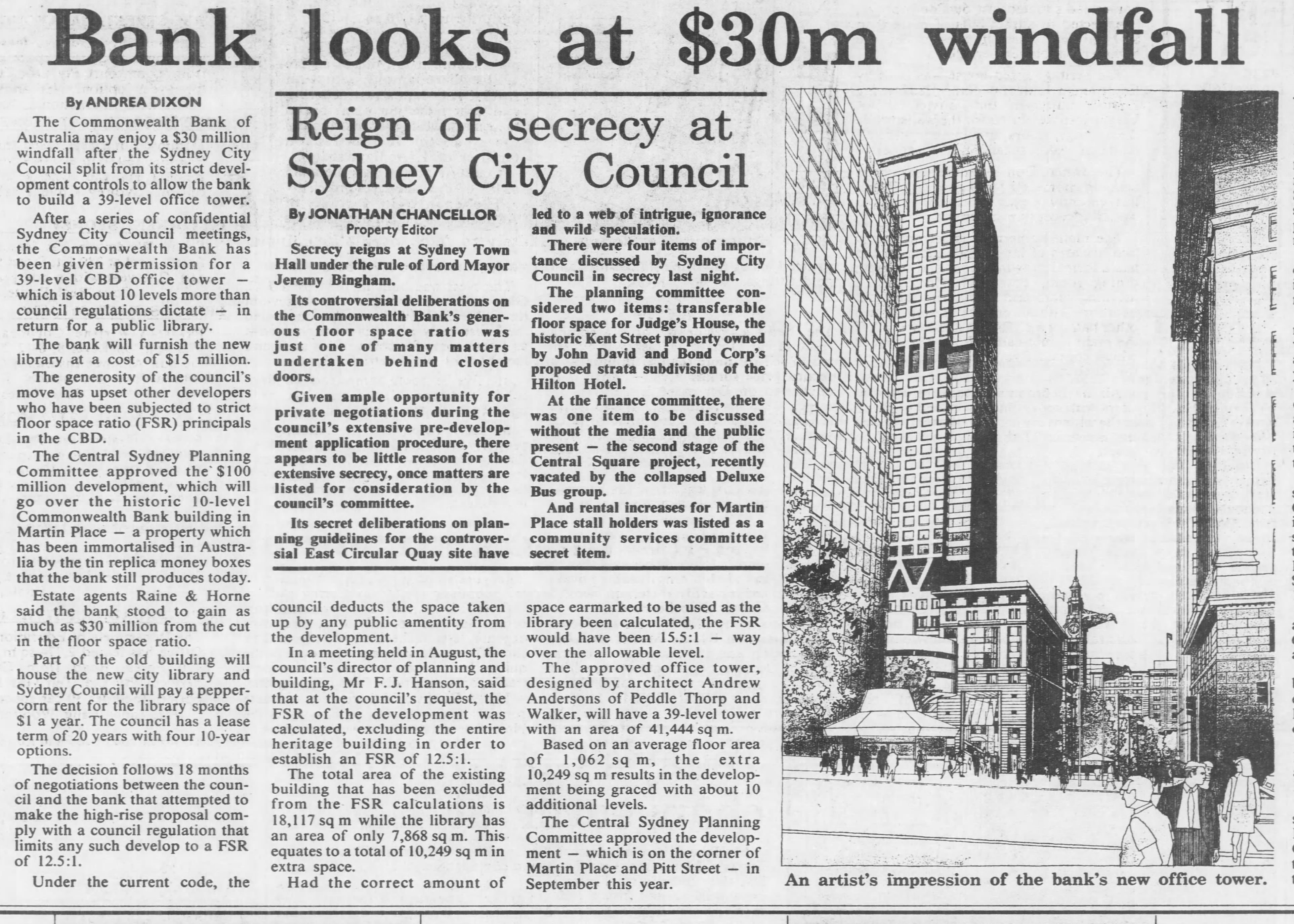
The site was zoned only to permit a 29 level tower, yet council approved the extra levels on the condition that it would fund the construction of a new public library for Sydney City Council. The library also had to be fully furnished. Approval was formally given in September 1990. 

CBA Martin Place Tower November 6 1990 SMH 28

Source: Dixon, A. 1990. "Bank looks at $30m windfall". The Sydney Morning Herald, November 6: 28. 

Below is a photo I took in 2002 of a scale model of the tower as featured in the City of Sydney model. Thank you to Richard Braddish of Sydney City Council who was able to show the model to me. 


A decade later (2013), I managed to get better photos of the model. Again this was organised by Richard Braddish (Sydney City Council).


This gives an idea of how it would have looked on our city skyline as viewed from the west.


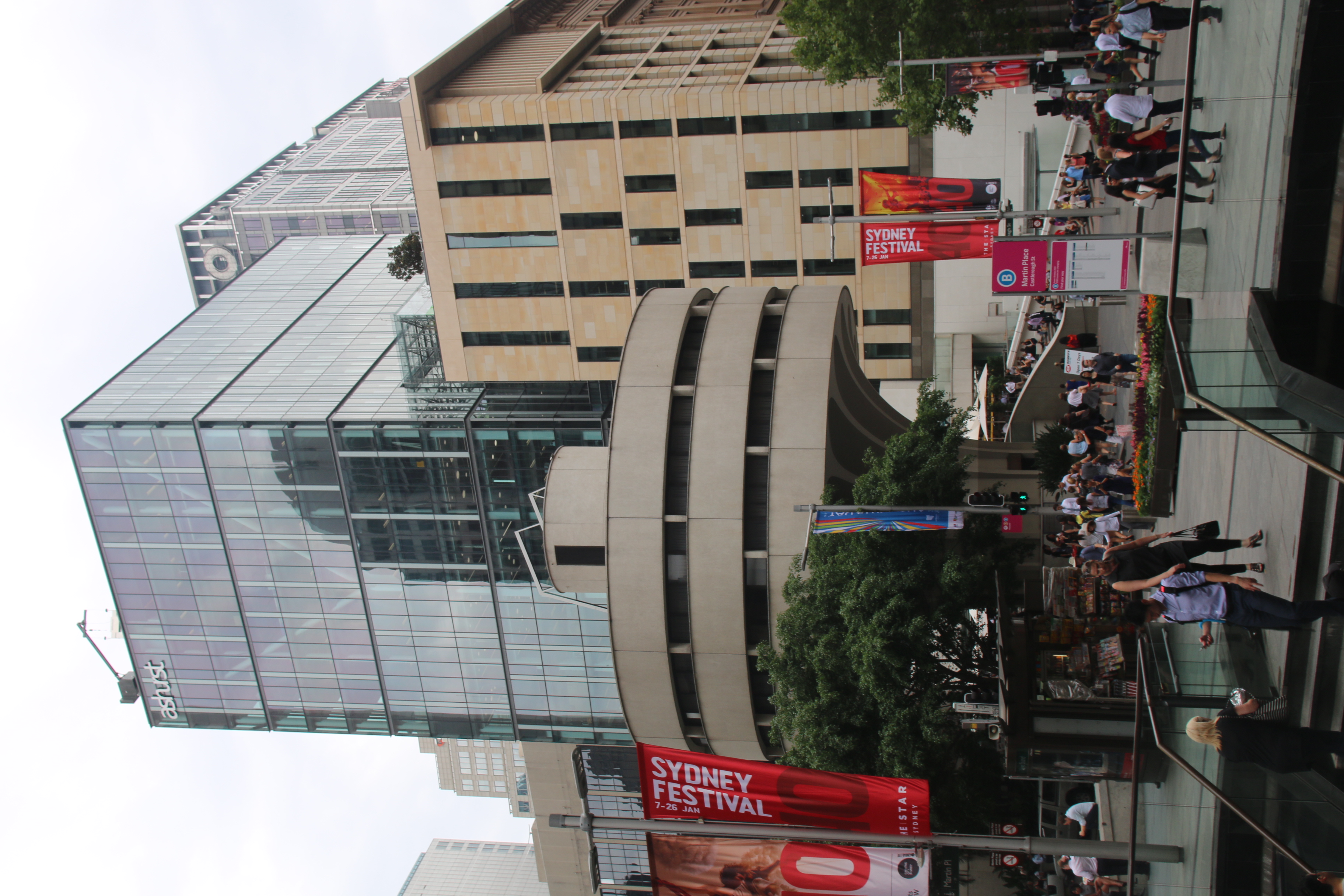
In 2015, a twenty level building was built as part of a redevelopment of the entire building (including the moneybox building). 

IMG_2201 (5)
Photo taken by the author (2016).

Monday, 9 May 2022

NEVER BUILT SYDNEY: Capitol Theatre Redevelopment Plans (1989)

The Capitol Theatre is one of four major theatres located within the Sydney CBD and its immediate surrounds. It's main competitors include the State Theatre, Theatre Royal and the Lyric Theatre at The Star.

The theatre is nearly a century old, completed in 1928 with a capacity for around 2000 people. It was closed in 1983 and reopened in 1995 after a redevelopment of the site which included a retail complex and a hotel facing Pitt Street.

In 1989, tenders were called for the redevelopment of the site. 

Winner

Ipoh Constructions

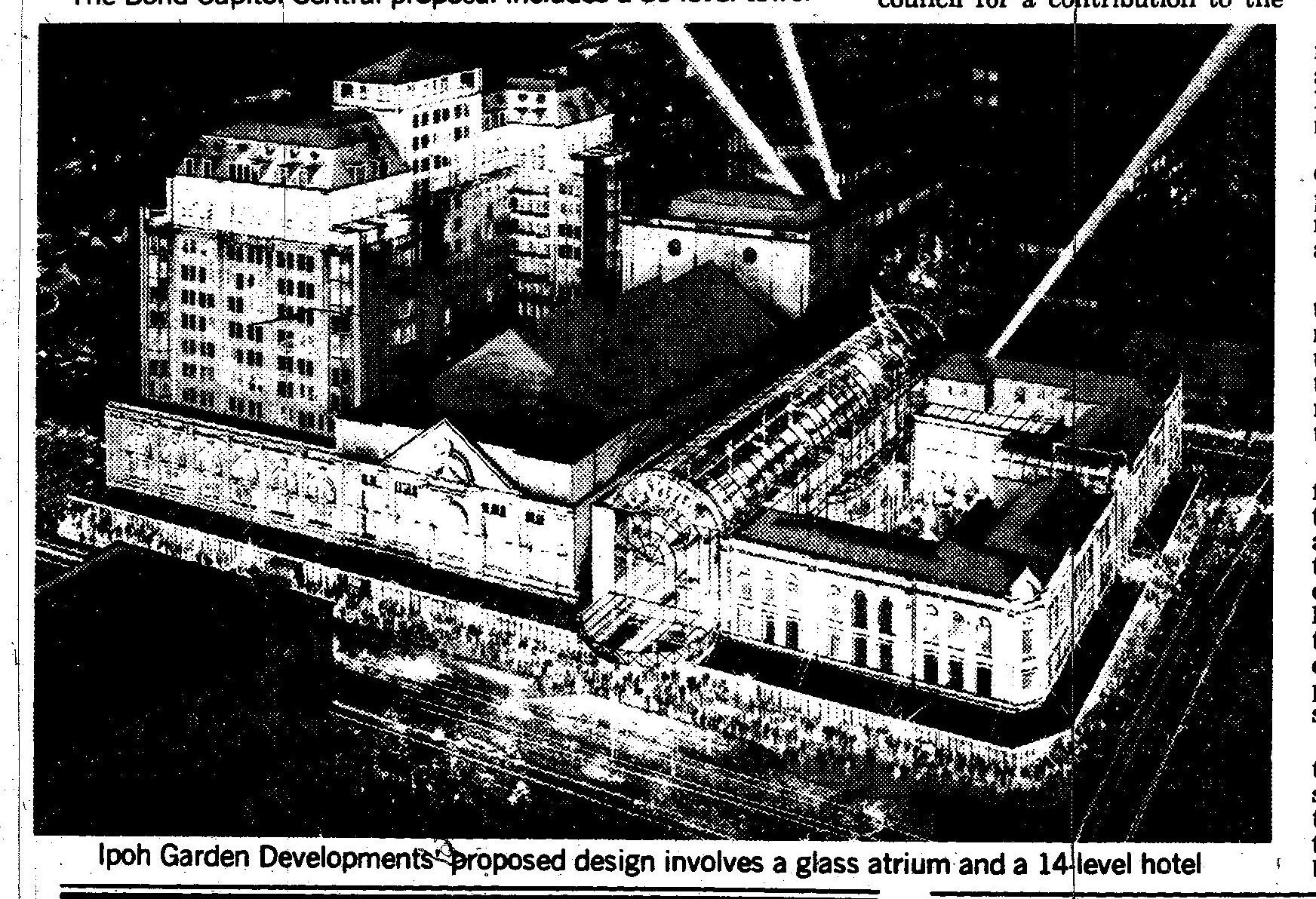
This is what the eventual redevelopment was based on with the redeveloped theatre, hotel and retail complex. The retail complex includes the atrium that is found there today. The hotel building was eventually redesigned. Architect was Andrew Andersons of Peddle Thorp Walker.

Capitol Theatre Redevelopment May 20 1989 Weekend Australian Page Unknown enlarged 2

Alternative Schemes

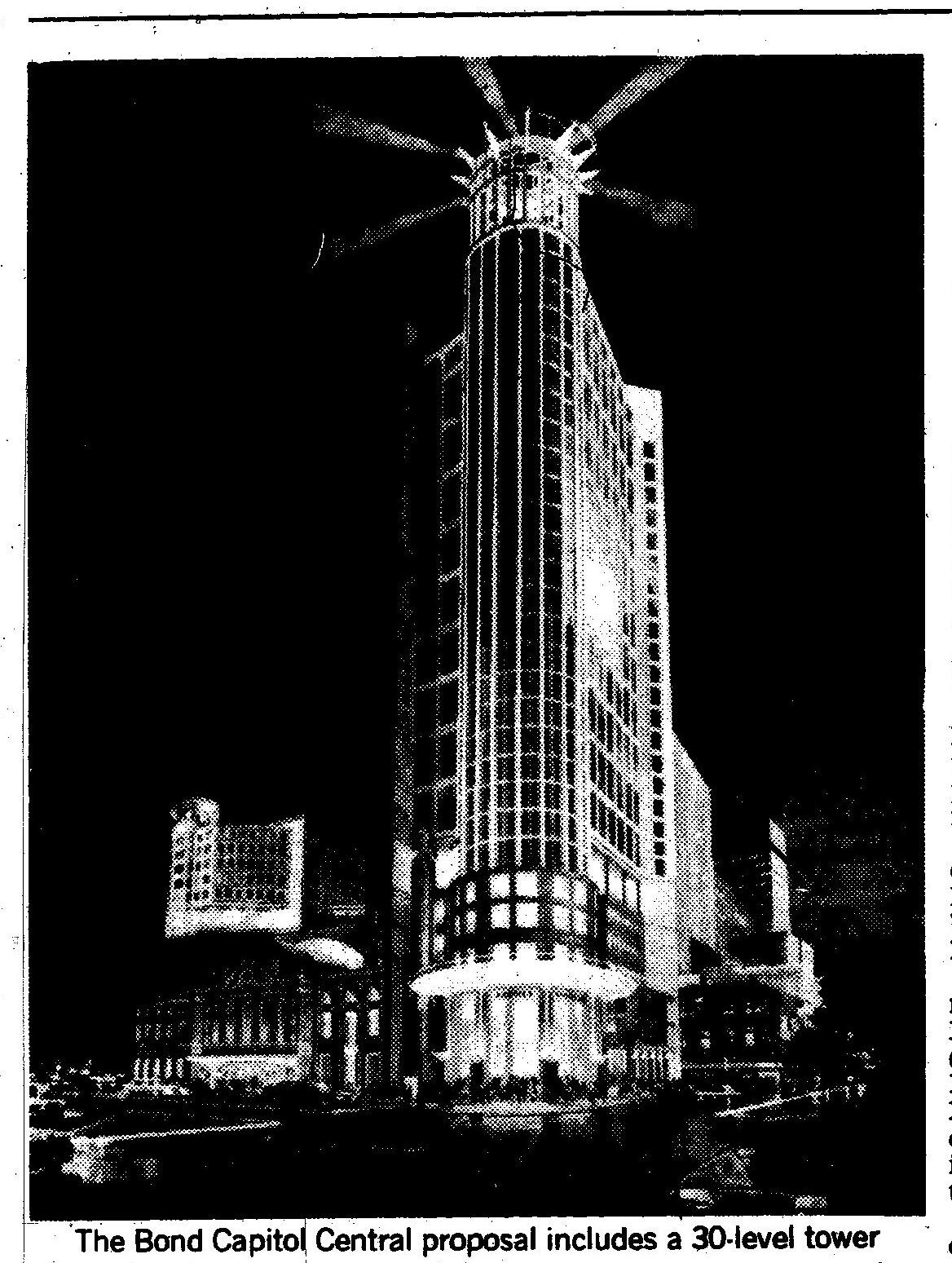
Bond Corporation

Redevelopment of the theatre also included a 30 Storey office tower facing George Street and a 13 level hotel facing Pitt Street. 

Capitol Theatre Redevelopment May 20 1989 Weekend Australian Page Unknown enlarged 1

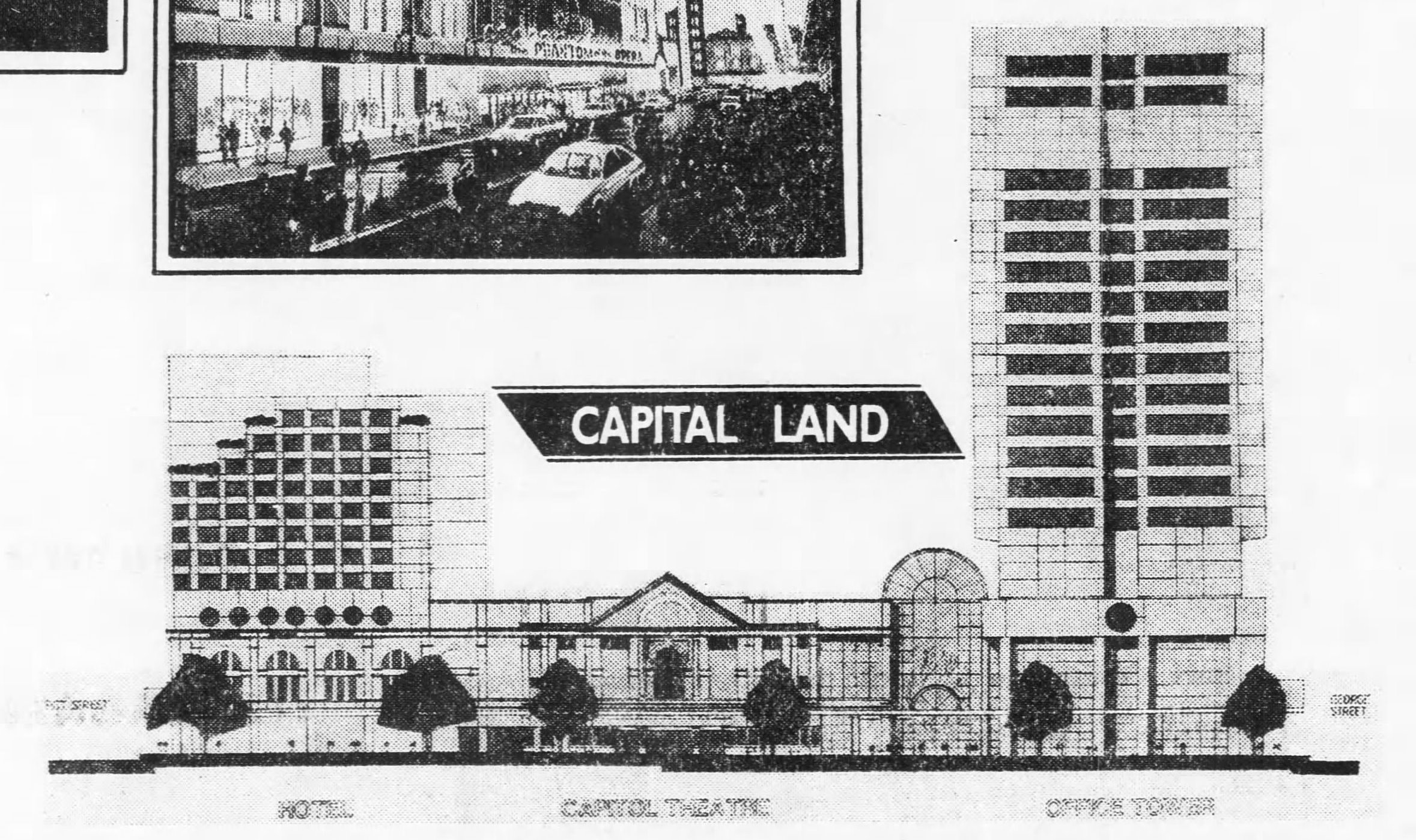
Capital Land Corporation

Along with a restored theatre, redevelopment plans included a 42 level office tower facing George Street and a 300 room, four star hotel facing Pitt Street.

Capitol Theatre Redevelopment July 22 1989 SMH 76 - Capital Land

Essington

In addition to the existing theatre, a second theatre with a capacity for 1 200 patrons was planned for the Pitt Street side of the site along with a thirty level office tower facing George Street.

Capitol Theatre redevelopment May 17 1989 AFR 54 - Essington Proposal


Capitol Theatre Redevelopment July 22 1989 SMH 76 - Essington

 The artists impressions were sourced from the following articles:

Evans, B. 1989. "Capitol Ideas". The Sydney Morning Herald, July 22: 76.

Harley, R. 1989. "Sydney Council weights options for Capitol". The Australian Financial Review, May 17: 54. 

Nance, J. 1989. "Capitol rivals put on a real variety show". The Weekend Australian, May 20: page unknown. 

Monday, 25 April 2022

NEVER BUILT SYDNEY: Mid City Centre Office Tower (1989)

For the next ten weeks, I will present a new series of "Never Builts" in Sydney. My collection in this area continues to grow.

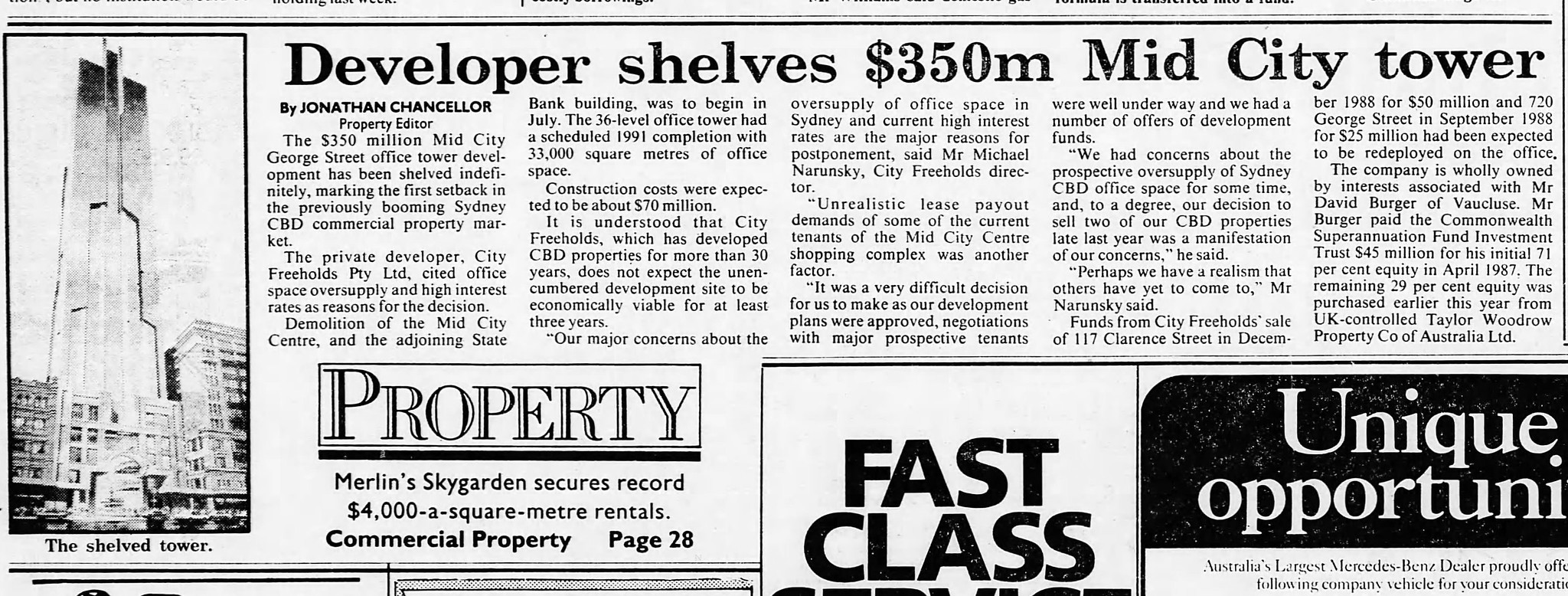
Mid City Centre tower shelved April 18 1989 SMH 25

Source: Chancellor, J. 1989. "Developer shelves $350m Mid City tower". The Sydney Morning Herald, April 18: 25. 

This week, I have selected the Mid City Centre Office Tower that was proposed in 1989. The current 34 level office tower at 420 George Street was completed in 2010 along with a new retail complex in its podium, bearing the same name as its predecessor.  It replaced the original Mid City Centre retail complex which opened in 1982 and was designed to accommodate a future highrise tower.

In 1989, plans for a 36 level office tower were shelved due to "oversupply" in the Sydney CBD Office Market and it led to disputes between the owners of the complex, City Freeholds Pty. Ltd and their tenants over the state of the complex.

Mid City Centre Tower April 19 1989 SMH 8

Source: Totaro, P. 1989. "Brawl over Mid City Centre redevelopment plans. The Sydney Morning Herald, April 19: 8. 

It was not the first highrise tower that was proposed for the site. In 1971  a 46 level office tower was proposed by Tjuringa Securities Ltd. Click here to view an entry on that proposal which was published last year. 

Monday, 23 August 2021

1989: Sydney Ferries introduce automatic ticketing

Sydney Ferries Automatic Ticketing Ad July 4 1989 Daily Mirror 37

Source: Sydney Ferries. 1989. "Announcing the Launch of a Great new Ferry Service. Automatic Ticketing" (Advertisement). The Daily Mirror, July 4: 37. 

In 1989, Sydney's Ferry Network became the first mode of public transport in Sydney to offer automatic ticketing across its entire network. Prior to 1989, automatic ticketing was only available for rail commuters on the Eastern Suburbs Railway Line, which had been available since its opening in 1979.

All tickets for services operated by Sydney Ferries featured a magnetic stripe which contained ticketing data. This would reduce fare evasion and assist government authorities in collecting data relating to public transport usage and inform planning for future provision of services. 

Automatic Ticketing led to the introduction of a new ticket option - Ferry Ten Tickets for regular commuters. This would be offered for more than twenty five years. They were withdrawn from sale at end of 2015 as part of the implementation of the Opal Card across Sydney's public transport network.  

Self-service ticket machines were introduced which meant that commuters no longer had to queue at the ticket office to buy a ticket. 

Monday, 2 August 2021

1989: The return of ferry ocean cruises

In 1988, the NSW Government delivered the last ferry in the Freshwater Class of Sydney Ferries -  Collaroy. 

collaroy ocean cruises august 2 1988 daily telegraph 9 

Source: Anon. 1988. "'Family' cruises for new ferry". The Daily Telegraph, August 2: 9.

Unlike the other three ferries in the fleet - Freshwater, Queenscliff and Narrabeen, the upper deck was open at each end. Post 2000, the other three ferries would also provide open decks at each end.

Collaroy had been fitted with stablisers to manage the ocean swells along with catering facilities. More than a canteen could be offered to commuters on the Manly run or on a harbour or ocean cruise. 
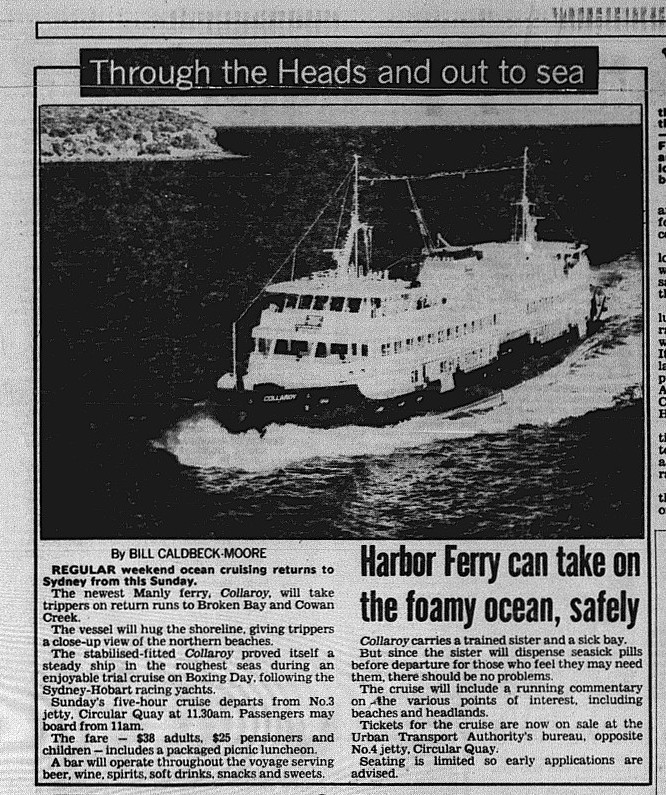
Collaroy Cruise January 6 1989 daily telegraph 

Source: Caldbeck-Moore, B. 1989. "Harbor Ferry can take on the foamy ocean, safely". The Daily Telegraph, January 6: page unknown

In 1989, Sydneysiders were able to experience ocean cruises on the Collaroy, reviving the cruises provided by the South Steyne between 1953 and 1973, when it was under the ownership of the Port Jackson and Manly Steamship company. 

Below is one newspaper advertisement from February 1989.  Cruises ran between Circular Quay and Cottage Point. Tickets were $38 for adults and $25 for children and pensioners and included a picnic lunch. 

  Ocean cruises Sydney Ferries Ad February 28 1989 daily telegraph 43

Source: Sydney Ferries. 1989. "Run away to sea for a day on a Sunday Coastal Cruise" (Advertisement). The Daily Telegraph, February 28: 43.

The cruises ran until the following year. It was written in Ferries of Sydney by Graeme Andrews that the services were terminated after ferry officers demanded the payment of a "spew allowance" that was being received by deckhands working on the services. The "spew allowance" referred to a payment to cover cleaning up the mess left behind by seasick passengers. 

With new Emerald Class ferries about to commence full time service on the Manly run, Collaroy will step back into a part time role, operating on weekends alongside the Freshwater (oldest of the Freshwater Class ferries). This only occurred after a backlash from Sydneysiders over plans to retire the entire fleet citing:

  • The iconic nature of the ferries 
  • Cultural Importance
  • Ability to transport large numbers of commuters - 1100 people compared to 400 on Emerald Class Ferries.
  • Heritage value
  • Ability to manage the swells at the heads.
The Narrabeen and Queenscliff are expected to be retired from service by the end of 2021. 


Monday, 5 April 2021

1989: Museum of Contemporary Art Plans Unveiled

This year is 30 years since the Museum of Contemporary Art opened its doors to Sydney art lovers. It was interesting to find articles relating to the announcement that Sydney was to get one.

The NSW State Government had vacated the Maritime Services Board (MSB) Building at West Circular Quay. In 1989 it leased the building to Sydney University for just $10 a week, allowing the museum to be created.


Source: Clifton, B. 1989. "Modern Art's Harbor Home". The Daily Mirror, March 22: 39.

Source: Grimshaw, P. 1989. "$100m gift for art". The Daily Telegraph, March 17: 9. 

This fulfilled the vision of former NSW Premier Neville Wran who announced in 1984 that a Museum of Contemporary Art would occupy the building.


Source: Anon. 1984. "Art gallery for Quay". The Daily Telegraph, November 24: 20. 

Through the creation of the Powerhouse Museum, it enabled the university to display the collection of Dr. John Power who bequeathed the university with his collection including artworks.

In 2001, the NSW Government became the main stakeholder for the museum. In 2012, a new five storey wing was completed that increased the size of the museum by 50%. 


Saturday, 20 February 2021

Property Advert of the Week: Neeta Homes Advertisement (1989)

Below is a newspaper advertisement from 1989 promoting the Neeta Homes Display Centre at Bossley Park. In addition they were promoting house and land packages in unspecified locations in Fairfield and Blacktown.


Source: Neeta Homes. 1989. "Brand New Homes...Fairfield & Blacktown Areas". The Daily Mirror, January 30: 23.  

I have included a Google Streetview image to show how the location appears today. 


Monday, 12 October 2020

1989: Urban Development around Badgerys Creek Airport


Source: Morris, L. 1990. "Oran Park to go for new city". The Daily Telegraph, September 2: page unknown.

Trawling through my clippings, I came across an article from September 1989 published in The Daily Telegraph. 

The State Government was planning a "mini-city", the size of Canberra to be built in a corridor incorporating the proposed Badgerys Creek Airport. This was seen as a response to the land shortage gripping Sydney (like today). 

Oran Park Raceway would be closed with housing to replace the former race track.  This occurred in 2010 and housing has since appeared.

With construction of the new airport underway three decades later, planning still continues. The focus has shifted towards commercial and industrial development to create a Western Sydney Aerotropolis. The long term goal is to create 200 000 jobs within the precinct which will follow the 1989 corridor. That is nearly two thirds of the number that commute into Central Sydney each day to work.

In 1989, they were unlikely to have considered high rise residential development, whereas three decades later it is being seriously considered.

Monday, 31 August 2020

1989: Gateway Tower as Sydney's "last" glass building

The Sydney Morning Herald predicted in 1989 that the Gateway Tower would be the last glass building built in Central Sydney based around a review of planning across the Central Business District.


Source: Quddington, P. "Why this may be Sydney's last glass tower". The Sydney Morning Herald, March 8: 1.
Three decades later, if standing at Kirribilli or on the steps of the Sydney Opera House, turn your eyes to the right of the Gateway Tower and one will notice an even taller tower rising and it has a glass facade. Crown Sydney. 

Monday, 20 January 2020

Remember This? Sydney Ferries Ocean Cruises (1989)

In 1988, the Collaroy was added to the Manly Ferry Fleet. Unlike the other three ferries in the fleet, it was designed to operate ocean cruises. Also, it had outdoor decks on the upper level at each end (they were eventually added to the other Manly Ferries).

Ocean Cruises were provided for decades on Sundays by the old steamers, but had stopped. By the end of the 1980's, an attempt was made to revive the cruises.

The cruises were provided between 1988 and 1991. They were discounted as crew demanded a "spew allowance" to deal with cleaning up after those who were seasick.

The coastal cruises would commence at Circular Quay and proceed north along the Northern Beaches to the Hawkesbury River, exploring its lower reaches before returning back to Circular Quay by the same route.

For our readers, should the cruises be revived?

Below is an advertisement from 1989.


Source: Sydney Ferries. 1989. "Run away to sea for a day on a Sunday Coastal Cruise" (Advertisement). The Daily Telegraph, February 28: 43. 


Monday, 25 November 2019

1989: The first non-stop London to Sydney flight

Just over a week ago (November 15), Qantas conducted a non-stop flight from London to Sydney using a 787 Dreamliner jet. The flight which carried a few dozen passengers was for research purposes as Qantas aims towards providing direct flights from the east coast of Australia to London and New York by 2022.

This flight was thirty years after the very first non-stop London to Sydney flight which was also undertaken by Qantas using a Boeing 747-400 jet. The 18 012km flight took 20 hours, 9 minutes and 55 seconds, arriving in Sydney on August 17 1989.

With the recent test flight involving the 787, it took 19 hours and 19 minutes to traverse the route. A new record.

Below is coverage from The Daily Telegraph from August 18 1989.